Oil prices climbed 5% on Monday after US President Donald Trump reinstated the blockade of Iranian shipping in the Gulf and announced a 20% toll on other countries' cargo passing through the Strait of Hormuz. The price of Brent crude rose to $79.37 a barrel, up from $72.48 before US-Israeli strikes on Tehran in late February.
Trump declared in a social media post that the US would become 'THE GUARDIAN OF THE HORMUZ STRAIT', with the arrangement taking effect immediately. The move casts doubt on hopes for a resumption of normal Gulf oil and gas flows, which have been disrupted by months of conflict. Oil had reached highs of $120 a barrel in April.
Asian stock markets fell sharply, with South Korea's Kospi down 8% and Japan's Nikkei 225 and China's Shanghai Composite 2% lower. Chip makers were hit hard, with SK Hynix slumping 15% and Samsung Electronics sinking 10%. US tech stocks also declined, with the Nasdaq down 1% and S&P 500 falling 0.4% in afternoon trading.
The escalation followed a weekend of US strikes against Iran on Sunday evening, which US Central Command said were intended to 'continue degrading their ability to attack civilian mariners and commercial ships freely transiting the strait of Hormuz'. Iran retaliated, and its Islamic Revolutionary Guard Corps said it stopped two ships in the strait on Sunday.
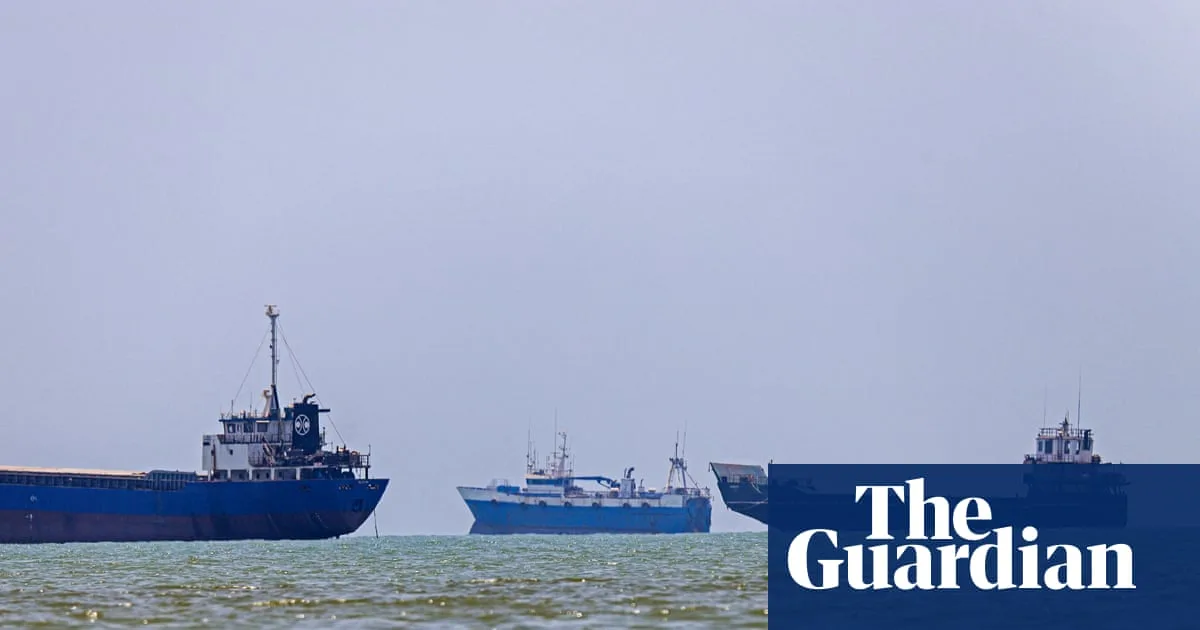
Data analyst Kpler reported that only six vessels crossed the strait on Sunday, the fewest in five weeks. Tankers exiting included the very large crude carrier Humanity, carrying 2m barrels of Iranian oil, and another tanker with about 500,000 barrels of Kuwaiti products. Most tankers switch off transponders when crossing.
Gold fell 1.4% to $4,083 an ounce as higher oil prices stoked fears of interest rate rises to combat inflation. The Opec cartel lowered its global demand growth forecast for 2026 to 780,000 barrels a day, its third consecutive downward revision, while the International Energy Agency expects demand to decline by 1m barrels a day next year.