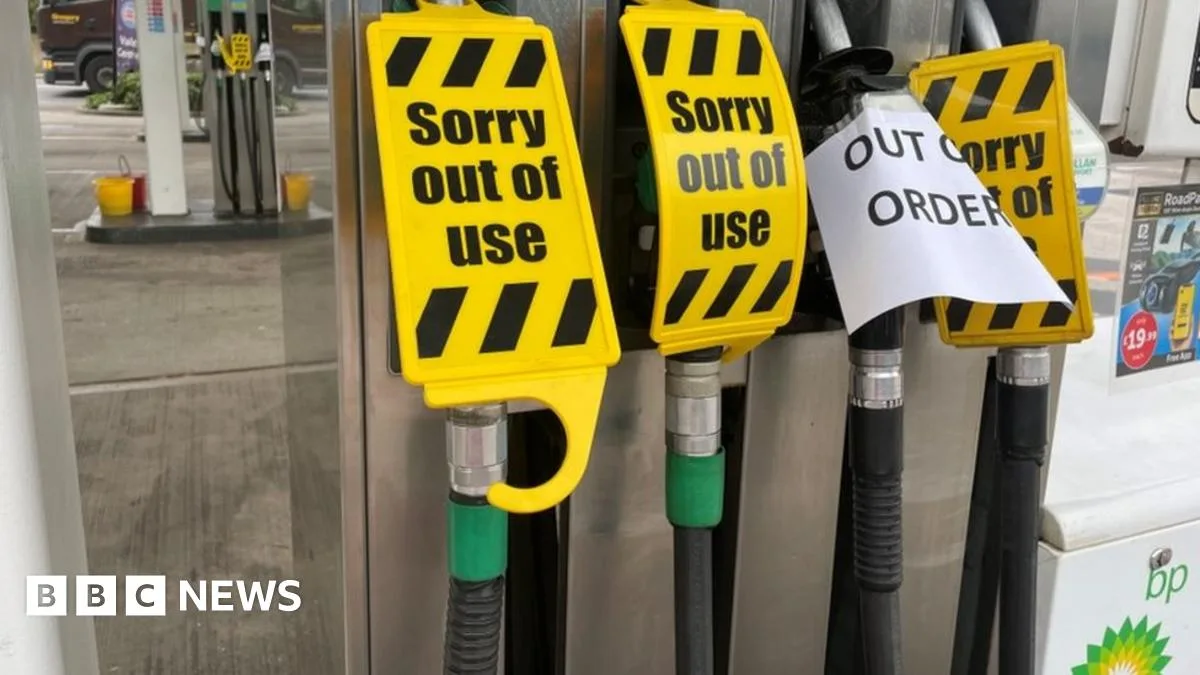
UK Fuel Crisis: Tesco Joins Asda in Petrol Shortages Amid Iran War Fallout
Tesco and Asda Petrol Shortages as Iran War Hits UK Fuel Supply

Petrol shortages are escalating across the United Kingdom as Tesco joins Asda in implementing significant fuel cutbacks at forecourts, sparking widespread concerns over a deepening energy crisis linked to the ongoing conflict in Iran. 'No fuel' signs have been observed at multiple Tesco petrol stations, following admissions from Asda's leadership that supply chain disruptions are beginning to severely impact British motorists.

Forecourt Closures and Supply Chain Strain

Staff were witnessed closing off petrol pumps at a Tesco Express location in Cheshire earlier today, while a separate station in Prestwich, Greater Manchester, was compelled to post notices alerting customers that diesel was completely unavailable. These incidents highlight the growing strain on fuel distribution networks, as industry insiders report that demand is rapidly exceeding available supplies.

The Mirror has reached out to Tesco for an official statement regarding the forecourt closures, but the supermarket giant has yet to provide detailed commentary. This development occurs amidst escalating fears over a global fuel crisis triggered by Iran's strategic closure of the Strait of Hormuz, a critical maritime chokepoint for oil shipments.

Wide Pickt banner — collaborative shopping lists app for Telegram, phone mockup with grocery list

Government Contingency Planning

British government officials are reportedly formulating contingency plans to address potential drops in national fuel reserves, should the international situation deteriorate further. Although industry representatives maintain that petrol and diesel supplies remain stable for the time being, the rapid price increases and localized shortages suggest a precarious balancing act.

Asda Boss Issues Stark Warning

Allan Leighton, the chief executive of Asda, issued a sobering assessment earlier today, confirming that certain forecourts are experiencing temporary petrol shortages. He elaborated, stating, "Our fuel volumes have increased quite significantly, and clearly demand has been outstripping supply. The supply is tight, and all retailers are striving to manage this situation. This is a temporary issue, and some locations may encounter problems while awaiting deliveries, a trend we anticipate will persist in the near term."

Mr. Leighton clarified that heightened consumer demand has resulted in a limited number of local "spikes" in shortages, emphasizing that these disruptions are not yet nationwide. Fuel Industry UK, the sector's representative body, echoed this sentiment, asserting that petrol and diesel availability is currently "stable."

Price Surges and Security Concerns

According to recent data from the RAC, the average price of unleaded petrol has surged by over 17 pence per litre since former US President Donald Trump initiated military actions against Iran, now standing at 150.11 pence. This sharp increase has prompted law enforcement agencies to issue warnings about the rising risk of fuel theft from vehicles.

Wiltshire Police have advised motorists to enhance security measures by installing anti-siphon devices and locking fuel caps on their cars, alongside utilizing CCTV surveillance where feasible. For individuals with standalone fuel tanks, recommendations include positioning tanks within visible range of residences, employing motion-sensor lighting and alarm systems, laying gravel to detect approaching footsteps, and enclosing tanks in protective cages.

Agricultural vehicle owners are urged to fit locking caps and store machinery securely overnight, while all consumers should vigilantly monitor fuel levels and remain alert for signs of tampering or spilled fuel. These precautions underscore the broader societal impacts of the fuel crisis, extending beyond mere inconvenience to genuine security threats.

As the situation evolves, industry leaders and government authorities continue to monitor fuel supply chains closely, with regular reports submitted to the Department for Energy. The stability of UK fuel access hangs in the balance, dependent on both international geopolitical developments and domestic logistical responses.

Pickt after-article banner — collaborative shopping lists app with family illustration