Households in three Australian states can now choose an electricity plan offering three free hours of power per day, as the government-regulated Solar Sharer scheme begins on 1 July. The offer applies to residents of Queensland, New South Wales and South Australia who have a smart meter. Victoria will launch a similar scheme, the Midday Power Saver, on 1 October.
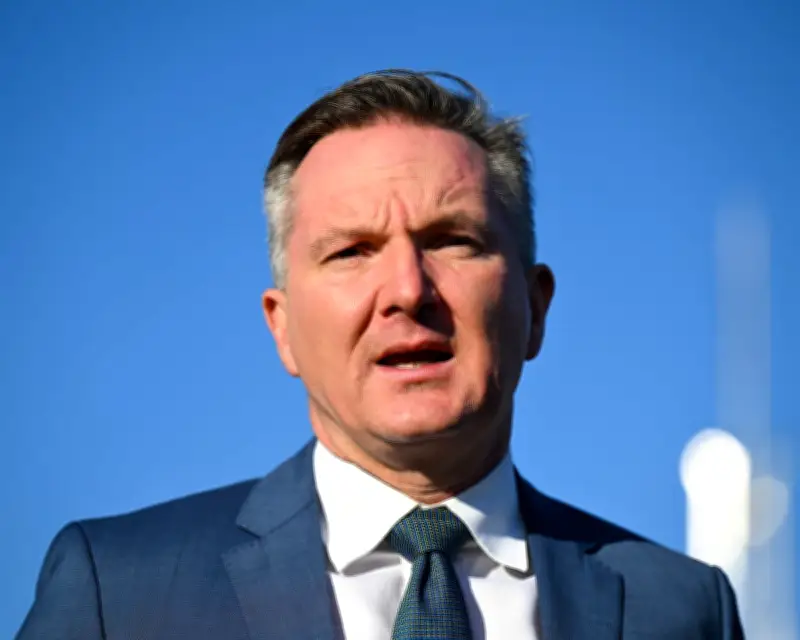
Energy Minister Chris Bowen stated that the scheme allows more households to benefit from Australia's abundant solar energy, regardless of whether they have solar panels. "When the sun is shining at its brightest and power is negative or at its cheapest, then consumers, whether they have solar panels or not, whether they be renters or not, should be able to benefit from that," he said.
How Solar Sharer Works
The free power period runs from 11am to 2pm in NSW, Queensland and Victoria, and from noon to 3pm in South Australia. A daily cap of 24kWh applies, equivalent to a typical five-person household's daily usage, according to the Australian Energy Regulator (AER). Usage beyond this cap is charged at standard rates. Renew, a not-for-profit advocating sustainable living, notes that most households use between 10 and 20kWh daily, making the allowance generous.
Customers need a smart meter to opt in. Homes without one can usually request a free installation from their energy retailer. Retailers with fewer than 1,000 customers are exempt from offering the deal. The scheme is unavailable in other states and territories, and to customers on embedded networks such as private electricity systems in some apartment blocks, retirement villages or shopping centres.
Who Benefits from Solar Sharer?
The Australian Energy Council, representing energy companies, says Solar Sharer is most beneficial for households with batteries, electric vehicles or large, shiftable loads. It also suits people who work from home. To maximise savings, households should shift electricity use into the free window. Renew advises filling home batteries, topping up electric cars, programming hot water systems, and pre-heating or pre-cooling homes during those hours. Timed use of dishwashers, dryers, washing machines and EV fast chargers is also recommended.
Impact on Energy Bills
Solar Sharer is not necessarily the cheapest plan; it is part of the default market offer framework, acting as a benchmark rather than a competitive plan. Retailers may charge higher rates outside the free window to recoup costs. Energy Consumers Australia (ECA) supports the scheme but warns that customers must understand the trade-offs. "We don’t want to have people signing up to these plans assuming it will decrease their bills, when in fact it could do the opposite," the advocacy group says.
Independent energy consultant Tim Forcey cautions that simply running appliances during the day may not suffice. "People need to assess if they can get their money’s worth during the free period," he says, noting potential higher charges or lower solar feed-in tariffs at other times. However, the AER notes broader grid benefits: "Shifting more demand to the middle of the day would lower the cost of the electricity system for all consumers as we don’t need to build as much generation or poles and wires to meet the evening peak."
Other Savings Options
Many retailers already offer plans with free power periods. Examples include GloBird Energy's Four4Free offer (four free hours during the day) and AGL's Three for Free plan in South Australia. An AGL spokesperson says, "The common thread across all of these products is giving customers more control and more ways to lower their bills by shifting energy use and export to the times that deliver the most value to them."
The AER encourages consumers to shop around and check if they are on their retailer's best plan, as retailers must notify customers every 100 days if a better plan is available. Federal and Victorian government comparison sites help find the cheapest deals. With many retailers updating plans after 1 July, it is an opportune time to review options.