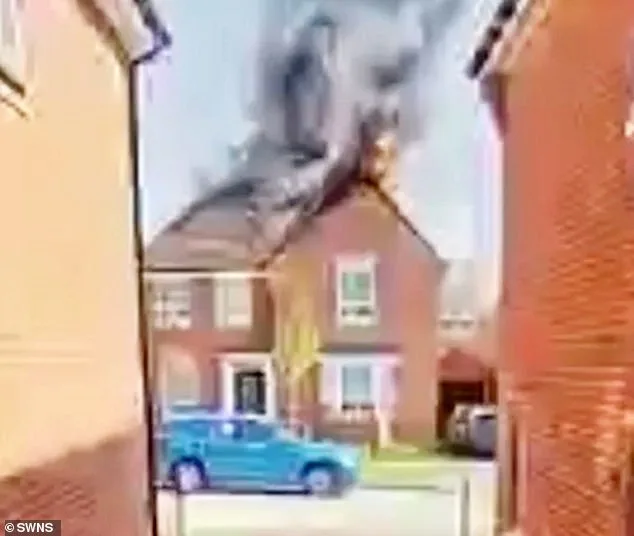
Solar panels are often promoted as a clean and cost-effective solution to transition away from fossil fuels. However, a recent incident might make you think twice before installing them on your home. Terrifying footage has revealed the moment a set of solar panels on a £600,000 new-build home exploded while a family was still inside.
Ring doorbell footage from earlier this week showed the roof of the property in Wellingborough, Northamptonshire, bursting into flames. Neighbours described the terror of watching the family scramble to safety at about 10.30am on Bank Holiday Monday, as the temperature had already hit 22°C. Thankfully, nobody was injured in the explosion after an off-duty firefighter rescued three adults and one child from the four-bedroom detached house. Five fire crews then arrived and worked quickly to control the blaze.
However, the incident raises important questions about the safety of solar panels, particularly as heatwaves become more common. David Whaley and Timothy O'Leary, lecturers in construction at the University of Melbourne, warned in an article for The Conversation: 'The surge in installations, the introduction of batteries, the ageing of panels and components together with more extreme weather events mean solar panel incidents are likely to continue increasing.'
Growing Popularity of Solar Panels
Also known as photovoltaic panels, solar panels convert the sun's energy into electricity. New figures released by the UK government this week show that their popularity is rising in Britain. Last year was the strongest year on record for solar deployment, with 269,000 installations completed across the UK. Around 255,000 of these were rooftop solar, meaning at least 95% of all new solar was installed on homes, businesses and other buildings. This equates to a new rooftop solar installation every 2 minutes throughout 2025.
While this shows that many Brits are embracing clean energy, Electrical Safety First has raised concerns about the safety of solar panels, which they describe as an 'evolving technology'.
Key Safety Issues
The first key issue lies in how solar panel systems run. As there is no switch to turn a solar panel system off, small issues such as leaves under the panels or an electrical fault can turn into big problems. Secondly, most solar panels don't have built-in fire detection systems. This means any problems can rapidly escalate, as seen with the fire in Northamptonshire. Electrical Safety First stated: 'Most solar panels don't have an automatic fire detection system, so a fire can take hold quickly and spread before it is discovered. The design of some solar panel systems can also make it more difficult to reach a fire with water.'
Government Review Findings
Earlier this year, the UK government carried out a review to investigate the fire safety implications of solar panels on rooftops. Worryingly, this flagged several factors that can increase the risk of a fire, including the gap height between the panel and the roof, roof construction materials, and the configuration and spacing of the panel array. The review also highlighted practical challenges for emergency responders, noting that photovoltaic systems operating on direct current introduce persistent electrical hazards even after power disconnection. The presence of PV arrays can obstruct firefighting access to the fire under the panel, impair ventilation systems, and if combined with battery storage, pose chemical or explosion hazards.
Based on the findings, the report's researchers made four key recommendations: use non-combustible roof coverings beneath the solar panels; ensure fire-resistant construction from the exterior inward to mitigate roof penetration; provide guidance on solar panel layout, including minimum gap heights and array segmentation to limit flame spread; and conduct further tests that accurately reflect the modified fire conditions created by solar panels.
What This Means for You
According to Electrical Safety First, the most important thing for Brits considering solar panels is to choose the right electrician. Luke Osborne, Technical Director at Electrical Safety First, said: 'Solar panel fires are generally rare occurrences and households should rest assured that if their installation has been undertaken by a competent professional and inspected and maintained regularly, then their set up should be perfectly safe. However, like any electrical device, solar panels and their systems need to be maintained. Faults can occur more generally from wear and tear over the years, given how exposed panels and their cables are to the elements. Loose connections and a build-up of debris, such as leaves, can all contribute to issues with solar panels later down the line, not only degrading the effectiveness of your system but also creating isolated hot spots and potential fire risk. It's essential people make sure they know the person installing their solar panels is competent and capable of doing it to a high standard.'
Osborne added: 'As with all new technology, it's not unusual for rogue traders to exploit households when interest in installing new devices might be at its highest. To protect yourself, always hire an electrician who is registered with a competent person scheme and qualified in solar PV installation, as this work is an additional qualification. Make sure your system is inspected every few years also, to highlight any wear and tear or faults that may have occurred. We recommend anyone with solar panels has them inspected by a competent and registered electrician at least once every five years.'
How to Ensure Your Solar Panels Are Safe
- Choose a good inverter and ensure it is installed safely: The inverter turns electricity from your panels into normal power. Place it in a cool location, such as a garage, to avoid heat damage. Ask the installer about placement and check the warranty.
- Insist on isolator switches for safety: These emergency shut-off switches near the inverter allow you or firefighters to quickly turn off the system. Confirm they are listed in the quote and properly installed.
- Buy from reputable manufacturers and installers: Quality panels are checked for defects that could cause hotspots or fire. Use MCS-certified installers and avoid unbranded options.
- Ensure proper sealing and waterproofing: Panels must be sealed to prevent moisture ingress, which can cause electrical faults. Ask the surveyor how connections will be protected from weather.
- Make sure connections are not too tight: Over-tightening can crack panels or damage cells. Use a qualified surveyor and get all details in writing.
- Check for a full technical survey of your roof: Assess roof strength, shading, and risks before installation. Never sign a contract without a full on-site survey.