

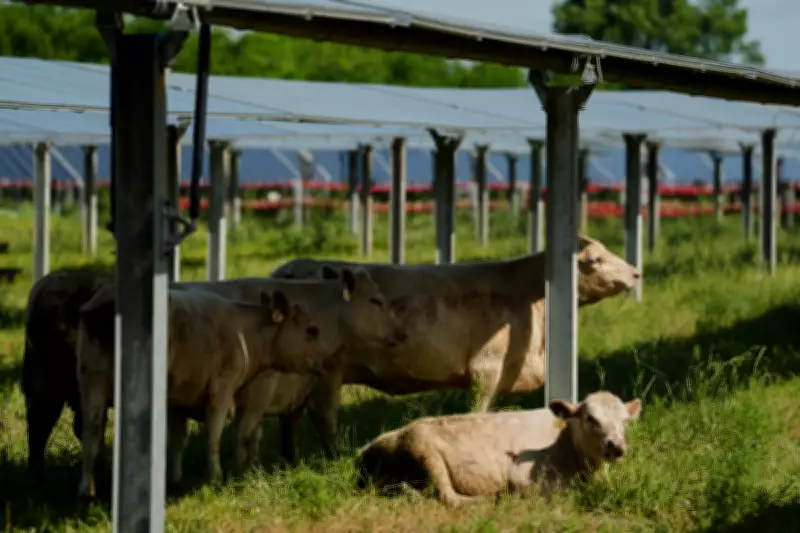
A solar developer in Tennessee is betting that cattle grazing and solar panels can coexist, offering benefits for both farmers and the electric grid. The 40-acre solar farm in Christiana, near Nashville, owned by Silicon Ranch, features lush pasture beneath black panels where a small herd of cattle grazes and rests in the shade.
Agrivoltaics with Cattle
While agrivoltaics typically involves crops or sheep, Silicon Ranch believes cattle grazing is the next frontier. The company debuted the project this week and aims to demonstrate that larger cattle can thrive at solar sites. Success could spur new projects to meet soaring electricity demand from data centers without carbon emissions, while helping cattle producers retain their land.
“Solar is one of the most powerful tools we have for cutting emissions,” said Taylor Bacon, a doctoral student at Colorado State University. “When done well, land use can be more of an opportunity than a downside.”

Overcoming Challenges
Cattle size poses challenges at solar sites, where equipment and animals must be protected. Silicon Ranch raised panels slightly and developed software to turn them horizontal during grazing, allowing cattle room to wander. Workers rotate 10 cows and calves between paddocks every few days, while ungrazed panels generate about 5 megawatts for Middle Tennessee Electric.
“We know it works,” said Nick de Vries, chief technology officer. “But you need to prove it to other people.”
Benefits for Farmers
Agricultural land is easier for solar development, but farmers need convincing. Ethan Winter of American Farmland Trust sees potential for solar grazing partnerships to help farmers earn extra income and keep land in production. “Agriculture is in a tough spot, so maybe this is our moment,” he said.
Silicon Ranch will have nearly 15,000 acres of pasture grazed this year, mostly by sheep, and is working with ranchers and researchers to adopt best practices. Pasture under panels retains more moisture, making it drought-tolerant, and grazing in the shade reduces heat stress, helping cattle gain weight and drink less water.
“There are more win-wins than trade-offs,” said Anna Clare Monlezun, a rancher and scientist on the project.
Economic Incentives
Farmers leasing land for solar earn about $1,000 an acre, often 10 times more than traditional agriculture. This can help diversify operations, pay debt, and buy more land.
“We need to grow America’s energy capacity, but not at the expense of our best farmland,” Winter said.






