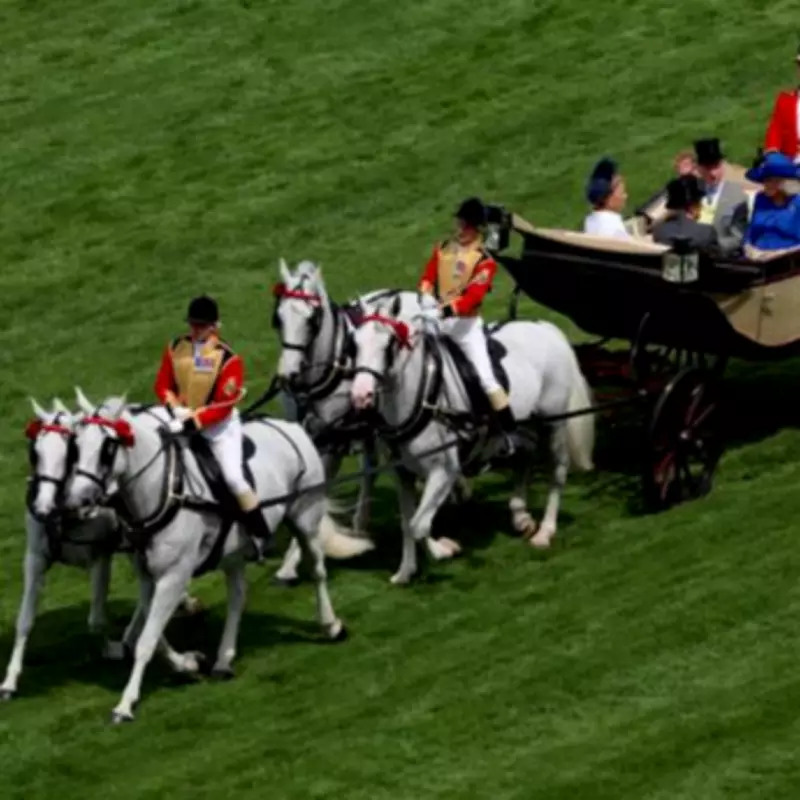
The King and Queen’s traditional Royal Ascot procession, a highlight of the renowned five-day race meeting, is under threat due to a surge in equine influenza cases. Racing authorities are collaborating with Ascot to ensure the daily arrival of the Royal Family and guests by horse-drawn carriage can proceed as planned, despite new biosecurity measures.
Equine Flu Outbreak Prompts Restrictions
Earlier this month, the May 10 race meeting at Plumpton was abandoned after a confirmed case of highly contagious equine influenza and EHV-4 was detected in a non-thoroughbred horse at a livery yard adjacent to the track. In response, the British Horseracing Authority (BHA) announced on Monday that from May 20, only horses from licensed training premises will be allowed to enter racecourse property on race days. This has led to the cancellation of all scheduled hunter chase races and other equine activities at racecourses.
Impact on Racing Events
The popular all-hunter chase evening fixture at Stratford on May 29 is among the highest-profile casualties. A BHA statement explained: “With a continued rise in reported equine influenza cases in the non-thoroughbred population, this is a precautionary measure to prevent any mixing between the thoroughbred racing herd and horses and ponies from yards that are not licensed.”

Retraining of Racehorses (ROR) parades, as well as activities such as petting farms and pony rides for family fun days, will also be suspended under the new rules, which were developed in consultation with infectious disease experts at Equine Infectious Disease Surveillance (EIDS) and the Racecourse Association’s representative on the BHA veterinary group.
Biosecurity Measures for Royal Procession
Discussions are underway with Ascot to ensure that the same biosecurity protocols applied at licensed premises are replicated for the horses used in the Royal procession. This will allow them to enter the racecourse without increasing risk. The BHA confirmed that the restrictions will remain in place until equine flu levels in the British horse population decrease and the threat to the thoroughbred racing herd subsides.
BHA Director of Equine Regulation, Safety and Welfare, James Given, stated: “The news today will understandably be disappointing for many people, but levels of equine flu are higher than at any time in recent history and it’s essential that we take all necessary steps to protect the thoroughbred herd.”
Given added: “These measures follow extensive engagement with independent infectious disease experts about how we further reduce the risk of exposure and ensure the continuity of racing. In addition to vaccination, this can be best achieved by preventing the mixing of racehorses with horses and ponies from premises that are not licensed by the BHA, where we have more limited information about their health and vaccination status.”
Vigilance Urged Across Racing Community
Given expressed encouragement at the racing community’s response to the importance of biosecurity. He urged constant vigilance, particularly regarding horse movement and mixing. “We continue to advise trainers to be extra vigilant with biosecurity on yards and the movement of horses. All new horses entering a yard, including from the sales, should be fully vaccinated and must be isolated for a period of 14 days,” he said.
Trainers and staff are advised to watch for signs of the virus, including raised temperature, harsh cough, or nasal discharge. Rectal temperatures should be recorded daily, and any horse showing symptoms should be immediately assessed by a veterinary surgeon.
The BHA is closely monitoring the rise in equine flu cases across the UK in the non-thoroughbred population. No confirmed cases or clinical signs have been reported within licensed training yards. Most reported cases involve unvaccinated animals, though some have occurred in vaccinated horses approaching their next booster, leaving them with lower immunity.