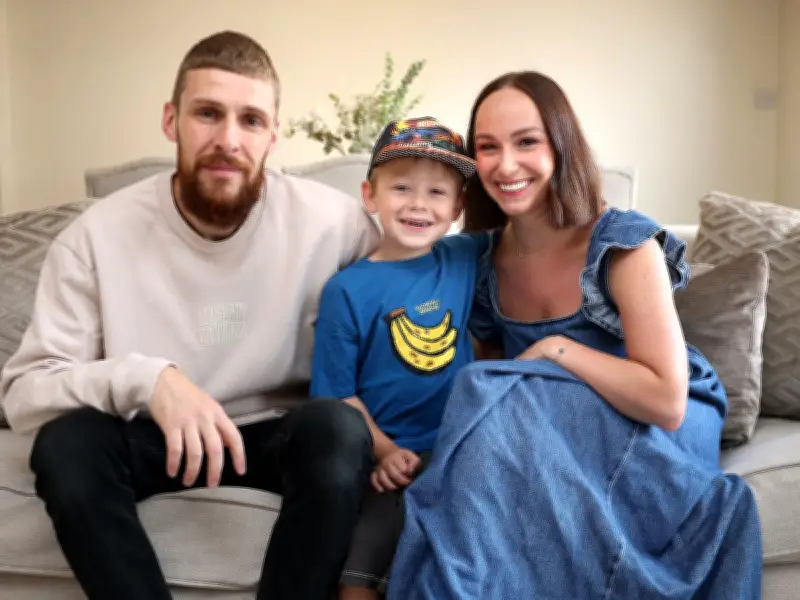
Cassie and Ryan Claydon, from Chadderton, are supporting a bill in Parliament that would allow families to register a stillbirth remotely. The couple lost their daughter Matilda at 36 weeks on September 16 last year after complications during pregnancy.
The couple, who also have a five-year-old son, Myles, said they had been supported by NHS staff at Saint Mary's Hospital in Manchester throughout the process. But their experience was very different when they went to register Matilda at Chadderton Town Hall.
Traumatic visit to the registry office
Under UK law, stillbirths have to be registered within 42 days to officially acknowledge the baby's existence, support public health data, and allow for burial or cremation arrangements. Currently, this has to be done in person.
Ryan said: "We were sat in a room with other families with little boys and girls and newborns happy and celebrating. They were happy and we weren't. It was a difficult scenario to be in when you have just lost your daughter. For us it was a traumatic experience."
The couple looked for another way to complete the process but found it was not possible. However, during the COVID-19 pandemic, registration by phone or post had temporarily been allowed.
Campaign for a change in the law
Cassie said: "I just thought why is nobody doing anything about it? What I found when we were at St Mary's was every part of it, every single moment of it, was heart breaking but the people there were trained to deal with that." She added: "It was like we went from being protected to being right in the thick of it again."
As a result of their experience, the couple approached Oldham MP Jim McMahon. Earlier this month, he introduced a bill to Parliament to make a small change to allow families to register a stillbirth remotely.
Mr McMahon said: "For some families, attending in person will be the right choice and that option must remain. But for others, the ability to register a stillbirth from home, surrounded by loved ones, would provide a small but meaningful act of compassion. Scotland has already shown that remote registration can work, protecting the integrity of the process while giving bereaved families greater choice and flexibility. Government cannot prevent tragedy. But it can ensure that its own systems are compassionate, understanding and fit for the people they serve."
He added: "For Matilda, and for every family affected by baby loss, we can and must do better."
Ryan told the Manchester Evening News: "People do not have go through that traumatic experience of walking to the registry office dealing with families with newborns when they have just lost a child. Just making that process a little bit easier is actually worth doing in my eyes. We know how hard that situation was. For us we know we are doing it for Matilda but we are also doing it because it's the right thing to do. It would have been much easier doing it on the phone or video call surrounded by friends and family. We want families that suffer a loss in the future, we want to give them the option of not going through that process."