Oil markets, currently closed for the weekend, are poised for substantial price swings in the coming week as the repercussions of recent US and Israeli military strikes on Middle Eastern oil supplies remain shrouded in uncertainty. The fallout from these actions has injected a high degree of volatility into global energy markets, with traders bracing for potentially dramatic movements when trading resumes.
Potential Scenarios and Price Impacts
Prior to the latest escalation of tensions with Iran, analysts had outlined several possible scenarios. One forecast predicted a rapid but short-lived price spike if the attacks avoided significant damage to critical oil shipping lanes and infrastructure, such as Iranian pipelines and the Kharg island terminal. However, a more severe and prolonged price increase would likely occur if oil infrastructure or supply chains were substantially disrupted.
Critical Chokepoints and Global Dependencies
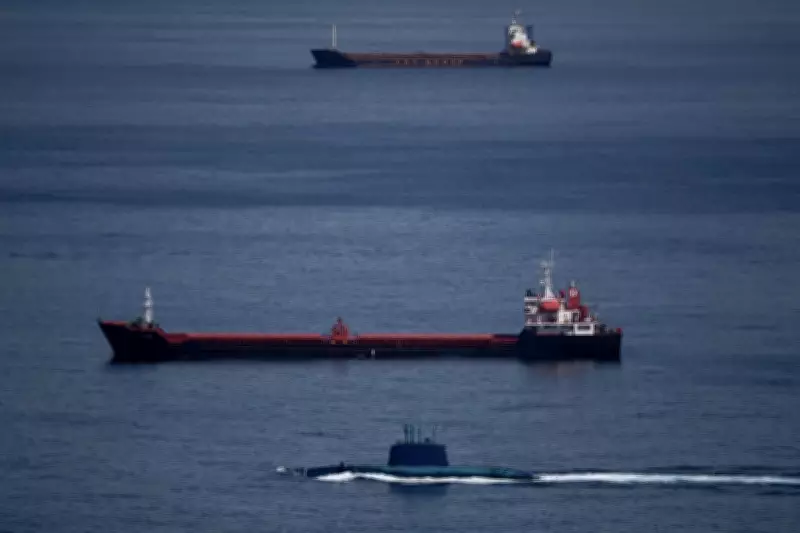
A major concern centers on the Strait of Hormuz, a vital maritime passage through which approximately twenty percent of the world's daily oil supply flows. Key Middle Eastern exporters, including Saudi Arabia, Iraq, and the United Arab Emirates, depend heavily on this route for their shipments. Interestingly, analysts note that Iran has little incentive to attempt to close the strait, as such an action would severely hamper its own exports and damage its relationship with China, its primary customer.

Iran currently exports around 1.6 million barrels of oil per day, with the majority destined for China. Chinese privately owned refineries have shown less concern over US sanctions that restrict Iran from selling oil to other nations. Should this supply be interrupted, Chinese buyers would be forced to seek alternative sources on the global market, potentially driving prices upward due to increased competition.
Pre-Conflict Analysis and Price Projections
According to a prewar assessment from Rystad Energy, limited strikes targeting Iran's nuclear program and the Revolutionary Guard—actions that avoid triggering regime change or a full-scale war—could still provoke a price jump of $5 to $10 per barrel based solely on market fear and speculation.
A more extensive conflict scenario, involving Iranian disruption of tanker traffic through the Strait of Hormuz, could have even more profound effects. Clayton Seigle from the Center for Strategic & International Studies outlined in another prewar analysis that such a situation might push crude oil prices beyond $90 per barrel, with US gasoline prices rising "well above" $3 per gallon. For context, US gas prices averaged $2.98 per gallon last week, as reported by the American Automobile Association (AAA).
Current Market Conditions and Historical Context
Oil prices have already experienced an upward trend due to escalating war fears. The international benchmark Brent crude closed at a seven-month high of $72.87 per barrel on Friday, reflecting the market's nervous anticipation of further supply disruptions. This increase underscores the sensitivity of global oil markets to geopolitical instability in the Middle East, a region long regarded as a linchpin for worldwide energy security.
As the situation develops, market participants will be closely monitoring any new military actions, diplomatic developments, and operational reports from the region. The interplay between geopolitical risk and physical supply constraints will likely dictate the trajectory of oil prices in the near term, with potential ramifications for global economies, inflation rates, and consumer energy costs.