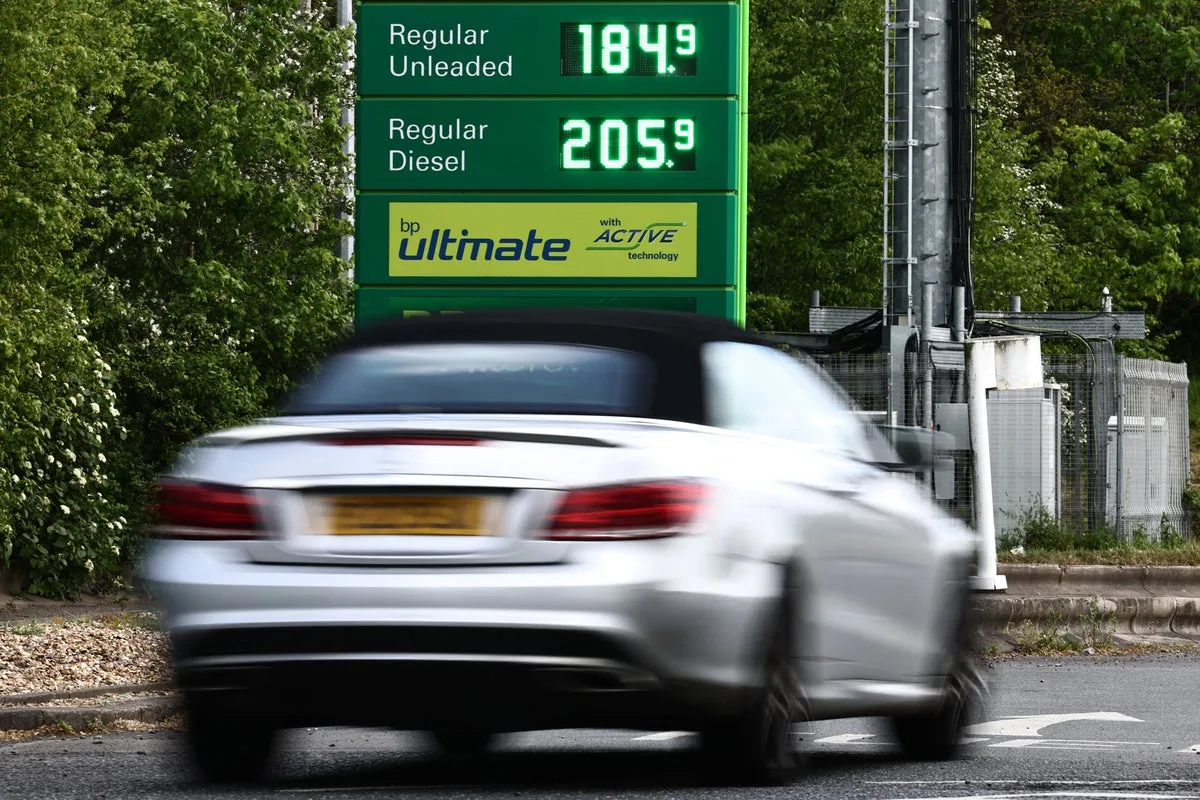
Oil prices remained elevated above $105 a barrel on Friday as the Strait of Hormuz stayed shut following escalating naval hostilities between the United States and Iran. Brent crude rose 0.63 per cent to $105.73, while US West Texas Intermediate advanced 0.32 per cent to $96.17, with no sign of a resolution to the standoff that has halted shipping through the vital waterway.
Asian equity markets were mixed despite the persistent energy pressure. MSCI's broadest index of Asia-Pacific shares outside Japan gained 0.3 per cent, on track for a weekly rise of 0.8 per cent, while Japan's Nikkei added 0.45 per cent. However, stocks in South Korea, China and Hong Kong fell. US futures pointed higher after a weaker close overnight, while European futures indicated a softer open.
The broader US-Iran ceasefire remains in place, but the conflict has evolved into duelling naval blockades as both sides seek economic leverage. Iran seized two cargo ships on Wednesday and continues to demand vessels receive its permission to cross the strait, while the US has intercepted several Iranian oil tankers and maintained a blockade of Iran's ports since 13 April. A Commonwealth Bank of Australia note warned that the longer the closure lasts, the greater the economic costs, raising the likelihood that one side will be forced to back down—with the bank judging the US would concede first given mounting political and economic pressure, though cautioning that the risk of major military escalation remains.
Analysts expressed scepticism over a quick resolution. Vishnu Varathan, head of macro strategy for Asia-Pacific at Mizuho, told Reuters: "The thing is, a ceasefire is a funny term to use in conjunction with a blockade and rolling tensions and animosities. It's not going to be a linear de-escalation. I don't think anybody in the market truly believes that this will be over in a week or two." Fatih Birol, head of the International Energy Agency, described the situation as "the biggest energy security threat in history," noting that around 20 million barrels of oil and petroleum products were shipped through the strait daily before the war began, with 13 million barrels per day now lost.
Currency markets were relatively calm, with the euro falling to $1.1684 and sterling holding at $1.3469. The Japanese yen edged to 159.78 per dollar, just below the 160 level widely seen as a potential trigger for intervention, as Japan's finance minister renewed warnings of decisive action. Central bank decisions from the Federal Reserve, European Central Bank and Bank of England are all due next week, with investors watching for guidance on how policymakers plan to respond to war-driven inflation. Gold was flat at $4,691.60 an ounce.