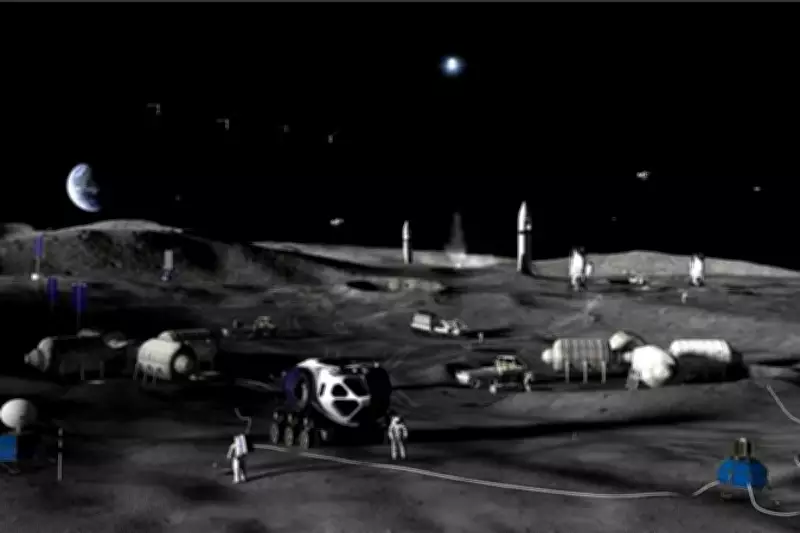
NASA has intensified its efforts to establish a base on the moon, unveiling a detailed timetable for the ambitious project. The space agency announced on Tuesday that early habitation on the lunar surface is slated for 2029, with the first missions toward building the base launching before the end of this year.
First Missions and Partnerships
The initial mission, set to launch this fall, will involve an uncrewed lunar lander from billionaire Jeff Bezos' aerospace company Blue Origin. This marks the first privately-funded lunar lander mission in history. The lander will test landing capabilities and deploy multiple science payloads at the moon's South Pole.
Two additional missions are scheduled by year's end. The second will deliver the largest commercial payload to the lunar surface, including a rover from AstroLab. The third will transport payloads from the European and Korean Space Agencies. These represent the first of over a dozen missions NASA plans to announce in the coming months.

Commercial Partners and Technologies
NASA also revealed several other commercial partners. AstroLab and Lunar Outpost have been selected to develop lunar terrain vehicles. Astronauts will drive AstroLab vehicles, which can reach speeds of up to 10 kilometers per hour and navigate slopes of 20 degrees, according to program executive Carlos García-Galán. Lunar Outpost's autonomous vehicles will map terrain to identify potential sites for the future moon base.
Lunar drones, carried by a Firefly spacecraft in a mission known as Moonfall, will also assist in site selection. These drones will characterize the radiation environment, help establish a moon base perimeter, guide lunar landings, and assess terrain. Additionally, they will prospect for water and ice beneath the lunar surface.
Phased Approach
The first phase of the moon base program involves 25 launches, 21 landings, and the delivery of 400 metric tons of cargo. This phase will pave the way for phase two, which includes assembling semi-permanent infrastructure and achieving early habitation by 2029.
NASA Administrator Jared Isaacman emphasized the importance of the project, stating, "We are leveraging the NASA playbook from the 1960s, figuring out what works and what doesn't in this epic science of survival, because the moon base is as beautiful as it is hostile." The base will serve as an outpost for Artemis astronauts, supporting missions farther from Earth, including eventual journeys to Mars.
Lori Glaze, acting associate administrator of NASA’s Exploration Systems Development Mission Directorate, added, "With the moon base, Artemis astronauts will stay longer, explore farther and conduct the kinds of science that advances exploration itself, understanding how humans operate off world, how we build infrastructure and how we prepare for Mars."