

Iran War Energy Crisis Spurs Nuclear Power Expansion Across Asia and Africa
The global energy shock triggered by the Iran war is compelling numerous nations across Asia and Africa to significantly bolster their nuclear power generation capabilities. This strategic shift is seeing countries with existing nuclear infrastructure increase output, while non-nuclear states are accelerating long-term plans to adopt atomic energy, aiming to insulate themselves from future fossil fuel market volatility.
Global Energy Disruptions Drive Strategic Reevaluation
Asia, the primary destination for Middle Eastern oil and natural gas, felt the initial and most severe impact from disruptions to critical shipping routes. Africa swiftly followed, experiencing similar energy supply challenges. The ripple effects have also driven up energy costs in the United States and Europe, underscoring the conflict's widespread economic consequences.
Nuclear power, while not an immediate solution to the current crisis, is being locked into future energy strategies. Developing atomic energy can take decades, particularly for nations new to the technology. However, as noted by Joshua Kurlantzick of the Council on Foreign Relations, the long-term commitments being made now are likely to cement nuclear power's role in national energy portfolios for years to come.

Asia's Accelerated Nuclear Ambitions
In Asia, energy triage efforts span from increased coal consumption to purchases of Russian crude. Nations with operational nuclear plants are now focused on maximizing output from existing reactors.
- South Korea is ramping up generation at its nuclear facilities and expediting maintenance on five offline reactors, with restarts scheduled for May.
- Taiwan is debating the complex, years-long process of restarting two mothballed reactors, a move prompted by the current crisis that will require rigorous safety inspections and system verifications.
- Japan is reversing post-Fukushima policies. Since the war began, Prime Minister Takaichi Sanae has signed a $40 billion reactor deal with the U.S., a nuclear fuel recycling agreement with France, and pledged nuclear cooperation with Indonesia. Japan restarted the world's largest nuclear plant, Kashiwazaki-Kariwa, in January.
While renewables like solar and wind are championed for affordability and security by analysts such as Michiyo Miyamoto, historically high electricity costs combined with the Iran war crisis are shifting Japanese public opinion toward greater acceptance of nuclear power.
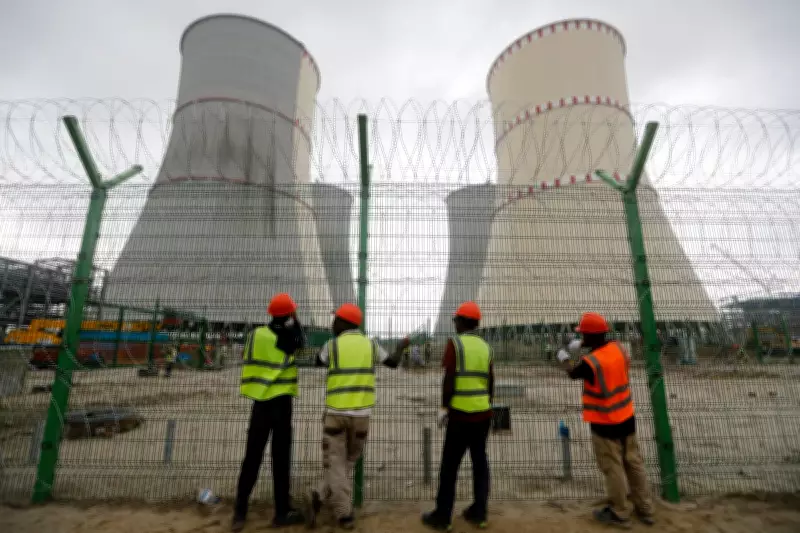
In South Asia, Bangladesh is racing to activate new reactors built by Russia's Rosatom, hoping to add 300 megawatts to the national grid by summer to alleviate gas shortfalls. Vietnam signed a deal in March for two Russian-designed reactors, and the Philippines, having declared a national energy emergency, is considering reviving a plant built after the 1973 oil crisis but never operated.
Africa's Nuclear Energy Aspirations Gain Urgency
Soaring energy prices and power shortages across Africa have ignited public calls for nuclear cooperation and revitalized interest in long-term plans, which are now underway in over 20 of the continent's 54 nations.
With Africa viewed as a key growth market for atomic energy, nuclear powers including the U.S., Russia, China, France, and South Korea are promoting advanced technologies like small modular reactors (SMRs) as solutions to energy deficits. These SMRs offer a cheaper, more compact alternative to traditional large-scale plants.

- Kenya plans to bring a small modular reactor online by 2034, a project initiated in 2009. Officials state nuclear energy is now a "strategic necessity" for African nations.
- Rwandan President Paul Kagame recently stated Africa will become "one of the most important global markets" for smaller reactors, which can provide scalable, low-emission base load power suited to the continent's rising demand and weak grids.
- South Africa, home to the continent's only existing nuclear plants, aims to increase nuclear's share in its energy mix from around 5% to 16% by 2040, viewing SMRs as a way to position itself at the forefront of advanced nuclear technologies.
Geopolitical Competition and Inherent Risks
The push for nuclear energy coincides with intensified competition for influence in Africa between Washington and Moscow. Russia's Rosatom is building Egypt's first reactor and has cooperation agreements with several African nations. The U.S., while currently having fewer partners in its modular reactor initiative, is actively trying to catch up, sponsoring conferences and offering collaboration on secure civil nuclear projects.
Despite growing interest, significant risks persist. Nuclear energy carries the potential for meltdowns, mismanaged radioactive waste, and could facilitate nuclear weapons proliferation. Advocacy groups warn it may perpetuate reliance on imported fuels like enriched uranium. Furthermore, as noted by Rachel Bronson of the Bulletin of the Atomic Scientists, nuclear plants are vulnerable targets during conflicts, as seen in recent wars.
Experts like Rex Amancio of the Global Renewables Alliance argue that governments should maintain focus on expanding renewables for long-term security. Nevertheless, the Iran war's energy shock is forcing nations in Asia and Africa to weigh these nuclear risks against the acute dangers of fossil fuel supply disruption, driving a palpable global "nuclear renaissance" as countries seek stable energy alternatives.





