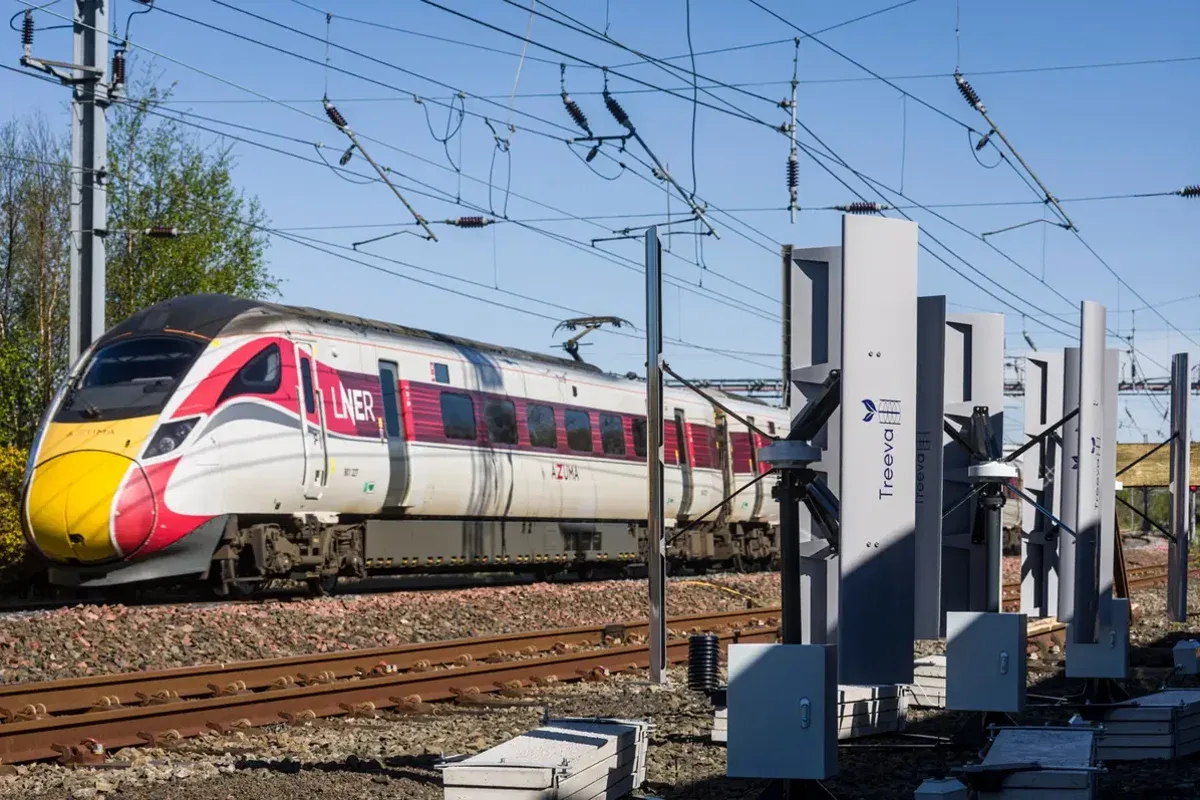
For the first time in the UK, wind turbines have been installed alongside a main railway line to generate electricity from the gusts created by passing high-speed trains. Rail company LNER has set up three experimental turbines at Hitachi Rail's Craigentinny depot in Edinburgh, in partnership with clean energy infrastructure firm Treeva.
The six-foot-tall devices, named 'Windiana Jones', 'Sir Spins-a-lot' and 'AC Breezy', are made from upcycled materials and require no grid connection, allowing them to be deployed easily on unused railway land. They are the first turbines to be operated next to a UK main line, and LNER said the trial could pave the way for a wider rollout across Britain's rail network.
The clean energy generated will be measured and used to power devices such as lighting, CCTV cameras and passenger information screens. According to LNER, a single turbine can power a third of a small station's lighting needs, four CCTV cameras or two passenger information screens. Five turbines have the capacity to reduce emissions by more than 12,000 kilograms of CO2 each year, equivalent to planting 500 trees.
The project emerged from the Future Labs rail industry innovation scheme, which pairs rail operators with technology start-ups. Treeva co-founder and chief executive Anjali Devadasan said the goal was to transform the way transport infrastructure is powered, capturing energy created by passing trains and turning unused land into a meaningful source of clean power. Mark Haymer of LNER called the installation 'a really exciting' step that could make rail travel 'even greener', praising the partnership between Treeva, Hitachi, Network Rail and LNER.
The trial follows a separate scheme in 2019, when a solar array at Aldershot began providing some of the power for passing trains. That project, known as Riding Sunbeams, has prompted significant interest in using solar power on rail lines, with Network Rail subsequently seeking suppliers.