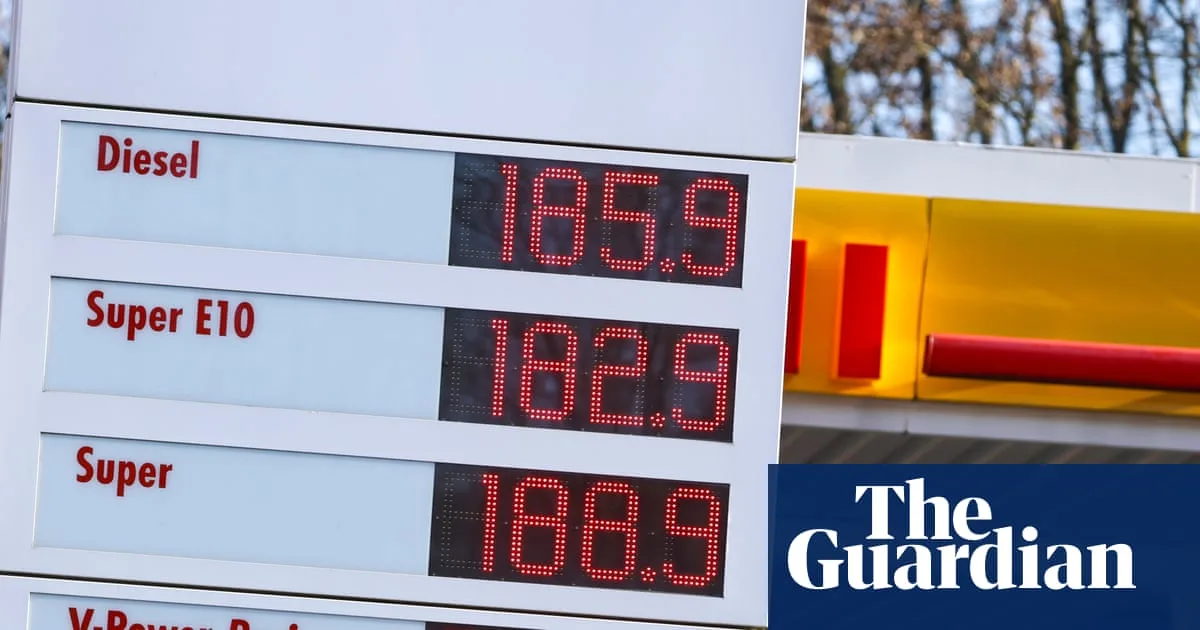
Oil prices rose again on Thursday after reports that an Iranian missile struck a US-registered tanker in the northern Persian Gulf, with Brent crude climbing 3.3% to $84 a barrel. Meanwhile, Asian stock markets rebounded from heavy losses earlier in the week, with South Korea’s KOSPI jumping nearly 10% and Japan’s Nikkei rising 1.9%.
Gas prices also pushed higher, with UK gas up almost 1% and European natural gas futures climbing 2%. Qatar, the Gulf’s largest liquefied natural gas producer, suspended activity at its facilities on Monday and declared force majeure on gas exports on Wednesday, freeing it from contractual obligations. A return to normal production could take at least a month, according to Reuters sources.
In London, the FTSE 100 index slipped 0.3% in early trading but later rose 60 points, or about 0.5%. Wizz Air warned of a €50m (£43m) hit to annual profits due to cancelled flights to Israel, Dubai, Abu Dhabi and Amman until 15 March, as well as higher jet fuel costs. The airline’s London-listed shares fell as much as 6%.
China’s government told its biggest oil refiners to halt exports of diesel and gasoline amid disruption to crude supplies, according to Bloomberg. In South Korea, a ruling party lawmaker warned that the conflict could disrupt supplies of semiconductor manufacturing materials, while the chip industry expressed concern about higher energy costs.
Stephen Innes, managing partner at SPI Asset Management, said the geopolitical backdrop “remains as combustible as ever” but noted that intelligence suggests Iran’s conventional military capacity is deteriorating quickly. He also pointed to solid US economic data as a positive factor.