

Fuel Crisis Forces Mass Departure of India's Urban Migrant Workforce
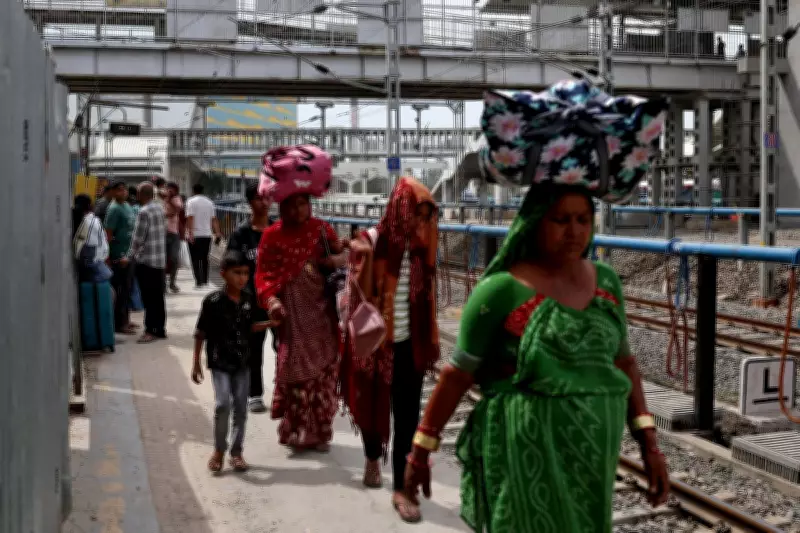
Bulging rucksacks, tightly secured with rope and containing nearly all worldly possessions, hang from the shoulders of migrant workers navigating through the dense crowds at Delhi's primary railway station. These informal labourers are quietly departing the bustling capital where they once sought employment, returning to villages and small towns as a severe energy supply disruption ripples through India's economy.
Strait of Hormuz Closure Creates Cooking Fuel Catastrophe
The exodus reflects mounting desperation among daily wage earners who now struggle to afford even basic meals. At the heart of the crisis lies cooking fuel scarcity. Iran's retaliatory closure of the Strait of Hormuz – a critical global energy artery – has severely tightened liquefied petroleum gas supplies to India, transforming household cooking gas cylinders into scarce and expensive commodities.
Although a fragile ceasefire has been established between Iran and the United States, the strategic waterway remains closed, with oil prices persistently hovering around $100 per barrel. The gas shortage has already forced numerous small businesses to shut down and triggered widespread job losses, representing just some examples of the spiralling fallout from the Middle East conflict.

Personal Stories of Struggle and Survival
Roshan Kumar, a 20-year-old labourer, stands at New Delhi railway station with his wife and brother, preparing to return to his hometown in Ludhiana. Fearing a repetition of the chaos and suffering witnessed during the Covid pandemic, the family decided to depart before conditions deteriorated further.
"We are going back," Kumar states while lowering his oversized bag. "What's here for us now when we cannot even eat?"
He explains that an LPG refill in the informal market now costs approximately Rs 400 (£3.20) per kilogram, roughly four times the standard price. Earning between Rs 400-450 daily as a labourer, Kumar would need an entire week's wages to purchase even a modest 5kg cylinder.
"What will I save and how will I survive? People like me come to big cities to earn and send money home. Now I might have to beg to eat," he reveals.
Kumar packed his single-burner stove, connecting pipe, and basic utensils into a white rucksack after selling his empty gas cylinder for Rs 250 (£2), having failed repeatedly to secure a refill.
Structural Vulnerabilities Exposed
For India's urban poor like Kumar, the impact of the Middle East conflict proved immediate. The South Asian nation imports nearly 60 percent of its consumed LPG, with approximately 90 percent of those imports traditionally passing through the Strait of Hormuz.
In the absence of widespread piped cooking gas infrastructure, most households depend on LPG cylinders – squat metal containers placed on kitchen floors and connected via rubber hoses to stoves. While registered consumers can access subsidised refills through government-approved distributors, others rely on informal channels that have become both costlier and increasingly inaccessible during the supply crunch.
Families Confront Impossible Choices
Not far from Kumar's family, on the railway station steps, Ram Vilas Yadav waits with his wife, three children, and brother for a train to Buxar in Bihar. The family exhausted their gas supply 25 days earlier and have been relying on meals from a nearby eatery.
"We have no option but to leave," Yadav declares. "How long can we keep eating from the restaurant and burning our savings? Even the local restaurants have raised prices."
He spent days attempting to secure a refill, standing in queues and pleading for assistance. "I stood in queues and almost begged people to help me, but everyone seemed helpless," he explains while holding his youngest child.
Beside him, his wife struggles to contain tears. "No one leaves by choice. It is these circumstances that are forcing us to go back. It feels like we don't belong here."

Echoes of Pandemic Displacement
At the same platform, Lakhe Chauhan, a construction labourer, prepares to return to his Bihar village after failing to find work for almost two weeks. Chauhan previously lived with his son, daughter-in-law, and their two children in a compact two-room Delhi apartment.
"The rooms are already so small here. There's no option to cook with firewood. At least in Bihar we will be able to cook on a chullah," he says, referring to traditional firewood stoves.
Chauhan notes this marks the second time he has been compelled to leave the city following the Covid lockdown, expressing uncertainty about whether he could endure returning for a third attempt. "There is no gas, no work, and no hope here. We don't want to die here starving as we cannot afford outside food every day."
Scale of the Migration Challenge
Delhi alone hosts an estimated three million of India's 54 million migrant workers, according to labour ministry data based on the 2011 census. Experts suggest the actual number is likely substantially higher given years of population growth, with India only recently commencing its first census in fifteen years.
Asha Kumari, a domestic worker from Badaun in Uttar Pradesh, weighs her options as her gas cylinder nears depletion. Widowed during the Covid pandemic, she independently supports two children.
"I'm trying to stretch it as much as possible," she explains, adding that she now cooks just once daily. "Sometimes we get leftover food from the houses where I work, which helps."
She recognises this approach is unsustainable and plans to depart once the cylinder empties completely.
Government Response and Structural Criticisms
The Indian government maintains that LPG supplies remain stable and sufficient, while police claim to be cracking down on black market activities. On 6 April, the petroleum and natural gas ministry reported that more than 180 million LPG cylinders had been delivered since 1 March, averaging approximately five million daily.
The ministry also indicated that 97 percent of bookings now occur online, with nearly 90 percent of deliveries verified through one-time passwords to prevent diversion. However, these systems primarily serve people with legal connections requiring housing documentation that most migrants lack.
Prime Minister Narendra Modi came closest to acknowledging disruptions when urging citizens to remain calm and prepared during a parliamentary address, noting that the war had created "difficult global conditions that may persist."
Modi invoked the Covid lockdown experience, encouraging the "nation to remain prepared and united, just as it had stood together during the Covid pandemic." He added, "We faced similar challenges during the Covid crisis with unity. Now again, we must prepare in the same way." These remarks triggered significant online anxiety, with "India lockdown again" trending on social media platforms.
Systemic Failures and Advocacy Concerns
In a relief measure following gas supply disruptions, the government began permitting migrant workers to purchase 5kg LPG cylinders using basic identification. Nevertheless, labour advocates warn that the crisis exposes deeper structural deficiencies.
Nirmal Gorana, convener of the National Campaign Committee for Eradication of Bonded Labour, compares the situation to a disaster. He highlights the continued failure to properly register unorganised workers under the Interstate Migrant Workmen Act of 1979, legislation designed to regulate their employment and welfare.
"This is an absolute injustice for migrant workers as the government is not able to ensure proper and accurate registration," Gorana asserts. "If the state can get this right, it would be a crucial first step in restoring dignity to the largely invisible labour force that sustains our cities."
For those attempting to return home, Gorana urges immediate government intervention to manage the exodus systematically. "There should be counselling, awareness campaigns, and clear public announcements to prevent confusion. Right now, people are standing in long queues, and panic is inevitable. Panic, in such circumstances, is only natural."





