Dublin Fuel Blockades Spotlight Europe's Costly Oil Dependency
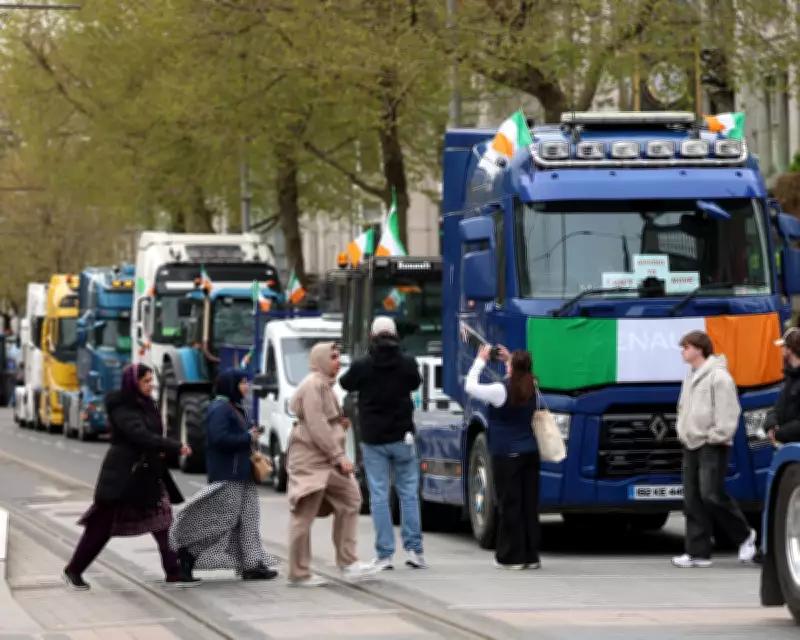
In a dramatic display of public discontent, a convoy of vehicles brought O'Connell Street in Dublin to a standstill earlier this month, protesting against soaring fuel prices. Truckers and farmers, claiming severe financial distress, blockaded key infrastructure including ports, fuel depots, and Ireland's sole refinery. Their anger was primarily directed at fuel taxes, rather than international energy companies or geopolitical actors like Donald Trump.
Political Bafflement and Concessions
The protests created an unusually destabilising moment for Ireland, catching the political establishment off guard. Had ministers studied similar grassroots mobilisations elsewhere in Europe, such as France's Gilets Jaunes or recent German and Italian tractor protests, they might have anticipated the unrest. After a tense six-day stand-off, the government capitulated, cutting excise duties on diesel and petrol and offering financial handouts to hauliers and agricultural contractors. Most significantly, it delayed a planned carbon tax increase by six months.
Professor Hannah Daly, a sustainable energy expert at University College Cork, described the €505 million rescue package as effectively a "ransom" to the fossil fuel system. "It has artificially shielded motorists and others dependent on fuel from an international crisis," she noted, "but this is temporary relief at huge expense that everybody is paying for."

Broader European Implications
The frustration over fuel prices is now reverberating across much of Europe. Energy experts express concern that larger economies like Germany and Poland may opt for blanket fuel subsidies rather than targeted income support for vulnerable groups. Campaigners have criticised Germany's reluctance to implement measures such as autobahn speed limits to reduce petrol demand.
On Wednesday, the European Commission outlined plans to provide relief from the energy shock, proposing tax cuts favouring electricity over oil and gas. Brussels also announced targets to electrify all road transport. "That could be done," Professor Daly asserted, "there are huge strides in battery technology that make it a no-brainer for any new car, van or bus."
The Electric Vehicle Paradox
Despite a 51% surge in electric vehicle sales across continental Europe in March—partially driven by geopolitical tensions including Donald Trump's conflict with Iran—96% of the EU transport fleet still runs on petrol or diesel. In contrast, Norway boasts 32% electric passenger cars. Ireland, with its exceptionally high reliance on road transport, had registered only one electrified heavy goods vehicle by April this year.
Professor Daly highlighted the irony that Europe's climate policies and geopolitical pressures are now aligned. The EU's Green Deal offers real and affordable alternatives even in fossil fuel-dependent economies like Ireland's, though significant barriers remain. "It's too late to say I told you so," she remarked, "but if we had moved faster we wouldn't be facing this pain."
Contrasting Approaches and Future Lessons
Spain and Denmark, which made early generous investments in domestic renewables, are now enjoying lower and more stable electricity prices. Meanwhile, Ireland's fuel blockades have unleashed unhelpful culture-war and climate-sceptic narratives. However, Professor Daly believes the protests may mark a turning point toward cleaner energy use. The tactics deployed demonstrated the alarming price of fossil fuel vulnerability more effectively than any climate protest could.
Nordic countries like Sweden dramatically reduced their exposure to energy shocks after the 1973 oil crisis through bold solutions including home insulation and extensive public transport. The current fossil fuel crisis could be Europe's last, Professor Daly suggested, "but only if the right lessons are learned."