Cubans Turn to Solar Solutions Amid Deepening Energy Crisis
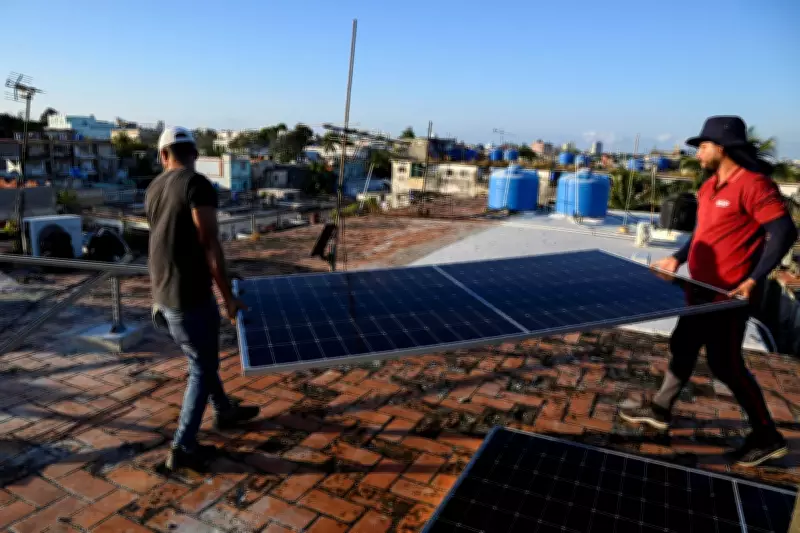
Cubans are increasingly adopting solar power, urgently installing panels on residences, commercial properties, and even vehicles, as the island faces prolonged and severe electricity blackouts. This escalating energy predicament is primarily linked to Washington's persistent efforts to block oil shipments to the Caribbean nation, intensifying pre-existing deficits in power generation.
For years, stringent US sanctions coupled with a profound economic downturn have critically impaired the Cuban government's capacity to secure adequate fuel supplies. The situation has deteriorated further in recent times due to a marked decline in shipments from traditional suppliers like Venezuela and Mexico, reportedly pressured by US tariff threats.
Government Efforts and Private Initiatives
While the Cuban administration, bolstered by Chinese financial support and equipment donations, has made significant progress—installing more than 1,000 megawatts of solar generation in the past year and vowing to double this capacity—many private citizens are now taking independent action to secure their energy needs.

Havana resident Roberto Sarriga detailed his motivation to Reuters, stating, "Given the frequent outages, which pretty much stop you from doing anything, a friend offered to help me invest in panels and set everything up." For Mr Sarriga, the solar panels serve as vital lifelines, enabling internet connectivity, charging his phone for communication, and powering a television to entertain his elderly mother with her favourite soap operas.
He emphasised, "The idea was to at least have the basics covered." Although these panels, imported and sold in US dollars, remain prohibitively expensive for most Cubans, they offer a viable solution for a growing segment of private entrepreneurs and individuals receiving remittances from relatives overseas.
Economic Incentives and Rising Demand
In a bid to promote such investments, the Cuban government announced new measures late on Thursday, offering personal tax exemptions for up to eight years to business owners who undertake renewable energy projects. Solar panel installer Raydel Cano, who services homes and private businesses across Havana, reported to Reuters that demand has surged as fuel supplies have dwindled in recent weeks, leaving those reliant on gas or diesel generators stranded.
"Private businesses see themselves obligated to install panels," he noted, highlighting that alternative power sources have largely become obsolete as the national grid falters. Dariem Soto-Navarro, a Havana cafe manager, explained that despite the higher upfront costs, solar power is the preferable option due to the increasing difficulty of purchasing diesel.
"In addition to being clean, green energy, it optimises operating costs," he said. "It is without a doubt one of the best solutions for entrepreneurs and private businesses."
Innovative Adaptations and Broader Implications
Alejandro Arritola, who operates a tricycle-taxi fitted with solar panels on its roof, told Reuters he installed the system to extend his travel range when gasoline runs out. "It extends my range and I don't have to use any gasoline," he remarked, adding that his family maintains mobility despite the shortages. "If there's no public transportation, it doesn't matter."
The Trump administration asserts that its measures are designed to increase pressure for political reform in Cuba. On Wednesday, White House press secretary Karoline Leavitt commented that it is in Cuba's "best interest to make very dramatic changes very soon." Meanwhile, the United Nations has cautioned that unmet energy needs could precipitate a humanitarian crisis on the island, which is already grappling with severe shortages of food, fuel, and medicine, prompting rationing measures to safeguard essential services.
In a potential respite, Russia, one of Cuba's few remaining oil suppliers, is reportedly preparing to dispatch crude oil in the near future, as indicated by Izvestia newspaper last week, though no specific date was provided.