
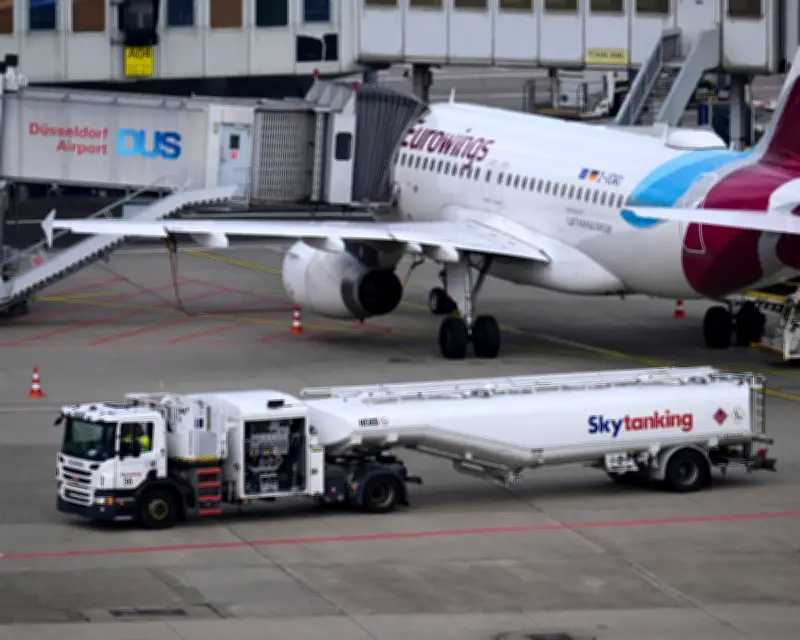
Airlines will be forced to spend an additional $100bn on jet fuel this year, with ticket prices set to rise inevitably as a result of the conflict with Iran disrupting oil supplies. The International Air Transport Association (Iata) has reported that jet fuel costs are expected to be 70% higher across 2026, causing collective industry profits to halve to $23bn. Some carriers may struggle to survive the fuel price shock triggered by the closure of the Strait of Hormuz in March.
Iata Director General Comments
Willie Walsh, Iata's director general, stated: 'High oil prices will inevitably mean higher ticket prices. There's just no way to avoid that.' He noted that industry polling indicates passengers are now prepared for higher fares and willing to spend more, but added: 'The big unknown is how long travellers and shippers can tolerate the higher costs of connectivity.'
Challenging Times Ahead
Speaking at Iata's summit in Rio de Janeiro, Walsh described the current period as 'challenging and unpredictable,' with 'wafer-thin margins.' He warned: 'It's going to be very challenging and for a lot of airlines the increase in the fuel bill is potentially existential.' However, Walsh downplayed concerns about fuel shortages, stating they are now over despite soaring costs, and compared the situation favourably to the Covid-19 pandemic. 'You're looking at an industry that is still profitable and still forecasting growth,' he said. 'Traffic is up 2%. If you factor out the impact on the Middle East for the rest of the world it remains a pretty positive environment.'
Impact on Passengers
Long-haul and business passengers may face the bulk of fare increases, according to British Airways chief executive Sean Doyle. Speaking on the conference sidelines, Doyle said: 'There's no getting away from it – if fuel goes up, fares have to go up.' However, he suggested that more price-sensitive short-haul holiday flights would be the last to rise. 'A brand like BA, which has got a lot of long haul, a lot of corporate, a lot of premium; we'd expect maybe to have more pass-through of prices than maybe a carrier who's solely competing for leisure short haul.'
Passenger Preparedness
According to Iata research, around half of passengers are prepared to spend substantially more on fares if they track oil prices. Walsh said this 'bodes well' for a strong northern summer season. Industry data shows more British and European travellers will fly within Europe than usual, with fewer venturing further due to continued uncertainty around Gulf hubs.
EU Entry-Exit System Concerns
Iata warned that the EU's entry-exit system (EES) could create difficulties for travellers this summer and beyond. The body called on Europe to rewrite legislation to allow flexibility to pause border controls beyond the current deadline of 7 September for full biometric checks. Rafael Schvartsman, Iata's vice-president Europe, said: 'I think Europe needs to be much more honest about where we are.' Under the new system, most non-EU citizens will be fingerprinted and photographed, with details uploaded to a central database. Schvartsman added: 'Normally, we would process a passenger in 20 to 25 seconds, and you're already stipulating that it will take 90 seconds, and on top of that you have unreliability of the systems, the probability that people will be waiting in lines for a long time is very, very high.'
Travellers to the EU face potential long waits at passport control. Greece has already unilaterally announced it will not carry out EES checks on UK nationals, but Schvartsman said exempting one nationality cannot resolve the issue for many airports. 'We also have high demand for American carriers already putting extra flights to European destinations during the summer. You will have an influx of US citizens too,' he noted.




