

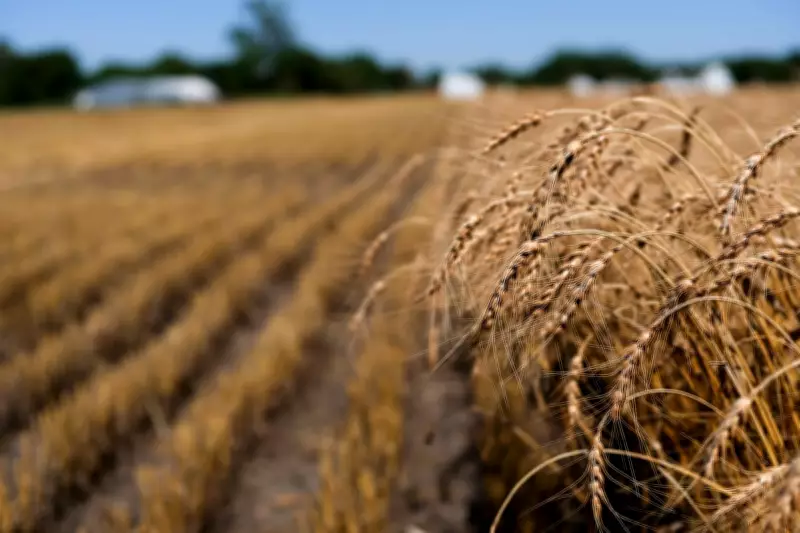
Wheat is normally a resilient crop, but extreme conditions in the Great Plains have severely harmed this year's harvest, leaving farmers facing significant losses. Merrill Nielsen, who farms 2,500 acres in north-central Kansas, saw his crop destroyed by volatile weather. After a warm, dry winter and extreme temperature swings, his fields are expected to yield only two bushels per acre, compared to the normal 45 to 55 bushels. He has decided not to harvest the minimal wheat that grew.
Historic Heat and Drought
Kansas and Oklahoma experienced their second-warmest year from March 2025 to March 2026, with March temperatures 10 to 11 degrees Fahrenheit above normal, according to Shel Winkley, a meteorologist at Climate Central. This extreme heat exacerbated drought conditions, leading to one of the poorest winter wheat crop conditions in recent history. The USDA reports that 44% of Kansas's and 49% of Oklahoma's wheat is in very poor to poor condition.
Climate Change Fingerprints
Winkley attributes the extreme March heat to climate change, noting that such temperatures would be rare without its influence. "It wasn't just a weird, wonky March. We understand there's something bigger here," he said. Romulo Lollato, a wheat professor at Kansas State University, expects many affected producers may follow Nielsen's decision not to harvest.

Other farmers, like Ben Palen in northeast Kansas, may yield only 30% of normal, while Vance Ehmke in southwest Kansas saw 90-degree temperatures in January followed by freezing weather. Late April rains provided some relief, but Ehmke says, "We're so far behind that it's not even funny now."
Production Outlook
With reduced planted acres and potential abandonment, US total wheat production is expected to fall. The USDA estimated earlier this year that US wheat acreage would be the lowest since 1919. Lollato estimates Kansas production may be 200-220 million bushels, far below the 10-year average of 317 million. Gregg Ibendahl of Kansas State University suggests total US wheat production could be down 15% from last year.
Despite the poor harvest, the US is not running out of wheat, thanks to last year's bumper crop. However, farmers face increasing challenges from erratic rainfall and temperature swings, which Palen describes as a "wild card." He noted that climate change is an increasing concern, as crops are more susceptible to late winter freezes.
As the Plains continue to experience volatile weather, wheat farmers must adapt to a changing climate that threatens their livelihoods and the nation's bread supply.






