

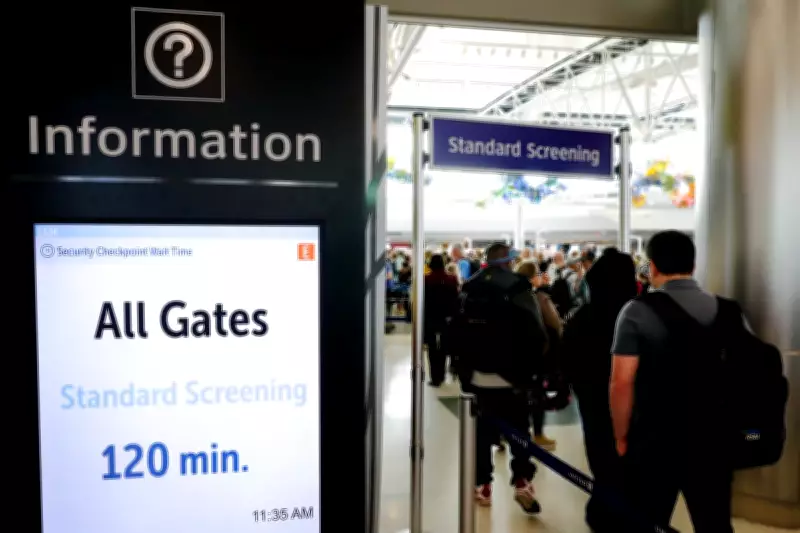
The ongoing partial U.S. government shutdown is triggering a severe and escalating staffing crisis at the Transportation Security Administration (TSA), as airport screeners quit their jobs instead of working without pay. This exodus poses a significant long-term problem for the agency, with the public already feeling the impact through extended wait times at major airports across the country.
Financial Strain Forces Officers to Leave
According to union leaders and federal officials, Transportation Security Officers are grappling with mounting financial pressures during the funding lapse, the third such incident in less than six months. Eviction notices, vehicle repossessions, and empty refrigerators have become common realities for many employees, forcing them to take time off to manage expenses or seek alternative income sources.
Since the latest shutdown began on Valentine's Day, at least 376 TSA officers have resigned, as reported by the Department of Homeland Security. This surge in departures exacerbates staff turnover at an agency historically plagued by high attrition rates and low employee morale.

Morale and Pay Issues Underpin Crisis
Cameron Cochems, a local TSA union leader in Boise, Idaho, described the situation as exhausting, with a growing weight on officers daily. He noted that the resignation numbers likely underestimate the true extent of personnel challenges, suggesting more would have left in a stronger job market.
A 2024 U.S. Government Accountability Office report highlighted that TSA's workforce has long suffered from some of the lowest morale in the federal government, driven by comparatively low pay and persistent workplace frustrations. Starting pay for agents is around $34,500, with average salaries between $46,000 and $55,000. The GAO warned that unless underlying issues like inconsistent management and poor work-life balance are addressed, the risk of officers leaving will persist.
Operational Disruptions and Traveler Impact
For travelers, the staffing shortages have made airport conditions increasingly unpredictable. Wait times have stretched into hours at airports in cities such as Houston, Atlanta, and New Orleans, with some passengers missing flights due to delays. Staffing shortages have forced some airports to close checkpoints, causing wait times to fluctuate dramatically throughout the day.
At Atlanta's Hartsfield-Jackson International Airport, 38% of officers missed work on a recent Wednesday, while over half were absent at a Houston airport on Sunday. Aaron Barker, a local TSA union leader in Atlanta, reported that officers cannot afford copayments for cancer treatments or visits for sick children, highlighting the dire personal circumstances.
Long-Term Consequences and Warnings
Acting Deputy TSA Administrator Adam Stahl warned in a Fox News interview that the shutdown could have lasting effects on staffing, with attrition and recruitment likely to suffer. He noted a 25% increase in departures after the previous shutdown and expects the situation to worsen without a resumption of normal operations and pay for officers.
Former TSA Administrator John Pistole revealed that about 1,100 officers quit during last year's record 43-day shutdown, underscoring the recurring nature of this crisis. The current shutdown, affecting only the Department of Homeland Security, has lasted 35 days, with Democrats in Congress linking funding to new restrictions on federal immigration operations following fatal shootings in Minneapolis.
As TSA officers miss paychecks and absences climb nationwide, the agency has exhausted emergency measures to keep checkpoints staffed, signaling a deepening operational and humanitarian challenge that threatens airport security and efficiency.






