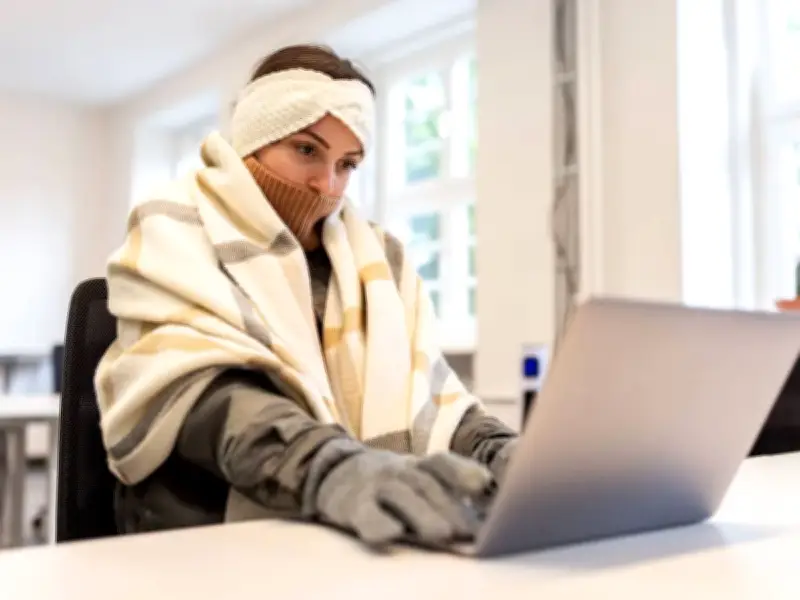
There is no fixed legal minimum temperature for workplaces in the UK, but employers still have clear legal obligations to keep staff safe, warm, and healthy during cold weather. The Met Office has forecast cold conditions this week, with overnight lows, frost, and 'feels like' temperatures dipping to 0°C or below across parts of the UK.
Cold air and clear spells overnight are bringing frost and sub-zero temperatures to colder and rural areas, alongside wintry hazards such as hill snow and ice in northern parts of the country. Even during the day, when actual air temperatures sit marginally above freezing, around 1°C to 4°C in areas such as Birmingham and the West Midlands, biting winds are making it feel like 0°C or colder, reports the Mirror.
What does the law actually say?
Under the Workplace (Health, Safety and Welfare) Regulations, employers must ensure that indoor temperatures during working hours are "reasonable." To help clarify what is considered reasonable, official guidance from the Health and Safety Executive (HSE) and employment body Acas recommends a minimum temperature of 16°C for standard indoor work, such as offices. For roles involving strenuous physical activity, such as heavy lifting in a warehouse, the recommended threshold falls to 13°C.
For those working outdoors or in specialist cold environments such as food chillers and freezers, there is no minimum temperature guideline whatsoever. Instead, employers are legally obliged to carry out risk assessments and implement appropriate measures to safeguard staff from cold-related illnesses and injuries.
Can you refuse to work?
Many employees believe they have an automatic right to walk out or down tools if the temperature drops below 16°C. In reality, you cannot simply refuse to work because you feel cold or uncomfortable. Leaving your post without authorisation could leave you vulnerable to disciplinary action.
However, you do have robust legal protection should conditions become genuinely dangerous. Under Section 44 of the Employment Rights Act 1996, workers are protected from dismissal, pay cuts, or unfair treatment if they leave or refuse to work because they reasonably believe there is a "serious and imminent danger" to their health or safety. In cold weather, serious dangers include the risk of hypothermia, frostbite, or severe numbness that can make operating machinery unsafe.
What about vulnerable workers?
Employers also have a greater duty of care towards staff who are more susceptible to the cold. If you are pregnant, have a disability, or live with a medical condition such as asthma, arthritis, or poor circulation, your employer should conduct an individual risk assessment. In many instances, they are required to make reasonable adjustments, such as permitting you to work from home or relocating you to a warmer area of the workplace.
What to do if your workplace feels cold?
Hilary Leavy, People Director at Bruntwood, explains: "While there's no fixed legal minimum office temperature, that doesn't mean businesses can simply leave their employees shivering. Employers still have a responsibility to provide a reasonable working environment, and workers shouldn't feel they have to spend the winter wrapped up in coats and scarves just to stay comfortable."
If your workplace feels too cold, experts recommend taking practical steps rather than immediately walking out: speak up early, keep a record, ask for adjustments, and escalate if necessary. Inform your line manager, HR department, or health and safety representative of the temperature so that the issue can be resolved. Keep a record of thermometer readings, dates, times, and any symptoms or safety concerns caused by the cold conditions.
Ask for straightforward solutions such as portable heaters, draught-proofing, a relaxed dress code allowing extra layers, or regular warm-up breaks with hot drinks. Should your employer disregard genuine health and safety risks, you are entitled to seek free guidance from Acas, consult your trade union, or raise the matter with the HSE or your local council.
Sarah Bateman, CEO at Unify Energy, a specialist commercial energy supplier and part of the Bruntwood Group, explains: "When employees complain about feeling cold, the instinctive response might be to turn up the heating, but that's not always the most effective solution." Sometimes the problem isn't how high the thermostat is set, but how the heating system is being used, such as heating only switching on when employees arrive or heat escaping through draughty doors, windows and busy entrances, which means the system has to work harder just to keep the space warm.