Grimsby, once the world's largest fishing port with more than 700 registered trawlers, has seen its industry collapse to fewer than 10 shellfish boats, leaving locals to say there are "no jobs left."
At its peak, the port employed 10,500 people at sea—15 crew on each of the 700 trawlers—before accounting for the bookkeepers, shipbuilders, pub workers and taxi drivers who supported the trade on land. "Probably two-thirds of the town's population was involved in some way," says Dennis Avery, 84, ex-skipper of the famous trawler Ross Tiger.
Glory Days of the 'Three-Day Millionaires'
Older generations remember a bustling town where fishermen spent freely after days at sea. "They used to call us the three-day millionaires," says Mike Walker, 73, who worked for decades on ships after leaving school. "God knows how many pubs there were down Freeman Street, and it was all packed."
Fishermen faced extreme danger: 20ft waves, hurricane-force winds, waist-deep water and minimal sleep. According to the Fishing Heritage Centre, more than 7,000 fishermen lost their lives from the port of Grimsby. Despite the risks, the veterans would return if they could. "It's the camaraderie and the chase," explains Avery.
What Changed: Cod Wars, Quotas and Decommissioning
Mike says "everyone lost their jobs" in the 70s as the Cod Wars escalated, when Britain progressively lost access to Icelandic fishing grounds. After Britain joined the European Economic Community (EEC) in 1973, EU vessels gained equal access to waters inside the shared 12-nautical-mile coastal limit, which many trawlermen resented.
Then came quotas. Catch limits were introduced as scientists warned that North Sea cod and haddock stocks were becoming depleted, preventing fishermen from profiting from huge hauls. "The quota system that's there, it doesn't actually pay you to go out, because you're not catching enough to pay for your boat or your vessel," adds Mike.
Decommissioning followed in the 90s. The Government offered fishermen "big money" to sell their boats because the large number of vessels could not coexist with the smaller quotas. The result was a drastically reduced British fishing industry. Fewer than 10 shellfish boats are understood to be registered in Grimsby now, and whitefish trawlers have been wiped out.
Current State: Few Jobs and a Quiet High Street
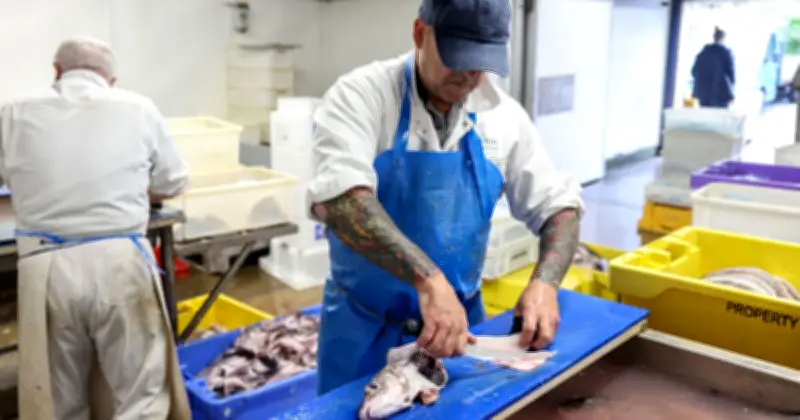
Today, the only boats leaving Grimsby are for crab and lobster. The haddock is brought in by container from Icelandic waters to Immingham and transported to the famous Grimsby fish market, where a round trip used to take two and a half hours. This morning, the fish was sold within 20 minutes.
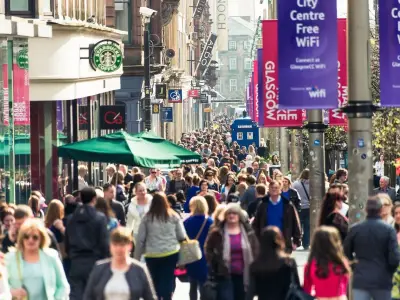
Freeman Street, which was "buzzing," is quiet. "You could say it's just vape shops and barbers. The market, to be honest, is going downhill very fast now," says Mike. A young plumber who chose to remain anonymous says people turn to selling drugs, and he plans to leave: "Put it this way. I'm 22, and that's my business, but in the next 10 years, I want to be moving to Australia or somewhere."
Wind farms and green energy now bring jobs to the area, but locals counter that only a small proportion of employees are needed to maintain the farms, compared to the thousands of jobs associated with fishing. The nearby oil refinery at Immingham has just closed, with hundreds losing their jobs.
"If people here are nostalgic for this time, with memorials for thousands of people who died at sea, how bad must things be now?" asks Emma Maskell, 49, working on a community garden in Grimsby. "It feels like we get opportunities that come in, but they don't actually employ the people who live here."
Mike is keeping the history alive with the Old Sea Dogs group, where ex-trawlers gather weekly to reminisce. While older generations are deeply proud of their roots, younger ones grow up with the constant reminder of what the town once was. The challenge now is finding an industry that gives the same sense of pride—and for better or worse, it is no longer fishing.