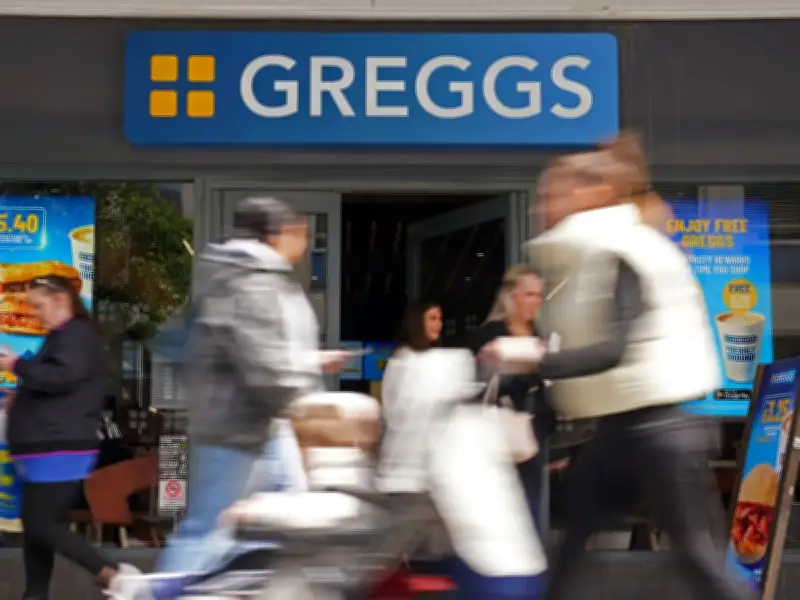
Greggs has announced plans to restructure its manufacturing operations, putting around 740 roles at risk across the UK. The proposals, announced on September 30, will see four factories shut down and parts of the manufacturing process relocated, with changes expected to take place as early as next year.
The company said the move is intended to 'future proof' the business, but unions have warned that workers should not be 'dropped like hot stones' after playing a major part in the firm's recent growth.
Factory closures and production changes
The proposals will impact manufacturing operations at the Treforest site in Wales, which will continue as a distribution centre. Greggs also plans to reduce the range of products manufactured at its Clydesmill Glasgow and Manchester locations, and stop manufacturing tinned bread at Gosforth.
The firm said this will consolidate its manufacturing operations, with a small number of products to be sourced from specialist suppliers. Greggs retail shops will not be affected by the changes.
CEO on efficiency and future-proofing
Chief executive Roisin Currie said the group needs to improve efficiency in its operations to help deliver value to customers. “We will continue to be best-in-class for the products we supply and manufacture, and if we want to be efficient we will always need to look at what we do periodically,” she said. “We believe doing this makes us future-proofed for modern times.”
The shake-up will cost the firm around £60 million, including disruption costs and redundancy payments, but is expected to save around £20 million across the 2028 and 2029 financial years. The company said it will shortly start a consultation process with affected workers and their union representatives, but stressed that “no final decisions have been made”.
Sales growth and outlook
Greggs employs around 33,000 people across the UK, with the vast majority in stores. The announcement came as the retail business revealed sales grew by 7.7% in the three months to September 26, compared with the same period a year earlier. Like-for-like sales grew by 3.4% across its managed stores, with overall growth buoyed by new shop openings.
The company said positive trading and continued cost control mean it expects a “modestly improved outcome” for 2026. It has opened 95 new shops and closed 38 in the year to date, taking its overall estate to 2,796 shops, with predictions of between 100 and 110 net new openings by the end of the year.
Current cost inflation is “well managed” and likely to stay around 2% for 2026, but bosses warned of “signs of greater inflationary pressures in 2027” as higher energy costs feed through. Shares in the company were up 6.5% at 1,997p, their highest level for around two months.
Sarah Woolley, general secretary of the Bakers, Food and Allied Workers Union (BFAWU), said: “The BFAWU is deeply concerned by today’s announcement from Greggs, which places hundreds of workers and their livelihoods at risk as part of proposed changes to the company’s manufacturing network. Our immediate priority is our members, their jobs, their families and the communities that could be affected by these proposals.”
She added: “The workers affected by these proposals have played a huge part in getting Greggs to where it is today. They cannot simply be dropped like stones as the company moves on to its next phase of growth.”