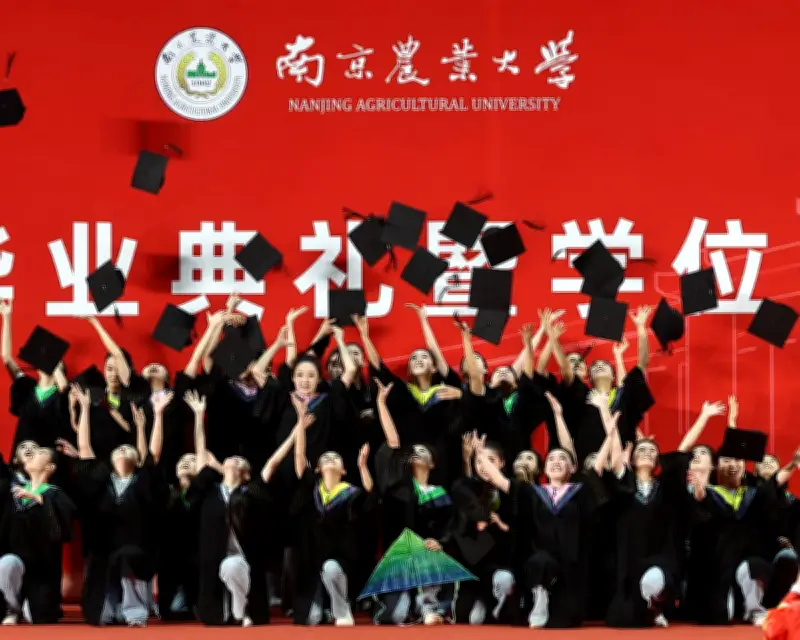
China is experiencing its largest-ever graduation season, with a record 12.7 million college students completing their degrees this year—an increase of 480,000 from 2025. Yet for many, the transition from campus to career is fraught with anxiety as they confront a job market that has little use for their skills, particularly in humanities, arts, and languages.
Graduate Glut and Skill Mismatch
Jasmine, a 22-year-old accounting graduate in Shanghai, has sent out about 150 CVs over the past month without success. “It has been much harder than I imagined,” she says. “The lack of vacancies is one issue, and the competition is also intense, especially for jobs that offer weekends off and proper social insurance.” Her story is emblematic of a broader crisis: China’s youth unemployment rate stands at 15.6%, comparable to the UK’s 16.2% and the EU’s 15.1%, but the scale of the problem is far greater given the sheer number of graduates.
An Economist Intelligence Unit (EIU) researcher, who declined to be named, notes that the mismatch between graduate skills and labour market demands has been brewing since 2020. “As the economy shifted toward a productivity- and manufacturing-driven growth model—focusing on electric vehicles, batteries, semiconductors, and robotics—a mismatch emerged,” the researcher says. “Entry-level jobs are often easier to automate or replace, making young workers particularly vulnerable. Even graduates with backgrounds in IT services have seen some entry-level tasks increasingly automated by AI.”

Universities Cut ‘Obsolete’ Degrees
In response to Beijing’s directives to align university curricula with labour market needs, Chinese universities have culled 12,200 undergraduate programmes—mostly in the arts and humanities—between 2021 and 2025, while introducing 10,200 in emerging fields. Charles Jeffery Sun, founder of consultancy China Education International, describes this as a “long-overdue reckoning.” “For decades, Chinese higher education was primarily about access, getting more students into university. The next phase must be about quality and relevance,” he says.
However, the rapid shift has been painful for many graduates. “China’s higher education is centrally governed. When Beijing sets a strategic direction, implementation across hundreds of universities happens rapidly,” Sun adds. The pace of change is unique to China, but it leaves many with degrees that are no longer in demand.
Economic Slowdown Exacerbates Crisis
Compounding the problem is China’s slowing economy. Beijing has adjusted its GDP growth target to the lowest since 1991—a range of 4.5% to 5%—as it grapples with aggressive global tariffs, weak domestic consumption, and a shrinking and rapidly ageing population. This economic headwind reduces the number of available jobs, particularly for new entrants.
China has not published nationwide statistics on graduate employment rates in recent years, obscuring the true scale of the issue. But Sun describes the situation as “severe.” “When accounting for previous cohorts still jobseeking, postgraduates who have not secured employment, and returning overseas graduates, the total pool of jobseekers [this year] may exceed 15 million,” he says.
Despair on Social Media
Informal polls on Xiaohongshu, China’s equivalent of TikTok, reveal widespread despair. One poll conducted in June by a 2025 graduate had more than 14,000 respondents, of whom over 10,000 said they were still unemployed. Another poll found that 3,317 of 4,637 respondents selected “unemployed since graduating, feeling aimless, lost and anxious” as their situation. The term “graduation means unemployment” has become a common refrain on China’s heavily censored social media platforms.
“Someone please save me!” one 26-year-old graduate recently wrote about their unsuccessful job search. “I’m crying, I’m exhausted, I’m silent, I’ve surrendered.”

Choice Between Stressful Private Sector and Competitive Civil Service
Graduates often face a stark choice: demanding private-sector jobs with long hours—12-hour days and weekend shifts are common—or stable but poorly paid civil service positions. Fan, a 22-year-old humanities graduate from Sichuan University, says there are very few jobs offering regular work hours and long-term stability. “For most of us, looking for a job or going to work is very stressful,” he says. “If you work in a large company, you will be very anxious about being laid off in the future. If you work in a more stable [government] job, you will be anxious about not earning as much as others.”
Policy Responses and the Gig Economy
Graduate unemployment appears to be a top concern for Chinese authorities, who have launched several initiatives to boost hiring, including a six-month national campaign launched this month. In March, authorities signalled plans to harness AI to add 12 million urban jobs in 2026, with large-scale training programmes and internships in high-growth emerging sectors.
Sun describes Beijing’s policy response as “rational and proactive,” but warns that “structural issues will take time” to resolve. “I believe the trend [of graduate unemployment] is worsening in the short term, but may stabilise in the medium term as structural adjustments take effect,” he says.
In the meantime, a growing number of degree holders are turning to flexible work, such as delivery driving, as part of China’s vast gig economy, which employs more than 200 million people. The EIU researcher warns that while the gig economy provides important income opportunities, it “may lead to long-term skill depreciation, lower income growth, and reduced career progression.” “Policy responses will be important in helping workers adapt and ensuring that the transition does not result in lasting skill and income losses for a generation of young people,” the researcher says.
Uncertain Future
For millions of young Chinese, time is running out. Fan says he cannot see any “particularly good solution” to the youth unemployment problem but maintains hope the “future environment will be better.” “I don’t know exactly when that will happen. I also don’t know what to do about the future,” he says. “I can only accept the reality.”