

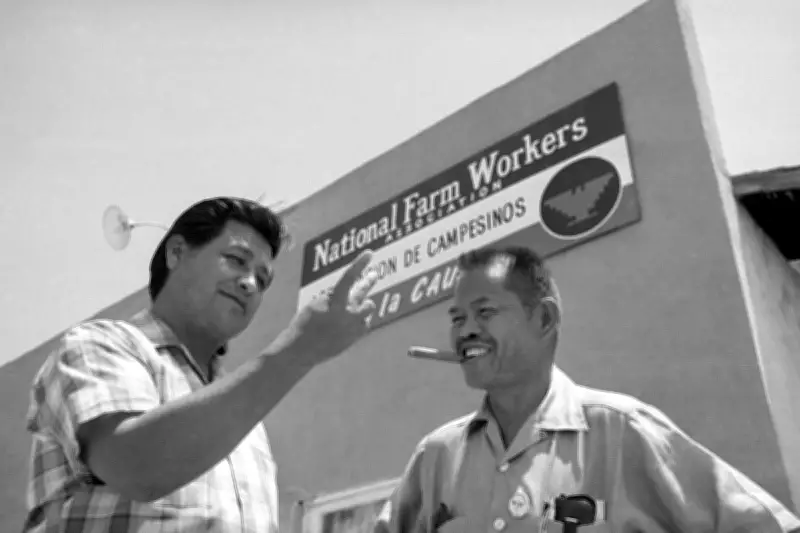
Recent sexual abuse allegations against iconic labor leader César Chavez have prompted a profound reassessment of how the historic 1965 California grape strike is commemorated, particularly within Filipino American communities whose ancestors played a pivotal role. The strike, which united Filipino and Mexican American farmworkers under Filipino labor leader Larry Itliong and Chavez's National Farm Workers Association, has long been celebrated in textbooks, monuments, and even stage productions.
Reevaluating Commemoration in Light of Allegations
In response to the disturbing claims that Chavez sexually abused young women and girls within the labor rights movement, Filipino American groups—including descendants of the original strikers—are navigating how to honor this crucial chapter in agricultural labor history moving forward. Many have canceled planned marches for César Chavez Day, with advocates pushing to rename the March 31 celebration to focus collectively on Filipino and Chicano farmworkers, while specifically acknowledging the survivors of abuse.
"We really need to center this trauma of women and sexual abuse," emphasized Dillon Delvo, executive director of Little Manila Rising, a longstanding Filipino community hub in Stockton, California. "It's definitely what the discussion needs to be." This shift aims to create a more inclusive and honest historical narrative that does not elevate individuals at the expense of truth or collective struggle.

The Historical Context of Filipino Farm Labor
Filipino immigrants began arriving in significant numbers to work on U.S. farms during the early 20th century, a direct result of American colonial rule over the Philippines from 1898 to 1946. During this period, many Filipinos learned English and were authorized to immigrate. From the 1920s through the 1960s, tens of thousands joined the agricultural workforce, laboring on farms and in factories across the western United States.
The first wave, primarily men from the Ilocano-speaking region, were affectionately called "manong" (older brother). They faced severe discrimination, receiving inferior wages, enduring substandard housing, and working in poor conditions, all to send money back home. Loneliness was also a constant companion, as few Filipino women immigrated and anti-miscegenation laws restricted marriage outside their race. By the 1960s, these conditions spurred the formation of the Agricultural Workers Organizing Committee, laying groundwork for labor strikes.
"It came out of necessity and desperation to protect themselves, to try to live in dignity," explained Dennis Arguelles, Southern California director for the National Parks Conservation Association, who monitors monuments dedicated to Filipino farmworkers and Chavez.
The 1965 Delano Grape Strike: A Unified Front
On September 8, 1965, Larry Itliong and fellow organizer Philip Vera Cruz led the Agricultural Workers Organizing Committee to vote for a strike against grape growers in Delano, California, demanding at least the federal minimum wage. Itliong, described as the more "fiery union leader," then contacted César Chavez, who co-led the National Farm Workers Association with Dolores Huerta.
"Chavez was hesitant to strike," noted Arguelles. "You didn't feel like the National Farm Workers Association was ready to take on these powerful agribusiness interests. These business structures were very effective in pitting different ethnicities against each other to break strikes." Despite initial reluctance, the groups joined forces a week later, forming the United Farm Workers.
The Delano grape strike lasted five years, ultimately securing collective bargaining agreements for thousands of laborers and reshaping the agricultural industry. However, the popular narrative has often attached Itliong's leadership to Chavez, with both figures appearing together in educational materials and public art across California.

Debating Historical Narratives and Leadership
The allegations against Chavez have ignited warnings against deifying historical figures and revived debates about who is overshadowed in labor movement history. "There always seems to be a need to be like a main character," Delvo observed. "But the problem is that is not what a union is about." This moment is seen as an opportunity to craft a more accurate and comprehensive story.
"Maybe this is our opportunity to tell a more accurate and comprehensive narrative of what took place," Arguelles suggested. "I see that as being a positive thing." In a tangible step toward this reevaluation, the Los Angeles Board of Supervisors recently moved to rename César Chavez Day as Farmworkers Day, with some proposing to shift the holiday to September 8 to honor the Filipino strikers.
At that meeting, Johnny Itliong, 60-year-old son of Larry Itliong, asserted that Chavez had attempted to "erase the history" of how the Delano strike began. "I've spent my whole life speaking up for my father and his generation of men and women who fed America," Itliong declared.
Centering Women in the Story
The musical "Larry the Musical: An American Journey," which focuses on the Filipino farmworkers movement, mentions Chavez only once—during the scene of Itliong's phone call. Producers intentionally included the women in Itliong's life, a decision reaffirmed by recent events.
"From the beginning, we have always centered this musical on the women of the community as those who keep Larry and the community accountable, and the ones who pass on knowledge to the next generation," stated co-producers Gayle Romasanta and Bryan Pangilinan.
Vernadette Gonzalez, an ethnic studies professor at University of California, Berkeley, urged educators to highlight unsung heroes, particularly women. She noted that Hispanic female members of the United Farm Workers were instrumental in raising families and preparing food for meetings, yet often went uncredited. "Nobody's crediting them in the minutes of the meeting," Gonzalez pointed out. "Who's missing from the story? In the United Farmworkers movement, folks will say 'It's Larry Itliong and the Filipino farmworkers.' But I would also say 'Where are the women?'"
As communities grapple with these complex legacies, the focus is shifting toward a more nuanced commemoration that honors collective action, acknowledges trauma, and ensures all contributors—especially women—receive their rightful place in history.





