Australia is quietly leading a global revolution in home renewables and battery storage, demonstrating what can be achieved with supportive policies. As heatwaves hit Europe and Asia, and oil markets fluctuated, the country demolished two large chimneys at one of its biggest power stations. Meanwhile, the energy minister announced a fall of up to 10% in benchmark electricity prices in some regions.
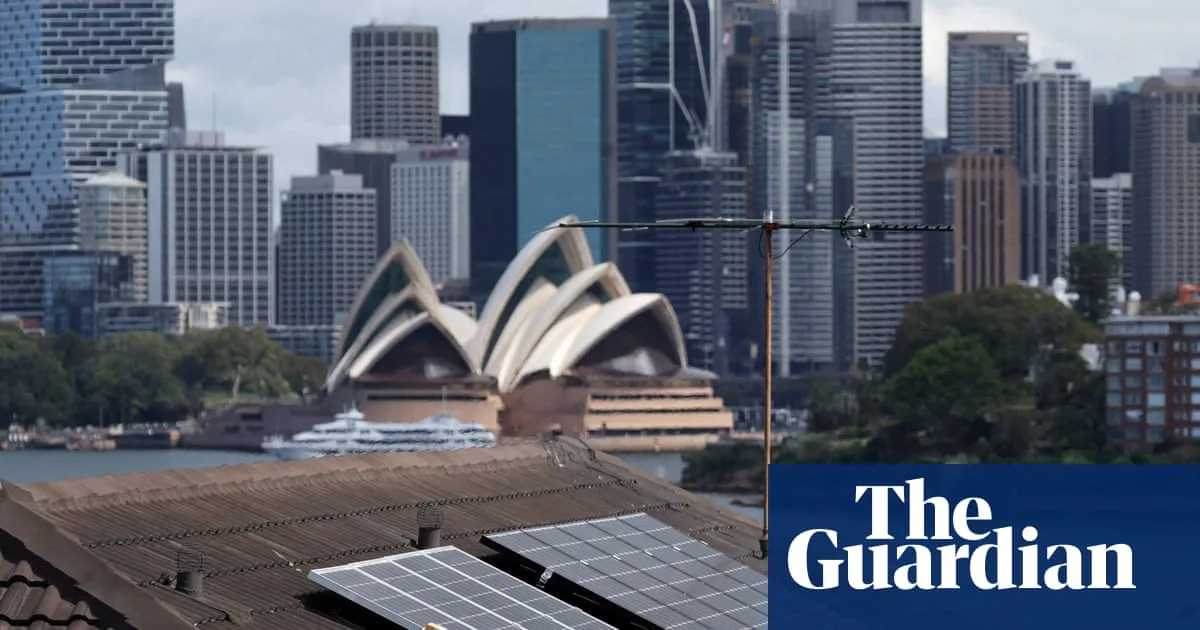
Australia already has solar panels on one in three homes, making it a world leader in domestic solar power. Now, batteries are accelerating its transition. Nearly 60% of household-scale battery capacity installed globally this financial year (excluding China) will be in Australia, according to analysis by Green Energy Markets. Since July, about 415,000 home batteries have been connected, roughly one for every 25 Australian homes.
Industrial-scale batteries are also being built rapidly, with Australia trailing only China and the US in new capacity after connections more than doubled last year. This growth is reducing electricity costs on the nation's extensive grid, which spans over 40,000 km of transmission lines. Batteries address the intermittency of renewables by storing solar power for use when needed, reducing reliance on expensive gas-fired backup.
Gas generation fell 24% across three months this summer compared to the previous year, as batteries increasingly fill evening peaks. Tennant Reed of the Australian Industry Group says batteries have 'completely changed how electricity prices are formed,' pushing out gas plants even as demand rises. The US-Iran war and subsequent energy price hikes have further highlighted the advantages of renewable technologies.
While China remains far ahead in overall battery spending, Australia's rapid adoption shows the impact of scaling up technology from the start. Tristan Edis of Green Energy Markets notes, 'If you go big with a technology, you can make a really significant difference.' Australia's success offers a model for other nations seeking to cut emissions and energy costs.