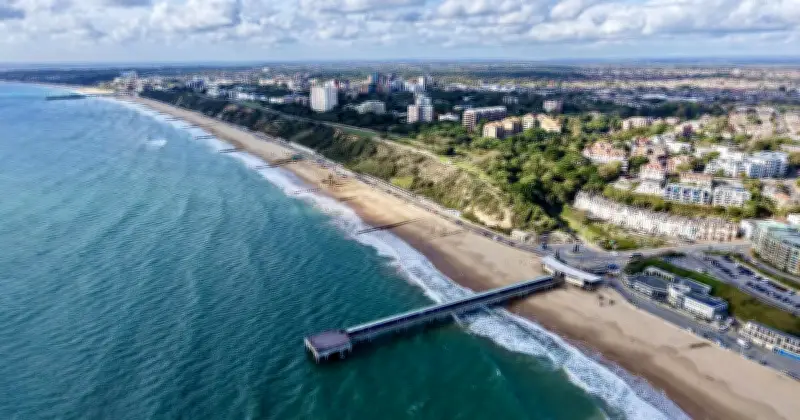
Bournemouth, a seaside town known for its sandy beaches, has become one of the UK's largest regional financial hubs. However, the rise of artificial intelligence (AI) now threatens the jobs and businesses that helped transform its economy. The JP Morgan campus at Littledown, just a few miles from the beach, reportedly employs more than 5,300 people and processes over $1tn (£750bn) in global transactions daily. When it opened in 1986, it employed just 650 people.
Bournemouth's Financial Growth
Bournemouth's financial sector emerged after the Big Bang, and financial services now account for around 10% of Dorset's business turnover. According to the Dorset Chamber of Commerce, about 2,500 companies in the area, including Nationwide Building Society, insurer LV=, and investment manager Rathbones, collectively employ about 24,000 people.
AI is increasingly seen by executives as a way to automate jobs traditionally performed by thousands of employees. For young graduates hoping to build careers in the town, the changes are already being felt. Amine, a 25-year-old Bournemouth University cybersecurity graduate, told The Guardian: “Because of AI, they’ve cut all the entry-level jobs.” He had hoped to stay in the area after completing his studies and secured work with a big insurance company, but said "it's been quite difficult."
AI-Driven Job Cuts
Barclays chief executive CS Venkatakrishnan recently announced 5,000 job cuts linked to advances in AI, while Standard Chartered has outlined plans to cut 7,000 roles as it increases investment in the technology. Earlier this month, Virgin Media O2 also confirmed plans to axe thousands of UK jobs under aims to slash costs by around £800 million a year by 2029, using AI to "support faster decision-making and delivery."
According to Deloitte's UK chief financial officer survey, 52% of UK CFOs expect AI to reduce headcount in their businesses over the next 12 months. Another report from professional services firm BSI found that more than half of business leaders worldwide say AI is enabling them to cut staff. The research found that 54% of bosses say AI is helping them reduce headcount, up from 41% last year.
Local Economic Impact
Gareth Sherwood, president of the Dorset Chamber of Commerce, warned that widespread redundancies could have a knock-on effect throughout the local economy. He spoke of the closure of Barclays House in nearby Poole in 2022, saying: "It was the original site that all the cheques in the country used to go through, to be checked. And of course, that went with digitisation." Sherwood said the Chamber has been helping local businesses understand how AI can improve productivity, but argued that companies should not overlook the importance of human workers: "You can’t switch a human off in the same way that you can switch an AI off."
Peter Howard-Jones, a senior lecturer in economics at Bournemouth University, told The Guardian that "[there is] no question that AI could be significantly disruptive." He added: "If human beings are currently driving $1tn of daily transactions [at JP Morgan], and if that can be done by AI, then of the 5,000 jobs currently at JP Morgan in Bournemouth, how many of those are going to be at risk?"