

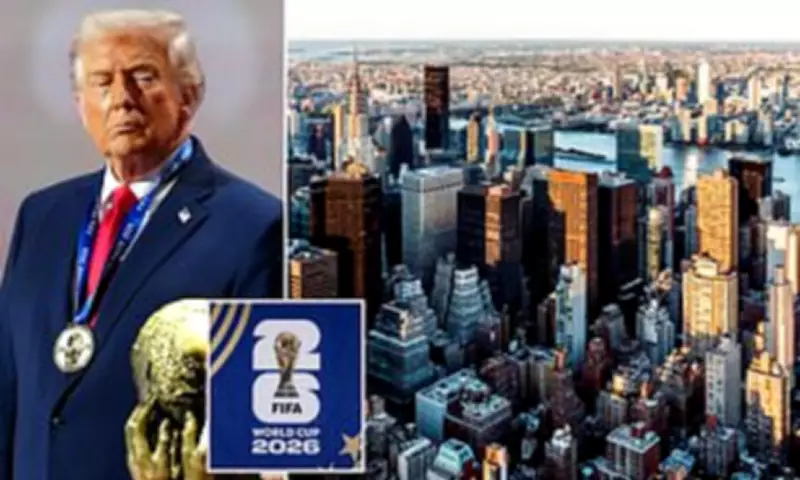
World Cup fever appears to be cooling across North America as hotel rooms in major host cities sit empty just weeks before the tournament's historic kickoff. Despite the hype surrounding the first-ever 48-team tournament, early booking data suggests the hospitality industry drastically overestimated the influx of traveling soccer fans this summer.
Occupancy Rates Plummet
According to property analytics firm CoStar, occupancy rates in several key hubs are lagging significantly behind where they were at this same point last year. The slump is particularly evident in Vancouver, where match-date occupancy has plummeted to just 39 percent, compared to 53 percent during the same period in 2025. Similarly, Boston is struggling to fill beds ahead of the Norway vs. Iraq clash on June 16, with current booking rates hovering at a disappointing 32 percent.
The expanded format, which features 104 matches spread across 16 cities, may simply be spreading demand too thin for international fans following their teams city-to-city. A staggering 80 percent of hoteliers across 11 major host markets, including New York and Miami, report that bookings are currently tracking well below initial forecasts.

New York and Other Cities Feel the Pinch
In New York City, two-thirds of operators reported softer-than-expected bookings, while 80 percent of hotels in Seattle and Philadelphia are trailing behind typical summer demand. Despite a showdown between Brazil and Morocco taking place on June 13, occupancy rates for that date sit around 31 percent, down from 43 percent last year.
Industry insiders blame a combination of visa hurdles and geopolitical concerns for the drag on international demand, which has left thousands of rooms unoccupied. Furthermore, roughly half of the surveyed hotels reported that FIFA has already cancelled significant room blocks. Only a small fraction of markets are seeing any meaningful lift, primarily those serving as official team base camps for the competing nations.
Trump Criticizes Ticket Prices
The latest update comes after Donald Trump admitted that even he wouldn't shell out the astronomical prices FIFA is demanding for tickets to this summer's World Cup. In an interview with the New York Post this week, Trump was asked about the exorbitant pricing, just hours after Infantino had brushed off rising criticism.
'I did not know that number,' the President said when told about the $1,000 get-in price for the USMNT's opener against Paraguay in Los Angeles on June 12. 'I would certainly like to be there, but I wouldn't pay it either, to be honest with you.' He added: 'If people from Queens and Brooklyn and all of the people that love Donald Trump can't go, I would be disappointed, but, you know, at the same time, it's an amazing success.'
Infantino's Defense
Just hours before Trump's comments, Infantino had attempted to defend the costs of World Cup tickets, insisting that it costs at least $300 to attend a college game in America, and that you can't see professional sport for less than that. However, on May 7, tickets were available for the Yankees' game against the Texas Rangers for $8. A Knicks playoff ticket in Philadelphia, meanwhile, would have set you back $192 on SeatGeek at the time of writing.
Speaking at a conference earlier that week, Infantino was asked about a ticket for the final that had been listed on a resale website for $2 million. In response, he joked that he would 'personally bring a hot dog and a Coke' to the buyer, to ensure they have 'a great experience' at the game at MetLife Stadium. FIFA have estimated that there were 500 million ticket requests for the tournament, but prices appear to be dropping on resale sites as organizers continue to drip-feed 'last-minute' tickets a month out.






