

US Lawmakers Advocate for Federal Gas Tax Suspension as Fuel Prices Soar
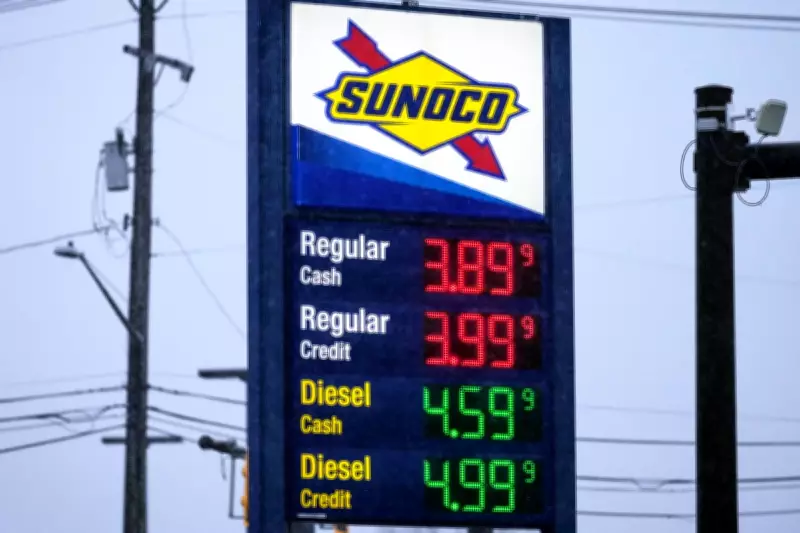
With gasoline prices in the United States approaching an average of $4 per gallon nationally, driven by the ongoing conflict in Iran, a group of lawmakers is pushing for the suspension of the federal gasoline tax. This move aims to provide immediate relief to families and businesses grappling with escalating energy costs.
Political Push for Relief Measures
Lawmakers argue that suspending the federal gas tax would offer much-needed financial assistance to households and enterprises that depend on vehicles for commuting, education, and daily errands. At a recent Cabinet meeting, President Donald Trump acknowledged the proposal, stating he has "thought about" a suspension but suggested states should also consider halting their own fuel taxes. "It's something we have in our pocket if we think it's necessary," Trump remarked.
In response to the price surge, the Trump administration has already released millions of barrels of oil from the U.S. Strategic Petroleum Reserve and temporarily eased sanctions on certain Russian and Iranian oil shipments. Additionally, the U.S. is negotiating with nations reliant on Middle Eastern crude to form a coalition to secure the Strait of Hormuz, a critical oil transit route.

Understanding the Gas Tax Holiday Proposal
A gas tax holiday involves a temporary suspension of the federal gas tax, which currently stands at 18.4 cents per gallon for gasoline and 24.4 cents per gallon for diesel fuel. This does not include state taxes, which are often higher. The federal tax generates over $23 billion annually for highway and public transit programs.
However, the president cannot unilaterally suspend this tax; Congressional approval is required. With Republicans controlling both the House and Senate, legislative action is unlikely without Trump's explicit support.
Potential Benefits and Criticisms
Rising fuel prices are placing significant strain on household budgets, particularly for low- and middle-income Americans who have limited flexibility to absorb higher transportation costs. Senator Richard Blumenthal, a Connecticut Democrat, co-sponsored the Gas Prices Relief Act with Senator Mark Kelly of Arizona, aiming to suspend the tax through October 1. "Trump's war of choice with Iran is driving up gas prices across the country—and Americans shouldn't have to bear the additional economic burden of Trump's reckless decision making," Blumenthal stated.
Despite the potential relief, industry groups like the American Road & Transportation Builders Association warn of drawbacks. They note that the gas tax is the primary revenue source for federal transportation projects, and suspending it could increase the federal deficit and jeopardize long-term infrastructure investments. Studies cited by the group indicate that retailers may not pass the full tax reduction to consumers, and gas prices are influenced by complex factors beyond taxes, such as global oil prices.
State-Level Initiatives and Mixed Results
Several states are considering or implementing their own gas tax breaks. Georgia Governor Brian Kemp, a Republican, recently signed a law suspending the state's gas and diesel taxes for 60 days, with bipartisan support. Early data shows positive effects: while national gas prices rose by 10 cents per gallon in one week, Georgia's prices fell by 15 cents, placing it among the states with lower average costs.
Other states, including California, Connecticut, Florida, Maryland, and Utah, are evaluating similar measures. However, Florida Governor Ron DeSantis expressed skepticism, noting that past tax holidays did not always translate to consumer savings due to price adjustments by retailers.
Practical Tips for Reducing Fuel Costs
Beyond policy measures, drivers can adopt habits to improve fuel economy. Consumer Reports advises obeying speed limits and driving smoothly, as maintaining a steady 55 mph can boost fuel efficiency by 6 to 8 miles per gallon. Avoiding hard acceleration and braking, as well as skipping premium gasoline when possible, can also lead to savings. These practices not only reduce fuel consumption but enhance road safety.

As debates over gas tax suspensions continue, the interplay between federal action, state initiatives, and consumer behavior will shape the response to rising energy costs in the coming months.





