The United States economy experienced a significant deceleration in the final quarter of 2025, with gross domestic product increasing at an annual rate of just 1.4%. This marks a dramatic slowdown from the 4.4% growth recorded in the third quarter and the 3.8% expansion in the second quarter, according to data released by the Commerce Department on Friday 20 February 2026.
Key Factors Behind the Economic Slowdown
A notable downturn in both government expenditure and consumer spending contributed substantially to the fourth-quarter growth contraction. Consumer spending, a critical driver of economic activity, rose by only 2.2% during this period. This represents a significant deceleration from the robust 3.5% gain observed in the previous quarter, indicating weakening consumer confidence and potential financial pressures on households.
Unusual Economic Landscape
The current economic environment presents several paradoxical characteristics. While growth remains relatively solid overall, with the economy expanding by 2.2% throughout 2025, job creation has been remarkably weak. Employers added fewer than 200,000 jobs last year, representing the lowest annual hiring figure since the COVID-19 pandemic disrupted labor markets in 2020.
This disconnect between economic expansion and employment opportunities has puzzled many analysts. The unemployment rate increased only marginally from 4% to 4.3% throughout 2025, despite the near-stagnant hiring environment. Several factors may explain this unusual economic dynamic.
Multiple Factors Influencing the Labor Market
Economists have identified several potential explanations for the gap between economic growth and job creation. The Trump administration's stringent immigration policies have substantially reduced population growth, thereby limiting the pool of available workers. This demographic constraint has helped maintain relatively stable unemployment figures despite weak hiring activity.
Business uncertainty represents another significant factor. Many companies appear hesitant to expand their workforce due to concerns about how artificial intelligence might transform productivity requirements. The potential for AI to enhance output without corresponding increases in staffing has created caution among employers contemplating expansion.
Additionally, the financial impact of tariffs has reduced profitability for numerous businesses, potentially discouraging investment in new personnel. These combined factors have created an economic environment where growth continues but fails to generate substantial employment opportunities.
Political Reactions and Economic Sentiment
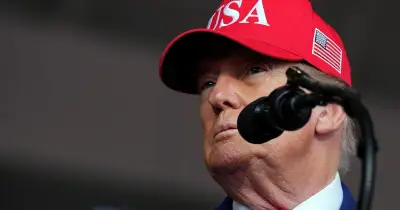
Former President Donald Trump responded to the economic report by attributing the slowdown to government shutdowns, claiming they reduced GDP growth by at least two percentage points. He also criticized Federal Reserve policies, calling for lower interest rates in social media posts following the data release.
Despite generally solid economic fundamentals including moderate growth, slowing inflation, and relatively low unemployment, public sentiment remains surprisingly pessimistic. Consumer confidence measures reached their lowest level since 2014 in January, yet consumer spending has continued to support economic expansion.
The K-Shaped Recovery Phenomenon
Some analysts suggest that spending patterns may reflect a "K-shaped" economic recovery, where upper-income consumers drive disproportionate economic activity while lower-income households struggle. However, data from major financial institutions indicates that lower-income consumers continue to increase their spending, albeit at more modest rates than their wealthier counterparts.
This complex economic picture underscores the challenges facing policymakers as they navigate an unusual period of simultaneous growth and public pessimism. The fourth-quarter slowdown highlights vulnerabilities in the economic recovery and raises questions about its sustainability without stronger job creation and broader-based consumer confidence.