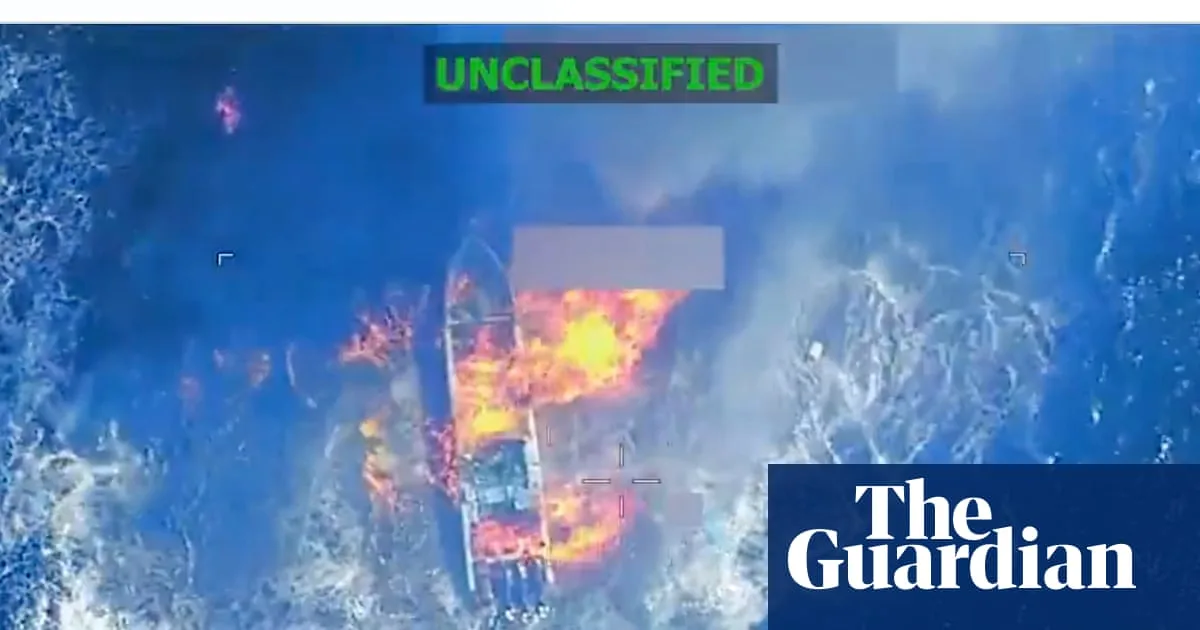
US Anti-Drug Boat Strikes Kill 200 but Fail to Curb Cocaine Flow, Experts Say
US Boat Strikes Kill 200, Fail to Curb Cocaine Flow

Despite killing nearly 200 people in attacks on suspected drug boats, the US has done little to slow the drug trade, experts say. Dozens of attacks on alleged drug-smuggling vessels have not made a dent in cocaine availability in the US, researchers claim.

Campaign Details and Casualties

Donald Trump’s administration has launched dozens of airstrikes that killed nearly 200 people in the eastern Pacific and Caribbean. Military officials described this as a campaign against “terrorist” groups trafficking drugs into the US. However, the months-long attacks have reportedly done little to combat the flow of illicit drugs, raising questions about the operation's effectiveness. Law of war experts say the strikes amount to extrajudicial killings and war crimes.

Cocaine Availability and Pricing

Cocaine remains as easy to obtain in the US today as it was nine months ago, when the president began the series of strikes that have killed at least 195 people as of May 29, according to researchers speaking to The New York Times. Dr. Carl Latkin, a professor of public health at Johns Hopkins University, noted that cocaine “remains highly available, highly prevalent and relatively inexpensive.” Street prices are still roughly $60 to $100 per gram in many US cities, according to University of North Carolina addiction scientist Nabarun Dasgupta. Purity levels have also not noticeably decreased, with dealers not appearing to stretch products with adulterants compared to previous years.

Wide Pickt banner — collaborative shopping lists app for Telegram, phone mockup with grocery list

Operational Costs and Seizures

The cost of the operations has exploded to at least $4.7 billion, according to research from the Watson School of International and Public Affairs at Brown University. This includes more than $3.8 million on naval deployments, $616 million on aircraft deployments, $15 million on special operation forces, and tens of millions on munitions. The Coast Guard seized over 511,000 pounds of cocaine in 2025, more than three times the annual average, but that amount “pales in comparison” to the estimated 5.7 million pounds of annual cocaine production in South America.

Legal and Strategic Concerns

The Trump administration insists the strikes are within legal bounds, supported by a notice to Congress that the US is engaged in an “armed conflict” with drug cartels labeled “unlawful combatants.” However, the administration has not publicly provided sufficient evidence or legal justification, according to members of Congress and civil rights groups. Military officials argue the attacks disrupt trafficking routes, but analysts find smugglers are shifting to other methods, such as container ships. US Customs and Border Protection officials are intercepting larger quantities, but researchers say this may reflect increased volume rather than effective interdiction.

“They’re not moving the needle at all,” said Adam Isacson, director of the Washington Office on Latin America. “Is that worth killing all these people?”

Military Officials' Views

Gen. Francis Donovan, head of US Southern Command overseeing the strikes, told the Senate Armed Services Committee in March, “Boat strikes aren’t the answer. Boat strikes will be one of the main tools, and probably not the most effective.” A Southern Command spokesperson stated that the Department of Defense is “taking the fight to the cartels and defending our Homeland from Designated Terrorist Organization’s illicit activities before their violence and poison reaches our shores,” and will continue to counter illicit drug trafficking by narco-terrorists using maritime routes.

Pickt after-article banner — collaborative shopping lists app with family illustration