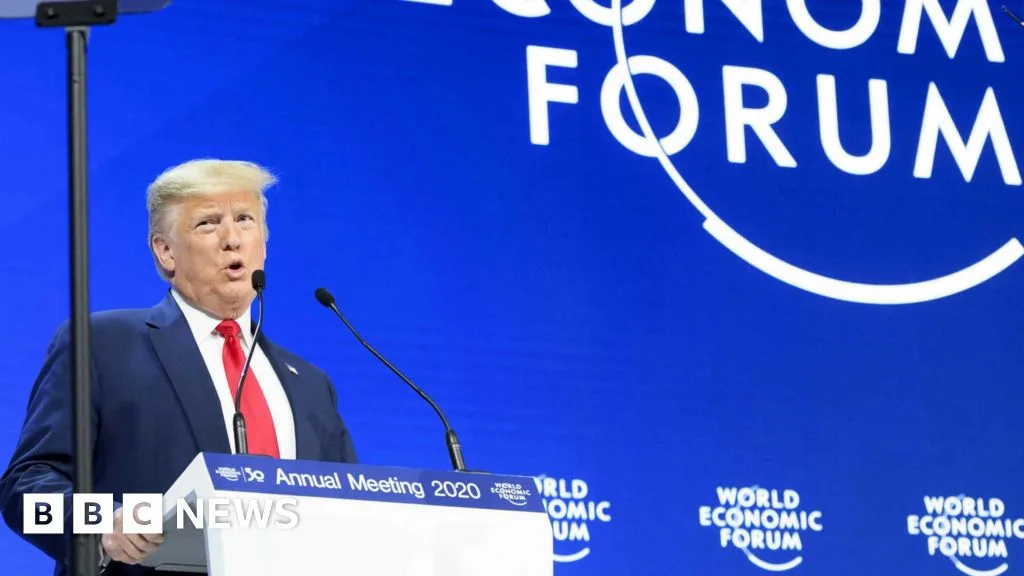
President Trump made a series of claims about his record on the US economy and environment during his speech to the World Economic Forum in Davos. However, fact-checking reveals a more nuanced picture, with some achievements tempered by longer-term trends and policy changes.
On GDP growth, Mr Trump noted annual rates between 2% and 3%, but this falls short of the 4% reached under President Clinton and the 5.5% quarterly peak under President Obama in 2014. The Congressional Budget Office had predicted growth of 2.7% for 2016 and 2.5% for 2017 before he took office.
Since November 2016, over seven million jobs have been added in the US, continuing a 110-month streak of job growth. However, President Obama added 7.8 million jobs in his last three years. The Bureau of Labor Statistics had forecast about 7.9 million new jobs over a decade from 2014.
Mr Trump highlighted manufacturing growth, with roughly 12,000 more factories since he took office. Yet the number began increasing in 2013 under Mr Obama, and most new establishments are small businesses with fewer than five employees.
Claims about welfare reductions are difficult to verify due to varying state programmes, and the African-American unemployment rate hit a record low of 5.5% in September 2019. However, wage disparities persist, with black men earning 26% less than white men on average.