

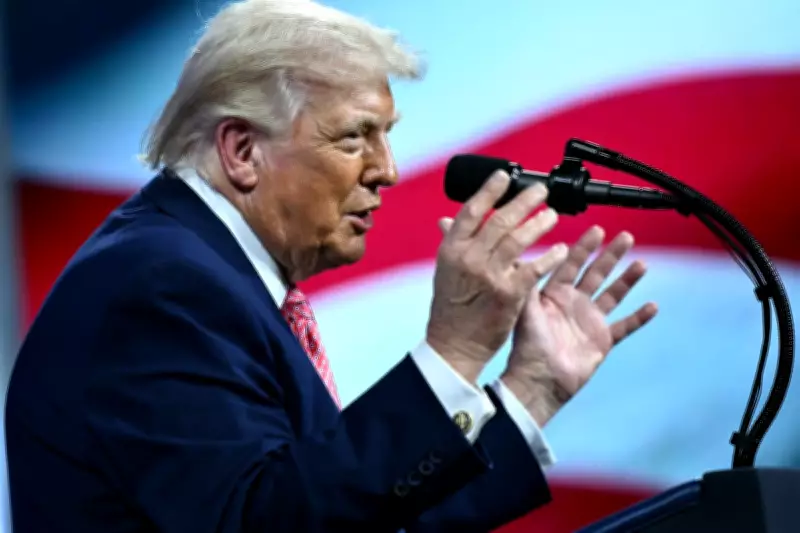
The signature of former President Donald Trump will soon grace the $100 bill, an unprecedented move that places him within an exclusive circle of world leaders whose autographs or portraits have appeared on their nation's currency during their tenure. This development, set to commence in June, will also mark the conclusion of a 165-year tradition where the United States Treasurer's signature was featured on all paper money.
A Historic Departure from Tradition
The United States Treasury Department announced the plan on Thursday, framing it as part of the celebrations for the nation's 250th anniversary. This initiative runs parallel to ongoing efforts to feature Trump's likeness on a commemorative coin for the Semiquincentennial. However, a longstanding federal law from 1866 explicitly prohibits the depiction of living current or former presidents on paper currency, making the signature approach a notable workaround.
Global Precedents for Leaders on Currency
Globally, it is customary for banknotes to display the signature of a central bank governor, treasury official, or another authority involved in monetary issuance. For instance, euro notes carry the signature of the European Central Bank president, while every Bank of England sterling note features the chief cashier's signature, originally inscribed by hand. Historically, Soviet roubles bore the signature of a finance minister or central banker until 1937.

Trump will join a small, often controversial group of sitting leaders whose images or signatures have appeared on their countries' banknotes. Here are some notable examples:
- Congo/Zaire: Former dictator Mobutu Sese Seko, depicted in leopard hat or military attire, appeared on banknotes after renaming the country to Zaire in 1971. His image was physically punched out from notes by the succeeding government until new currency was issued.
- Uganda: Idi Amin Dada, who ruled from 1971 to 1979 following a coup, featured on Ugandan banknotes during his regime. His rival, Apollo Milton Obote, also appeared on notes after returning to power in 1980.
- Kenya: The late President Daniel Arap Moi, in office from 1978 to 2002, and Jomo Kenyatta, Kenya's first president, both had their portraits on banknotes. These were phased out after constitutional changes and currency redesigns.
- Indonesia: Presidents Sukarno and Suharto appeared on banknotes during their terms. Notes with Suharto's image were withdrawn in 2000 following his resignation during the Asian financial crisis.
- Philippines: Former President Ferdinand Marcos Sr. was depicted on numerous banknotes and coins during his presidency from 1965 to 1986. Current notes bear the signature of his son, President Ferdinand Marcos Jr., but feature images of native wildlife instead.
- Tanzania: First President Julius Nyerere's picture appeared on banknotes during his tenure from independence in 1961 until 1985, with the first notes featuring his image released in 1966.
Implications and Reactions
This change signifies a major shift in American monetary tradition, sparking discussions about the intersection of politics, legacy, and currency design. While the 1866 law prevents Trump's image from appearing on paper money, his signature's inclusion offers a symbolic nod to his presidency amidst the nation's milestone anniversary celebrations. The move underscores how currency can serve as a canvas for political expression and historical commemoration, echoing practices seen in various nations across the globe.






