

Trump's Iran Ultimatum Ignites Global Financial Turmoil
Global stock markets have experienced a severe downturn, with billions wiped off valuations, following President Donald Trump's stark ultimatum to Iran. The escalating Middle East conflict has sent shockwaves through financial systems worldwide, directly impacting the pension savings of millions of workers.
Market Meltdown and Pension Pain
In a dramatic start to the trading week, London's FTSE 100 index plummeted, shedding over £40 billion in value within the first hour alone. This was part of a broader global rout totaling approximately £670 billion. The FTSE 100 has now fallen back below the 10,000 mark, representing a 1.5% decline since the beginning of 2026.
The sharp market decline has severely affected the value of pension pots for countless workers, as well as those holding stocks and shares ISAs and other equity-linked investments. While markets remain higher year-on-year, the recent volatility underscores the fragility of financial stability amid geopolitical unrest.

Trump's Threat and Escalating Tensions
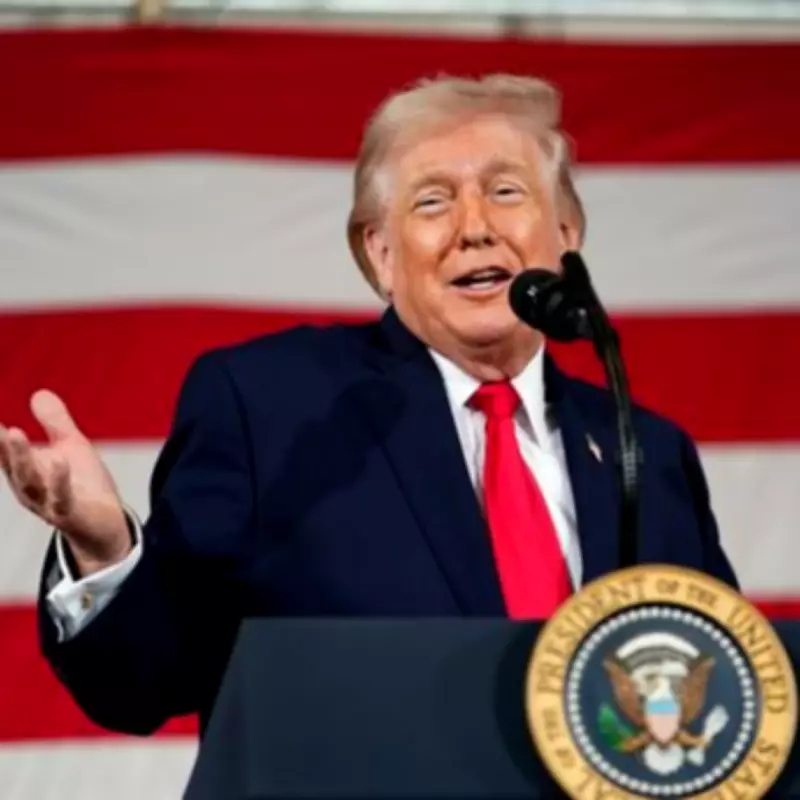
The market turmoil was triggered by President Trump's threat on Saturday to "obliterate" Iran's power plants if the country did not fully reopen the Strait of Hormuz within 48 hours. This aggressive stance came barely a day after he had suggested "winding down" the war, which is now in its fourth week.
In response, Iran's Revolutionary Guards issued a statement on Monday, warning that they would attack Israel's power plants and facilities supplying US bases in the Gulf if Trump carried out his threat. The statement retracted earlier threats to desalination plants in the region, which are vital for providing drinking water in Gulf countries.
"We are determined to respond to any threat at the same level as it creates in terms of deterrence... If you hit electricity, we hit electricity," the statement declared, as shared on state media.
Oil Prices Surge and Energy Crisis Warnings
Concurrently, oil prices soared to $113 a barrel in early trading, nearly double the level before the Middle East conflict erupted, though still below the recent peak of $119. This spike has exacerbated concerns about a deepening energy crisis.
Fatih Birol, head of the International Energy Agency (IEA), warned that the Middle East war has triggered an energy crisis worse than the twin oil shocks of the 1970s and the Ukraine war combined. Speaking in Australia, Mr Birol emphasized that the scale of the problems caused by the US and Israel's war with Iran had not been fully grasped by world leaders initially.
"This crisis, as things stand, is two oil crisis and one gas crisis put together," he stated, highlighting that the conflict has already led to the loss of 11 million barrels of oil per day and about 140 billion cubic metres of gas. In comparison, the 1973 and 1979 oil crises saw a loss of five million barrels daily, while Russia's invasion of Ukraine removed approximately 75 billion cubic metres of natural gas from markets.
The IEA has coordinated a record release of 400 million barrels of oil from global reserves, about a fifth of all reserves held worldwide, in an effort to stabilize markets.
Investor Anxiety and Market Reactions
The stock market turmoil has also affected gold, traditionally seen as a safe-haven investment during times of crisis. Susannah Streeter, chief investment strategist at the Wealth Club, noted, "Far from providing reassurance that the conflict could be resolved, Trump's ultimatum to Iran over the Strait of Hormuz has sent another jolt of worry through markets."
Richard Hunter, head of markets at Interactive Investor, added, "The trickle is running the risk of becoming a flood as it becomes increasingly evident that the short conflict which investors had been pricing in remains totally elusive."
Broader Implications and Future Outlook
Critics argue that UK households are facing the repercussions of "Trumpflation," as the geopolitical tensions drive up costs and market instability. The situation remains fluid, with investors closely monitoring developments in the Middle East and potential further escalations.

As the conflict continues, the financial markets are likely to experience ongoing volatility, posing significant risks to pensions and investments. The international community watches anxiously, hoping for a de-escalation to prevent further economic damage and safeguard global stability.





