

Oil prices climbed and stock markets edged lower on Friday following an exchange of fire between the United States and Iran in the Strait of Hormuz. However, Asian markets remained on track for their strongest weekly performance in years, fueled by an artificial intelligence-driven rally.
Hostilities in the Strait of Hormuz
Brent crude rose 1.3% to $101.60 per barrel as renewed Middle East tensions unsettled markets that had largely anticipated a negotiated resolution earlier in the week. According to the US military, Iran targeted three American destroyers with missiles, drones, and small boats in the strait on Thursday. The attacks were successfully intercepted, and none of the warships sustained damage. In response, US forces carried out strikes against Iranian military facilities, including launch sites and command-and-control centers. Iranian state media reported that the army and navy exchanged fire with "the enemy" near Qeshm Island, while explosions were heard elsewhere.
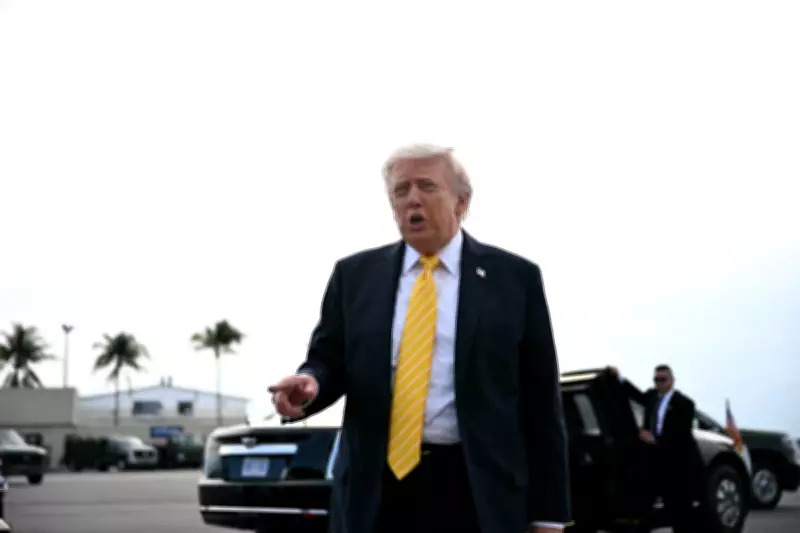
President Donald Trump labeled Iran's leaders as "lunatics" and warned that the US would "knock them out a lot harder, and a lot more violently" if they failed to sign a deal to end the conflict "fast." He posted on Truth Social: "A normal country would have allowed these destroyers to pass, but Iran is not a normal country." Despite the escalation, Trump told reporters that the ceasefire remained in effect. "They trifled with us today. We blew them away," he said. "They have to understand – if it doesn't get signed, they're going to have a lot of pain." When asked about the proximity of an agreement, the US president claimed, "It could happen any day, and it might not happen."

New Iranian Maritime Authority
Adding to the complexity, Lloyd's List Intelligence reported that Iran had established a new agency called the Persian Gulf Strait Authority, positioning it as the sole valid authority to grant permission for vessels transiting the strait. The agency has begun emailing shipping companies an application form for passage. Analysts suggest this move could be designed to increase pressure on Washington.
The United States and its Gulf allies are now seeking support at the United Nations for a resolution condemning Iran's stranglehold on the strait. However, the resolution faces a likely veto from Russia and China.
Asian Markets Rally Despite Tensions
Despite the renewed hostilities, Asian stock markets enjoyed a robust week, driven by surging demand for AI-linked chipmakers. South Korea's Kospi was heading for a weekly gain of 12%, its largest since 2008, as Samsung and SK Hynix surged. Taiwan's benchmark index rose 6.9% for the week, and Japan's Nikkei gained 4.5%, having hit a record intraday high on Thursday. On Friday, however, MSCI's broadest index of Asia-Pacific shares outside Japan fell 0.8%, and the Kospi slipped as traders locked in profits. The Nikkei was 0.4% lower, dragged down by a decline in SoftBank shares after Arm Holdings warned of difficulties securing supply for its new AI chip. S&P 500 futures rose 0.2%.
"Despite ongoing hostilities and still-elevated oil prices, markets are pricing a limited duration," said Marija Veitmane, head of equity research at State Street Markets, noting that Asia and America were attracting the most buying at Europe's expense. European stock futures fell 0.7%.
Economic and Political Focus
Investors are closely watching Friday's non-farm payrolls report in the US, where jobs are expected to have increased by 62,000 in April after rebounding 178,000 in March. Local government elections across Britain are also in focus, with poor results expected for the ruling Labour Party. "Gilts are already under scrutiny due to inflation risks, and adding political uncertainty to the mix could further push global investors to look elsewhere," ING analysts said. Sterling held steady at around $1.36.
The yen was at 156.9 per dollar, having struggled to sustain gains beyond 155 after suspected Japanese intervention totaling nearly $70 billion since last Thursday. The euro bought $1.1731, and the Australian dollar $0.7210. China's yuan, Asia's best-performing currency since the war broke out, was on the cusp of strengthening past 6.8 to the dollar, near its strongest level since 2023. The 10-year US Treasury yield held at 4.39%, while Bitcoin was inching toward a sixth consecutive weekly gain at $79,460.






