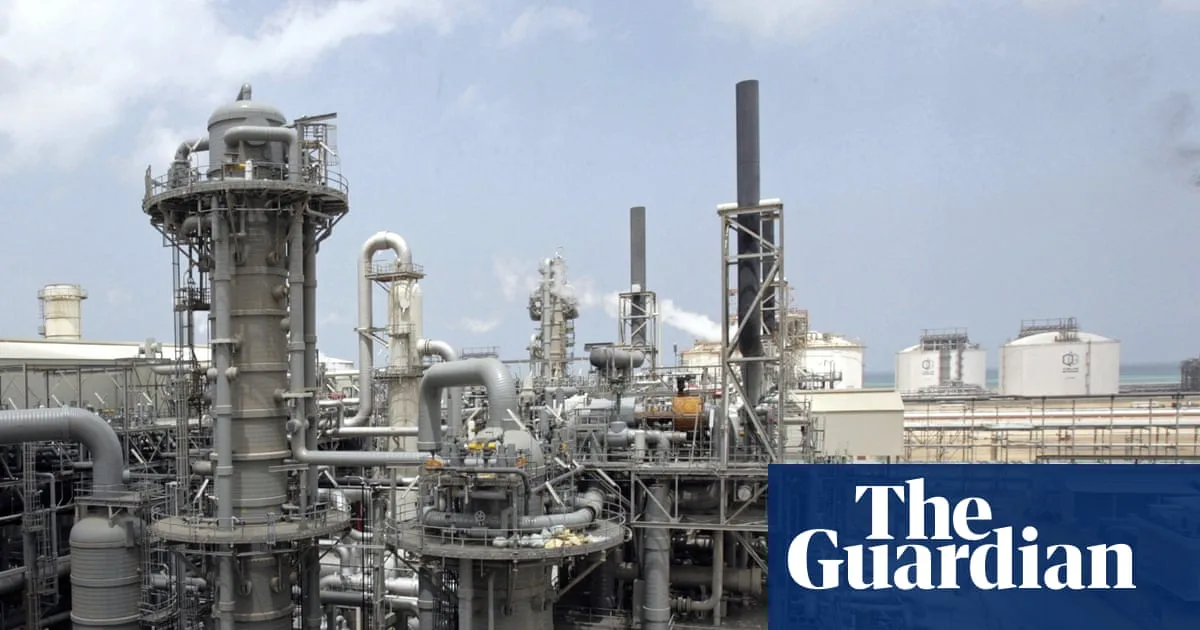
Gas prices soared on Monday and oil rose sharply as the US-Israel war on Iran escalated, causing major disruption to production and supplies. QatarEnergy, the state-owned energy company, said it had halted production of liquefied natural gas (LNG) after attacks on facilities in Ras Laffan and Mesaieed. A drone attacked its energy facility in Ras Laffan, according to Qatar's defence ministry, though no human casualties were reported.
The Dutch day-ahead gas contract, the European benchmark, jumped 41% to €45 per megawatt hour, while the UK day-ahead contract rose 40% to 110p a therm. The shutdown at the world's biggest export facility could result in the loss of almost 20% of global LNG supply, at a time when the market is still feeling the effects of the 2022 energy crisis. Jess Ralston, head of energy at the Energy and Climate Intelligence Unit, warned that the price spike could lead to higher bills for UK homes and businesses.
Oil prices also surged, with Brent crude jumping as much as 13% to $82 a barrel, a 14-month high, as the effective closure of the Strait of Hormuz intensified supply concerns. While oil later fell back slightly, Brent remained up nearly 6% at $77 a barrel on Monday. The strait, through which about a fifth of oil supplies and seaborne gas tankers pass, was reportedly blocked after Tehran warned tankers that no ship would be allowed through. Two ships have been attacked in the strait, according to the UK Maritime Trade Operations.
Stock markets fell across Europe, with London's FTSE 100 down 1.2%. Airlines IAG and easyJet were among the worst performers, dropping 6% and 4% respectively as thousands of flights were cancelled. However, oil companies BP and Shell rose about 3%, and defence firm BAE Systems jumped 5%. Gold, a safe-haven asset, rose 2.5% to $5,408 an ounce. The International Maritime Organization urged ships to avoid the Strait of Hormuz, with its secretary general expressing deep concern over reports of wounded seafarers.