

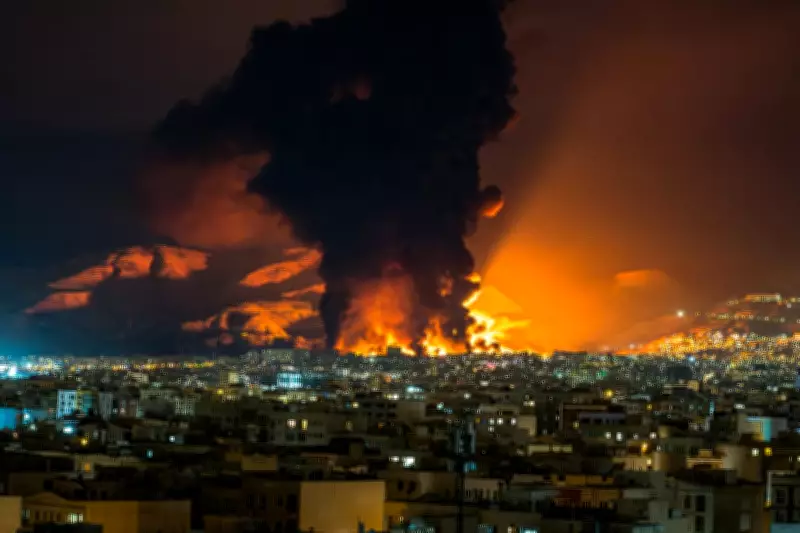
OECD Issues Stark Warning on UK Economic Outlook Amid Middle East Conflict
The Organisation for Economic Co-operation and Development (OECD) has delivered a sobering assessment of the UK's economic prospects, forecasting a significant surge in inflation and markedly weaker growth this year. The influential global policy group attributes this grim outlook primarily to the prolonged war in the Middle East involving Iran, which poses severe risks of global energy shortages and higher food prices.
Inflation and Growth Projections Downgraded
According to the OECD's latest report, the conflict has substantially worsened the economic forecast for many of the world's largest economies, with the UK expected to be hit particularly hard. The organisation now predicts that the UK will experience the second-highest inflation rate within the G7, trailing only the United States, and the second-lowest economic growth, ahead of only Italy.
The OECD has revised its UK inflation forecast upward to an average of 4 per cent for 2026, a sharp increase from the 2.5 per cent projection made in its December report. While inflation is anticipated to decline to 2.6 per cent in 2027, this figure remains higher than the previous estimate of 2.1 per cent.

Concurrently, the outlook for UK gross domestic product (GDP) has been downgraded. The OECD now expects growth to be 0.5 percentage points lower in 2026 than prior forecasts, settling at just 0.7 per cent. A modest recovery to 1.3 per cent is projected for 2027, unchanged from earlier predictions.
Energy and Food Supply Disruptions Loom Large
The report highlights that the Iran war has created significant uncertainty within the oil and gas industry, with potential for prolonged closures of energy infrastructure and shipping routes. Such disruptions could have far more severe consequences than currently anticipated, leading to sustained spikes in global energy prices. This would substantially increase business costs, fuel inflation, and further suppress economic growth.
A prolonged period of disruption could also result in the emergence of significant energy shortages that would lower growth further, the OECD cautioned. Beyond energy, the conflict threatens to cause fertiliser shortages, as the Middle East is a major producer of key components like urea and ammonia. Supply shortages in this sector could drive global food prices sharply higher, exacerbating household financial pressures and inflation expectations.
Policy Recommendations and Government Response
In response to these mounting risks, the OECD urges governments to encourage both households and businesses to improve their energy efficiency. The organisation has expressed support for Chancellor Rachel Reeves' plan to provide targeted support to the most vulnerable households. However, it also advocates for longer-term strategies to reduce dependence on fossil fuel imports, which leave economies exposed to geopolitical shocks.
The report cites examples from some Asian governments, such as energy rationing for businesses in India and energy export restrictions in China, as proactive measures to mitigate shortage risks. Furthermore, the OECD's economists stress that central banks worldwide must remain vigilant in their efforts to control inflation amidst these heightened global price risks.
In her response, Chancellor Rachel Reeves acknowledged the impact of the conflict, stating, "The war in the Middle East is not one that we started, nor is it a war that we have joined. But it is a war that will have an impact on our country." She emphasised the government's economic plan, which focuses on empowering regional growth, embracing AI and innovation, and establishing a closer relationship with the EU, as a strategy to build a more secure economy resilient to global instability.
Across the broader G20 group of advanced nations, which includes economic powerhouses like China, India, and Saudi Arabia, the OECD projects that economic growth will weaken in the near term before gradually recovering through 2027. The organisation underscores that while many uncertainties surround the Middle East conflict, its potential to disrupt global energy and food supplies represents a critical threat to economic stability.






