Business confidence has risen again in Greater Manchester, but any “Burnham bounce” could be temporary as firms face the long-term price impacts of the Iran war.
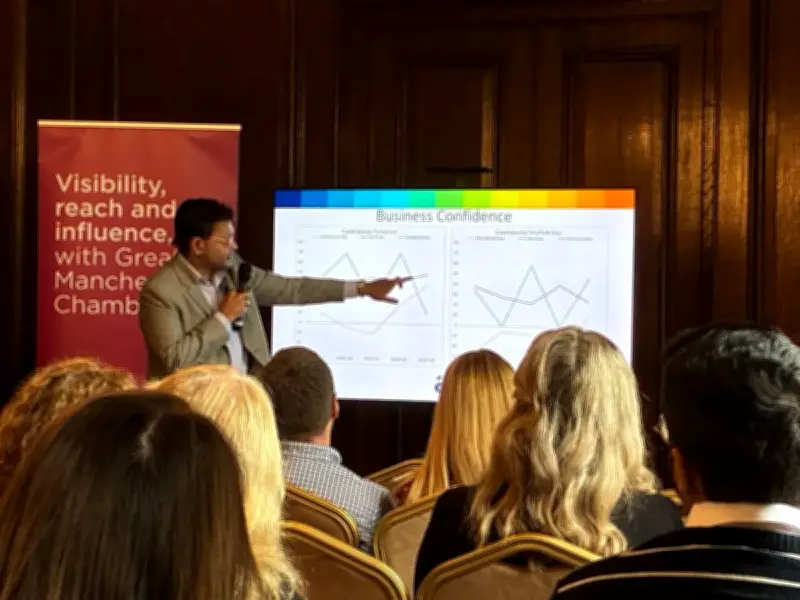
Business leaders gathered at Manchester Hall to hear the latest Greater Manchester Business Index update. Shortly after it was confirmed that Donald Trump and other G20 leaders would be invited to Manchester for next year’s G20 summit, they were told that price increases caused by the US President’s Iran war would affect Northern businesses for a long time to come.
Confidence Index rises to 14.9
Subrahmaniam Krishnan-Harihara, director of business policy and research at Greater Manchester Chamber of Commerce, said the headline GM Business Confidence Index rose to 14.9, up from 13 in Q2. He said businesses in the region had proven resilient despite challenges from rising costs to political uncertainty.
But he and other speakers, including Bank of England agent Lydia Reid, warned that prices could rise still further as the long-term impacts of the war make themselves felt.
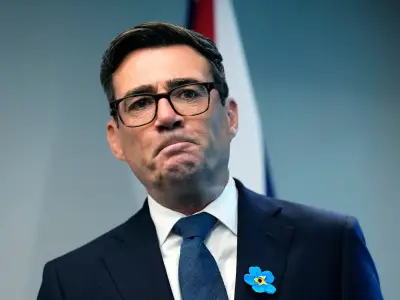
Asked by BusinessLive whether there had been a “Burnham bounce” since the new PM’s arrival, Subrahmaniam said: “In terms of actual economic impact and financial impact, probably no. But clearly some of the improvement in sentiment was attributed to the fact that there was optimism, a new Prime Minister, very good communicator, perhaps a change in direction.”
Where is confidence coming from?
The Chamber’s surveys have shown that despite the costs crisis and the Iran war, business confidence has remained stable. That poses a challenge for analysts like Subrahmaniam.
“There is no cliff edge in confidence,” he said. “Which is why one of the questions that I am wrestling with now is… it’s a mixed picture in the economy. So, where is that business confidence actually coming from? Is it founded in hard business facts or is it an expectation that things will get better?”
One answer might be that businesses are preparing to raise prices, meaning they are upbeat that revenue and profits will rise. But a definitive answer is tough to find.
Subrahmaniam said: “The questions in the QES are very specific... they ask, looking forward to the next few quarters, what is your confidence or optimism with revenues? What is your optimism with profitability? What we are not asking is, psychologically, what do you feel about business confidence?”
Iran war’s drag impact
The fact the conflict has been “protracted and long-drawn” means the impact is ongoing and will continue for a while yet.
“Initially oil prices went up,” Subrahmaniam said, “but then went down. So that perhaps had an ameliorating effect. But we are now seeing the prices go up. If we had a shock and quick resolution, that would have been different, right? But the fact that the crisis has been prolonged, there was a bit of resolution, but then that got cancelled, is starting to have that drag impact on the economy. The fact that prices haven't gone hugely up, but that prices have gone up and are staying up, is what we are seeing now.”
As for the Budget, Subrahmaniam has three key suggestions. He wants the Government to commit to investment in some areas, potentially including green technology or infrastructure, to stimulate the economy. He also wants more support for firms looking to trade internationally, as well as “a very clear roadmap for business investment to be unlocked”.
Bank of England warns on rates
Subrahmaniam shared his presentation with Rupert Greenhalgh, head of business intelligence at The Growth Company. Rupert said business confidence in Greater Manchester “has remained consistently strong” since 2024 despite overall uncertainty, including the impacts of the Iran conflict, but warned “The remainder of the year will be a bit more challenging”.
Lydia Reid, North West agent for the Bank of England, also spoke about this year’s interest rate decisions from the Bank’s Monetary Policy Committee (MPC). The MPC this month voted to keep interest rates at 3.75%, but members warned that pressure to raise rates will build as the Middle East conflict continues.
Lydia stressed the Bank’s core mission was to keep inflation at 2%, and said: “Sometimes the Bank has to make difficult decisions to make sure inflation is low and stable”.
Early this year, analysts were optimistic that cuts in interest rates were on the way. Businesses, she said, were using words like “recovery, green shoots, cautious optimism”. But after the Iran war began, inflation forecasts rose, and expectations are that it could rise further.
She said the indirect impacts of those higher energy costs caused by the Iran conflict were still building in the background, as higher shipping and insurance costs would eventually start being passed on to businesses and consumers. That inflation persistence, she said, will depend on whether any second-round effects, including demands for higher pay, emerge in coming months. She added: “That's the big question for the MPC – what's going to happen to pay?”
That mirrors the warning from Bank Governor Andrew Bailey earlier this month, even as he voted to hold rates. He said: “So far higher global energy costs have had a limited effect on price and wage setting in the UK. But the longer this volatility persists, the bigger the impact it will have on inflation, and the more likely it is we will need to raise Bank rate to ensure that inflation falls back to our 2% target.”
The meeting was opened by David Jones, business services partner at event sponsor Armstrong Watson. He talked through the North West results of the advisory firm’s Family and Owner Managed Business Survey 2026, saying 30% of the firms polled had no growth planned, against a national average of 24%. He said: “It's difficult out there. It's not a fantastic environment for companies to really push the accelerator to grow.”