

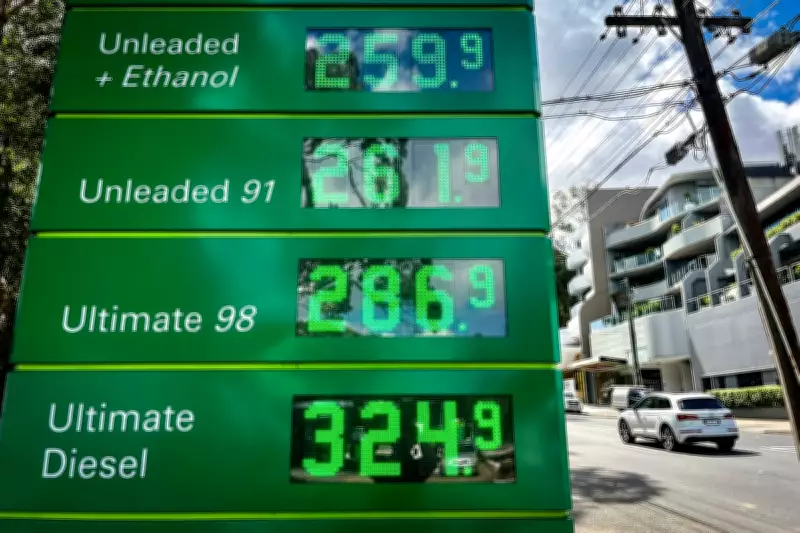
Labor Slashes Fuel Excise to Combat Rising Petrol Prices
In response to the escalating global energy crisis triggered by the war in the Middle East, the Australian Labor government has unveiled a significant economic intervention. Prime Minister Anthony Albanese, following a national cabinet meeting, announced a temporary 50% cut to the fuel excise, effective for three months. This measure is projected to save motorists approximately 26 cents per litre at the pump, providing immediate relief from soaring fuel costs.
Immediate Savings and Budget Impact
The fuel excise reduction will lower the current rate from 52.6 cents per litre to 26.4 cents per litre, with changes visible at petrol stations starting Wednesday. For a typical 65-litre tank, this translates to savings of around $19 per fill-up. However, analysts caution that if global oil prices continue to climb, retail fuel prices may rise again despite the excise cut. The opposition has long advocated for such a reduction, echoing similar actions taken during previous international conflicts.
Additionally, the government will suspend the heavy vehicle road user charge for three months and defer scheduled increases for six months. The total cost of this relief package is estimated at $2.55 billion, reflecting a substantial budgetary commitment to support households and businesses during this turbulent period.

National Fuel Security Plan Unveiled
Alongside the excise cut, Albanese and Energy Minister Chris Bowen introduced a comprehensive four-stage national fuel security plan. This strategy aims to coordinate responses to potential fuel shortages across Australia, ensuring supply stability amid global disruptions. The plan's levels are:
- Plan and prepare
- Keeping Australia moving
- Taking targeted action
- Protecting critical services for all Australians
Currently, Australia is at level 2, where fuel supply continues despite localized disruptions. Under this stage, motorists are urged to buy only the fuel they need and consider using public transport to conserve resources for regional areas. Levels 3 and 4 involve more stringent measures, such as voluntary fuel use limits and government actions to prioritize critical industries, though explicit fuel rationing is not yet mandated.
Supply Concerns and Government Actions
Energy analysts have raised alarms about Australia's fuel reserves, noting that the country has only 39 days of petrol, 30 days of diesel, and 30 days of jet fuel on hand. With Asian suppliers reducing petrol production, at least six shipments to Australia have been cancelled, though the government claims to have secured alternative supplies. To address potential shortages, the government plans to expedite fuel purchases worth up to $2 billion using advance finance minister powers, bypassing parliamentary approval for urgent spending.
Political Reactions and Future Outlook
Opposition leader Angus Taylor welcomed the excise cut but criticized the government for delays and lack of clarity on fuel distribution to affected service stations. State leaders, including NSW Premier Chris Minns and Tasmania's Jeremy Rockliff, expressed support for the measures, highlighting the immediate relief for cost-of-living pressures. While minor parties like One Nation have called for fuel rationing, the government maintains it is unnecessary at present, with Albanese stating Australia is "substantially away" from needing to escalate to level 3 of the security plan.
As the global energy crisis unfolds, these initiatives represent a critical step in mitigating economic impacts on Australian motorists, though ongoing vigilance and potential further actions may be required if conditions deteriorate.






