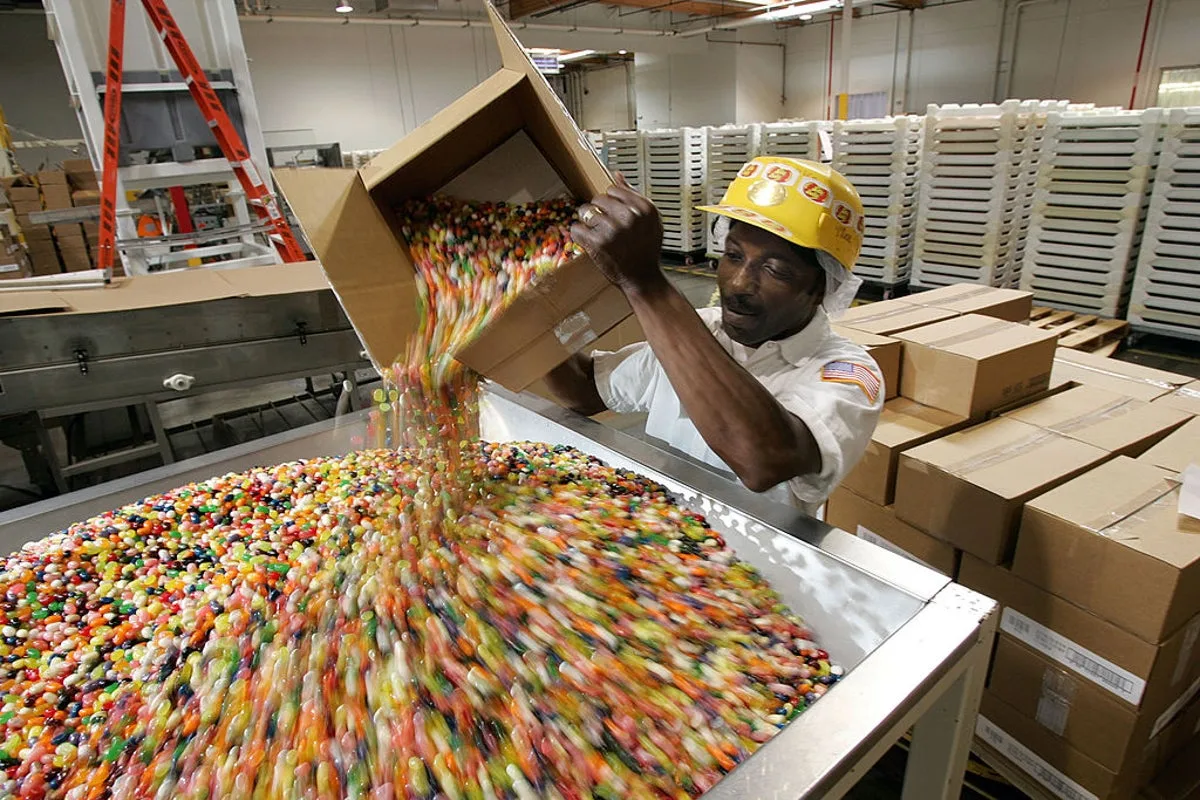
In a significant restructuring move, the iconic jelly bean manufacturer Jelly Belly is set to lay off nearly 70 employees from its corporate headquarters in California. The company, renowned for its quirky flavours such as buttered popcorn, cappuccino, and tutti-frutti, will eliminate 69 positions, representing approximately 18 percent of its total workforce.
Details of the Layoffs and Facility Closure
According to documents filed with county and state officials, and shared publicly by Fairfield Mayor Catherine Moy on social media, Jelly Belly will close its corporate-commercial operations facility in Fairfield, California. The layoffs are scheduled to occur over an 11-month period, commencing on June 1, 2026, and concluding on January 14, 2027.
Positions affected by the cuts include software developers, accountants, customer service representatives, and e-commerce staff. This move follows the acquisition of Jelly Belly by Ferrara Candy Company in 2023, which also owns popular brands like Trolli, Nerds, and Laffy Taffy. The layoffs were reportedly planned as part of the post-acquisition integration strategy.
Broader Trends in the Food and Beverage Industry
The Jelly Belly layoffs are not an isolated incident. Over the past year, several well-known food and beverage brands have announced significant job reductions. For instance, Nestle, the maker of Kit Kat and Nestle Crunch bars, revealed in October 2025 that it would lay off 16,000 workers over two years. Similarly, Ferrero USA, producer of Baby Ruth and Butterfinger, plans to cut 72 jobs in Illinois by January 1, 2027.
These cuts highlight ongoing challenges within the candy and broader confectionery sector. Research firm IBIS World noted in a 2025 analysis that candy producers have struggled to maintain consistent growth due to shifting consumer preferences, heightened competition, and volatile economic conditions.
Economic Factors Impacting Candy Sales
Candy is often viewed as a discretionary or non-essential item by consumers. When economic conditions deteriorate or uncertainty rises, spending on such treats tends to decline. "Since candy provides little nutritional value, it is considered a discretionary good," IBIS World explained. "When economic conditions are poor or uncertain, consumers tend to reduce their candy purchases."
Despite these headwinds, there are some positive indicators for the industry. Per-person disposable income increased slightly in 2025, potentially freeing up more funds for sweet indulgences. The candy industry grew by 1.9 percent in 2025, reaching an estimated $12.5 billion in revenue. However, IBIS World projects a likely 1.9 percent drop in revenue moving forward, underscoring the sector's fragility.
Future Outlook for Jelly Belly and Competitors
While the planned layoffs at Jelly Belly are a direct result of corporate restructuring post-acquisition, they also reflect the broader economic pressures facing candy makers. Companies must navigate consumer trends toward healthier options and economic fluctuations that impact discretionary spending.
The closure of the Fairfield facility marks a strategic shift for Jelly Belly as it adapts to these challenges. As the industry continues to evolve, other brands may follow suit with similar cost-cutting measures to remain competitive in a tough market environment.