Japan's Business Sentiment Rises Despite Iran War Economic Fears
The Bank of Japan's closely watched quarterly tankan survey has revealed a notable uptick in business sentiment among major manufacturers, marking the fourth consecutive quarter of improvement. This positive trend persists even as growing concerns over the economic impact of the US-Israeli war on Iran cast a shadow over Japan's growth prospects and oil supply stability.
Survey Highlights and Economic Context
According to the survey released on Wednesday, the diffusion index for large manufacturers rose from 16 to 17 in March. This index, a key indicator calculated by subtracting the percentage of companies feeling pessimistic from those foreseeing favourable conditions, underscores a gradual but steady recovery in industrial confidence. In contrast, the index for large non-manufacturers, including the service sector, remained unchanged at 36, reflecting a stable but cautious outlook in other areas of the economy.
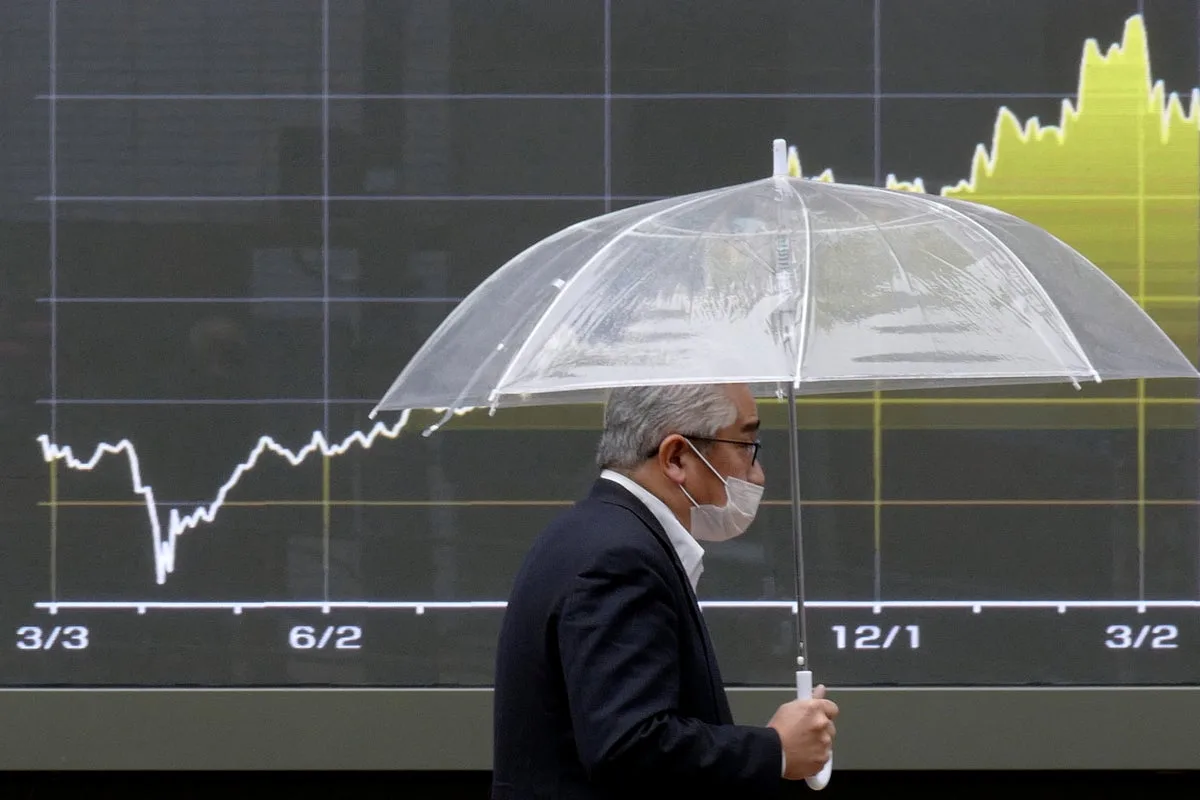
The improvement comes against a backdrop of significant economic uncertainty. Investors and consumers alike are grappling with fears about prolonged conflict, potential disruptions to oil supplies, and volatile statements from US President Donald Trump. These factors have contributed to wild fluctuations in Japan's benchmark Nikkei 225 index in recent weeks, highlighting market jitters.
Inflation and Monetary Policy Considerations
While Japan's inflation has remained relatively moderate so far, worries are mounting over rising prices at petrol stations and for other essential products. Soaring energy costs and a declining yen are two critical elements driving these concerns, as they directly impact living costs for average Japanese consumers. Historically, Japan benefited from a weak yen due to its robust export sectors, such as automobiles and electronics, as it increased the value of overseas earnings when converted into yen.
However, in recent years, the weak yen has turned into a liability. As a resource-poor nation, Japan relies heavily on imports for energy, food, and manufacturing components, making a depreciated currency a negative factor that exacerbates import costs. The US dollar has been soaring against the yen lately, intensifying these pressures.
Analysts suggest that the Bank of Japan may consider raising interest rates in response to inflation concerns, given the current economic climate. The central bank, which had maintained a negative interest rate policy for years to combat deflation until normalising in 2024, kept the rate unchanged at 0.75 per cent in March. The next monetary policy board meeting is scheduled for April 27 and 28, where further adjustments could be discussed.
Broader Implications and Future Outlook
The resilience in business sentiment, despite geopolitical tensions, points to a complex economic landscape. Key factors to watch include:
- Energy Dependency: Japan's reliance on imported oil makes it vulnerable to supply shocks from the Iran conflict.
- Currency Dynamics: The weak yen's dual role as both a boon for exports and a burden for imports requires careful balancing.
- Consumer Confidence: Rising living costs could dampen consumer spending, affecting broader economic growth.
- Policy Responses: Potential interest rate hikes by the Bank of Japan could influence borrowing costs and investment decisions.
As the situation evolves, businesses and policymakers will need to navigate these challenges while capitalising on the positive momentum in manufacturing sentiment. The ongoing war in Iran adds a layer of unpredictability, but Japan's economic indicators show a cautious optimism that may help buffer against external shocks in the coming months.