Japan's Business Sentiment Edges Up Despite Iran War Concerns
Japan Business Sentiment Rises Amid Iran War Worries

Japan's Business Sentiment Edges Up Despite Iran War Concerns

A quarterly survey by the Bank of Japan reveals that business sentiment among major Japanese manufacturers has improved slightly, even as worries mount over the economic impact of the war in Iran and rising inflation pressures.

Key Findings from the Tankan Report

The closely watched "tankan" report, released on Wednesday, shows the diffusion index for large manufacturers rose to 17 in March from 16 in the previous quarter. This marks the fourth consecutive quarter of improvement, indicating a cautious optimism among industrial firms.

However, the index for large non-manufacturers, including the service sector, remained unchanged at 36, reflecting stability but no growth in this segment.

Wide Pickt banner — collaborative shopping lists app for Telegram, phone mockup with grocery list

Economic Challenges and Market Volatility

The positive sentiment comes against a backdrop of significant economic headwinds. Concerns are growing about Japan's economic growth and oil supplies due to the ongoing conflict in Iran, which has led to soaring energy costs.

Japan's inflation has remained relatively moderate so far, but fears are escalating over prices at gas stations and for other essential products. Investors and consumers alike are grappling with uncertainty about the war's duration and potential statements from U.S. President Donald Trump.

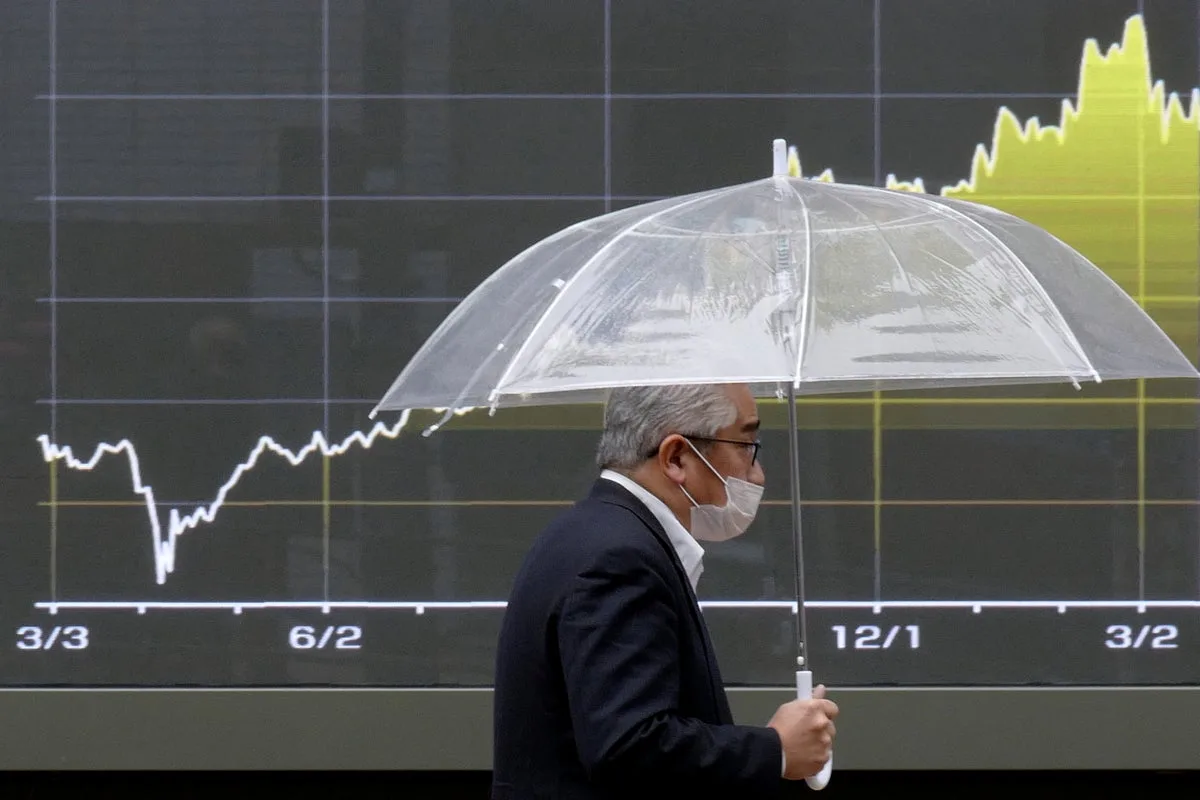
The benchmark Nikkei 225 index has experienced wild fluctuations in recent weeks, highlighting market instability.

Monetary Policy and Interest Rate Speculation

Analysts suggest that the Bank of Japan may consider raising interest rates in response to inflation concerns, driven by high energy costs and a declining yen. These factors significantly impact living costs for average Japanese consumers.

Historically, Japan benefited from a weak yen due to its strong export sectors, such as automobiles and electronics, as it increased the value of overseas earnings when converted to yen.

In recent years, however, a weak yen has become a negative factor. As a resource-poor nation, Japan relies heavily on imports for energy, food, and manufacturing components, making a depreciated currency costly.

The U.S. dollar has been strengthening against the yen, exacerbating these import challenges.

Central Bank Actions and Future Outlook

The Bank of Japan maintained a negative interest rate policy for years to combat deflation before normalizing it in 2024. In March, the central bank kept the rate unchanged at 0.75%.

The next monetary policy board meeting is scheduled for April 27 and 28, where further decisions on interest rates and economic measures will be discussed.

This survey serves as a critical indicator, calculated by subtracting the percentage of companies with pessimistic outlooks from those anticipating favorable conditions.

Pickt after-article banner — collaborative shopping lists app with family illustration