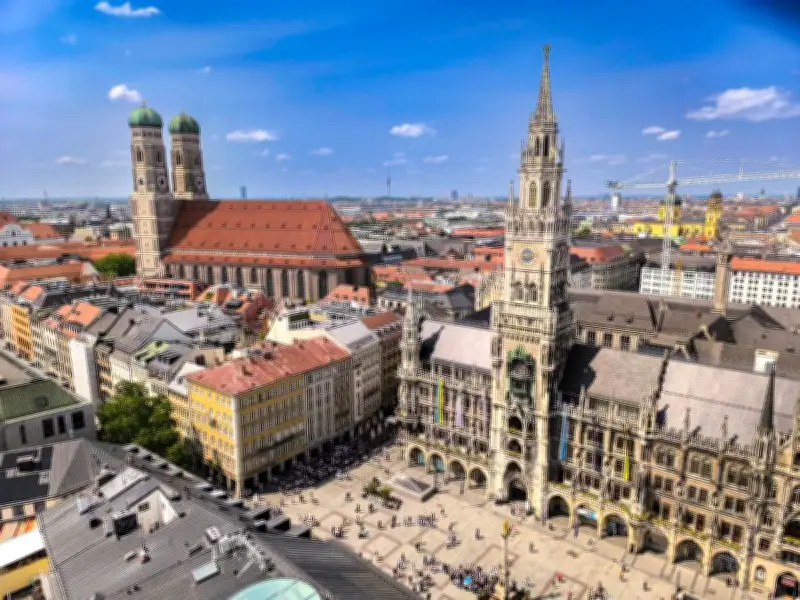
Germany has been identified as Europe's wealthiest country based on gross domestic product (GDP), according to figures from the World Population Review. The nation's GDP stands at $5.45 trillion (£4.026 trillion), outpacing other major European economies.
Understanding GDP
GDP measures a country's productivity and prosperity by calculating the total monetary value of all goods and services produced within its borders over a year. Economists derive this figure by combining consumer spending, business investment, government expenditure, and net exports.
A rising GDP year-on-year signals financial health, while consistent declines may indicate an impending recession. However, GDP alone does not reflect wealth distribution, happiness, or individual prosperity. Therefore, it is often paired with metrics like the Human Development Index, which incorporates life expectancy and education, or the Inclusive Wealth Index, which assesses infrastructure, natural resources, and workforce alongside finances.

How Other European Nations Compare
The UK ranks second with a GDP of $4.23 trillion (£3.148 trillion), followed by France at $3.17 trillion (£2.654 trillion), Italy at $2.42 trillion (£2.021 trillion), and Russia at $2.21 trillion (£1.962 trillion).
Germany's GDP exceeds the combined economies of Portugal ($380.6 billion, £281.0 billion) and Greece ($307.6 billion, £227.1 billion), illustrating its dominant economic position in Europe.