Gender Equality Progress at UK's Top Firms Remains 'Achingly Slow'
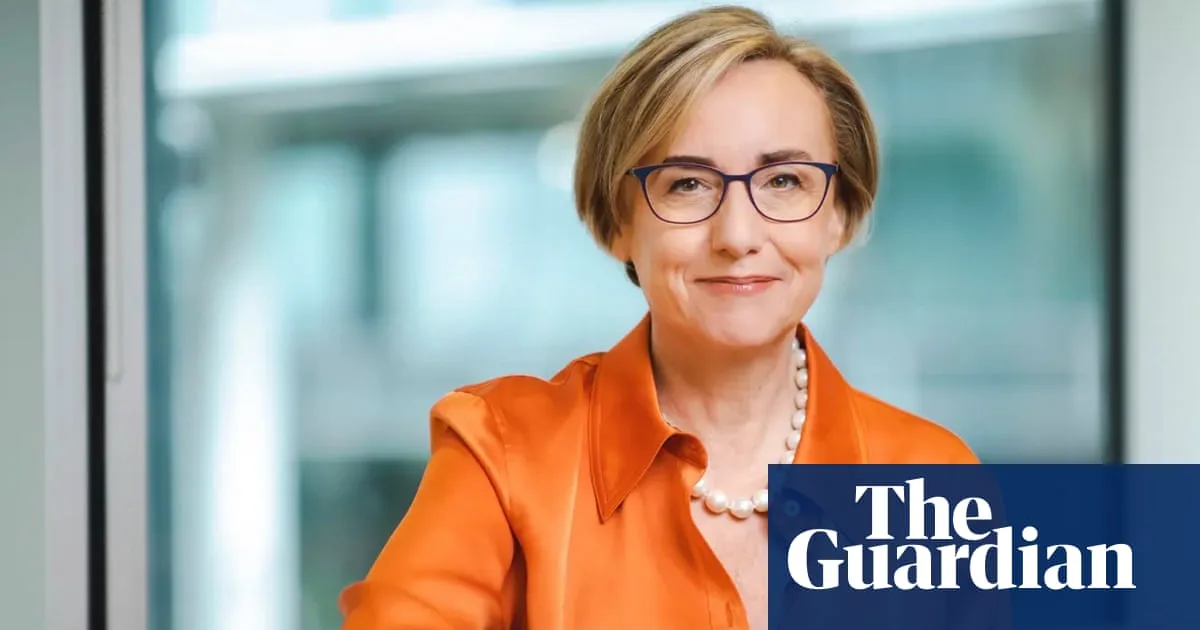
Campaigners have expressed deep disappointment over the "achingly slow" advancement of gender equality within Britain's largest corporations. A recent government-backed review highlights that blue-chip companies have failed to meet critical targets, with only nine female chief executives currently leading FTSE 100 firms.
Stalled Numbers and Missed Targets
According to the FTSE Women Leaders Review, the average number of female CEOs in the FTSE 100 remained stagnant last year, mirroring the figure from 2024. This represents a significant setback, as the peak was reached in 2023 with ten women at the helm. In contrast, as recently as 2016, there were merely six female chief executives.
The current roster includes notable leaders such as Allison Kirkby at BT, Zoë Yujnovich at National Grid, Milena Mondini de Focatiis at Admiral, Stella David at Entain, Louise Beardmore at United Utilities, Margherita Della Valle at Vodafone, Amanda Blanc at Aviva, and Cindy Rose at WPP. Additionally, the report acknowledges Emma Walmsley at GSK and Liv Garfield at Severn Trent, both of whom departed in December, along with Carol Howe, the interim CEO of BP, who is set to be succeeded by Meg O'Neill in April.
Further changes occurred with Debra Crew's exit from Diageo last summer after a period of declining share prices, and the relegation of Taylor Wimpey and WPP to the FTSE 250, though both companies continue to be led by women.
Broader Leadership and Boardroom Trends
The FTSE 350, encompassing mid-sized businesses, fell short of a voluntary target established in 2021, aiming for 40% women in top executive roles by 2025. Currently, women occupy 36% of senior leadership positions, defined as roles on the executive committee and the senior managers directly below.
However, there is a brighter spot in boardroom representation. The FTSE 350 surpassed its 40% target for boards, with women now holding 43% of seats. Similarly, the FTSE 100 achieved 44% female board representation. Vivienne Artz, chief executive of the FTSE Women Leaders Review, emphasized that progress in critical roles like chief financial officer, chair, and chief executive has been particularly sluggish, underscoring the need for enhanced talent pipelines and experience in revenue-generating positions.
Company-Specific Insights and International Comparisons
Among FTSE 100 companies, Burberry leads with the highest number of women on its leadership team, followed by the retailer Next. Conversely, Games Workshop and the miner Fresnillo ranked lowest in terms of female representation in senior leadership roles.
Female representation is notably stronger among non-executive directors (NEDs), who provide part-time guidance without daily operational involvement. The proportion of female NEDs stands at 49% in the FTSE 350 and 50% in the FTSE 100, unchanged from the previous year.
Internationally, the UK ranks second among G7 countries for women in the boardroom, trailing only France. In the French Cac 40, where mandatory quotas are in place, women hold 45% of board seats.
Government Response and Future Initiatives
Rachel Reeves, the UK Chancellor, acknowledged the progress made but stressed that "there is still a long way to go." She highlighted the economic benefits of full female participation, including better decision-making and enhanced innovation.
Seema Malhotra, the Minister for Equalities, pointed to voluntary business-led efforts that have moved women from the periphery to the heart of the boardroom over 15 years. The government is accelerating progress through measures such as the Employment Rights Act, which offers stronger protections for mothers, tougher sexual harassment laws, and improved gender pay gap transparency. Additional support includes expanded childcare hours and initiatives like free breakfast clubs.
Games Workshop and Fresnillo were approached for comment but have not yet responded.