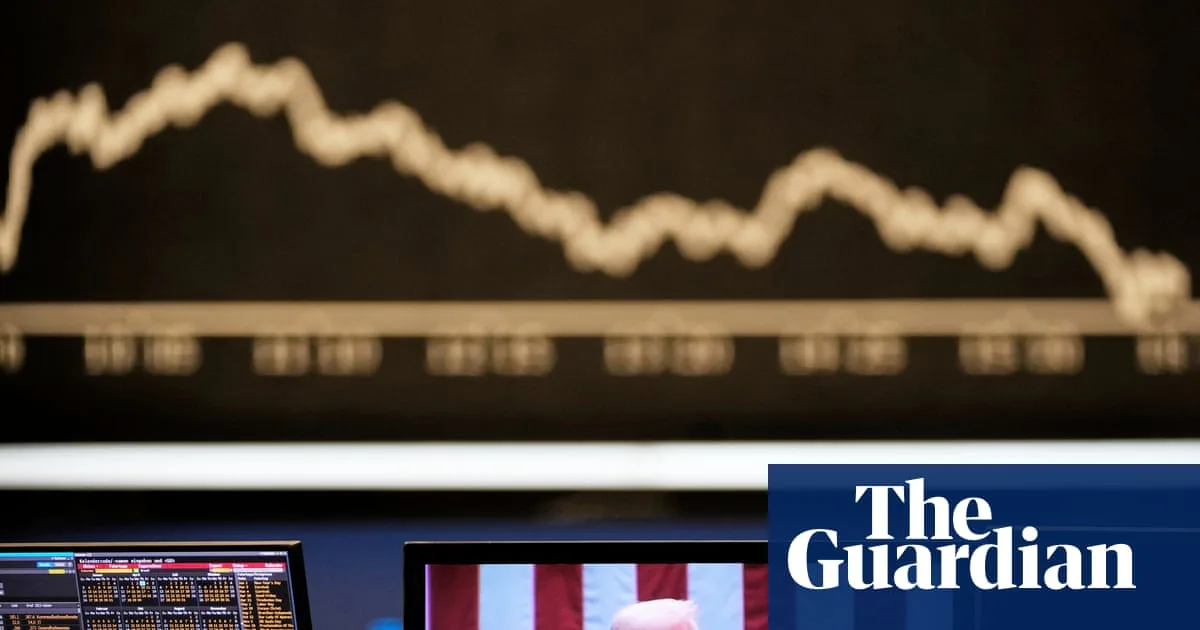
The global economy proved more resilient than feared in 2025 despite intense headwinds, but the outlook for 2026 remains fragile. Inflation is expected to cool further as central banks lower interest rates, yet the era of rock-bottom borrowing costs is over, and growth is moderating across advanced economies.
Investor anxiety over artificial intelligence is a defining theme. A Deutsche Bank poll of institutional clients found a tech bubble bursting was the biggest risk for 2026, cited by 57% of respondents among their top three concerns. Jim Reid, the bank’s global head of macro research, said: “We’ve never seen a single risk score so far ahead of the rest entering a new year, making it very clearly the dominant concern for 2026.”
Global GDP growth is forecast to slow as trade tariffs weigh, with China’s expansion weakening and the US expected to lead the G7, followed by Canada and Britain. While inflation across rich countries is predicted to normalise, the UK stands out as a disinflation laggard. The IMF forecast in the autumn that Britain would suffer the highest inflation in the G7, though the Bank of England expects the latest budget to bring the headline rate close to its 2% target by summer.
Monetary policy will shift focus in 2026. Federal Reserve chair Jerome Powell’s term ends in May, raising questions about whether his successor will cut rates more aggressively under political pressure from President Trump. In the eurozone, inflation is already close to the European Central Bank’s 2% target, likely deterring action, while economists warn of the risk that price pressures could be rekindled, limiting room for further cuts.
Trade tensions have eased since the initial shock of Donald Trump’s “liberation day” announcement last April, but US tariff rates remain far higher than before his return to the White House. Geopolitical uncertainty persists, prompting companies to accelerate supply chain diversification and nearshoring. “Geopolitically, the world remains a boiling pot of uncertainty,” said Carsten Brzeski, global head of macro at ING.