

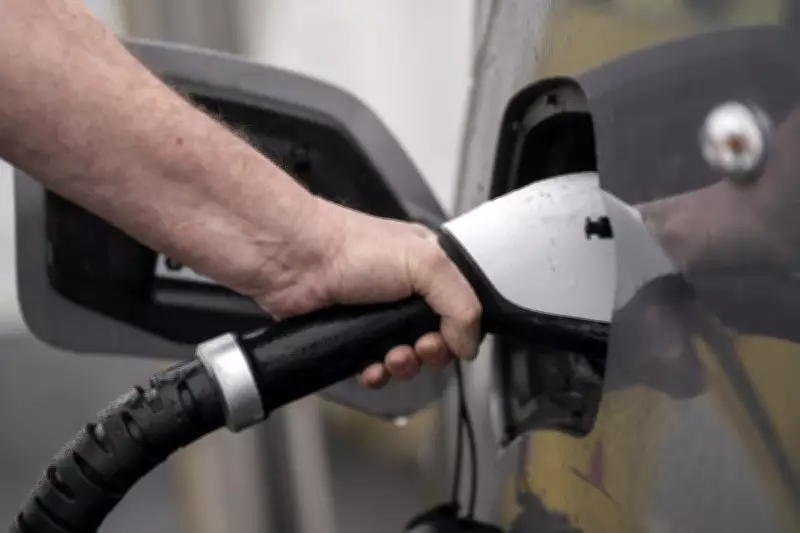
Electric vehicle (EV) sales have reached a new record in the first quarter of the year, driven by a broader selection of models and the appeal of lower running costs as petrol prices continue to climb.
Record EV Sales Amid Falling Used Car Market
The Society of Motor Manufacturers and Traders (SMMT) reported that the overall used car market saw a slight decline between January and March compared to the previous year. However, sales of fully battery electric vehicles surged by 32%, with 86,943 units sold. Despite this growth, EVs still represent only 4.3% of the market, up from 3.3% last year. Hybrid electric vehicles also performed strongly, with sales rising by 27% to over 128,000 units, accounting for 6.4% of the market.
Industry Insights on EV Uptake
Mike Hawes, SMMT chief executive, noted that the overall market experienced “weakness in March in comparison with a very strong performance in 2025.” He emphasised that the record demand for used EVs is a positive sign, but stressed the need for supportive policies to sustain momentum. “High fuel prices, given the conflict in Iran, may increase demand even further,” Hawes added. “To maintain this momentum, every fiscal and policy lever must be pulled to ensure a healthy new car market that delivers zero emission vehicles that can in future flow through to the used market.”

Iain Reid of Carwow attributed the shift to both rising petrol costs and improved consumer confidence. “The latest SMMT figures reflect both cost pressures and expanding consumer confidence in electrified vehicles,” he said. “Our data shows that used EV enquiries are up 30% compared with February and March, while a recent poll of 300 Carwow customers revealed that 39% say they are more likely to buy an EV or hybrid as a result of the global political situation.” Reid added that the growing depth of choices available now gives consumers the opportunity and confidence to consider a used EV that they may not have had before.
Impact of Rising Fuel Prices
While the SMMT figures only cover the early stages of the Iran conflict, industry insiders suggest the trend will accelerate. In April, rising petrol costs prompted more drivers to switch to electric, according to the Energy and Climate Intelligence Unit (ECIU). Colin Walker, head of transport at the ECIU, highlighted that EVs are now cheaper to recharge than petrol vehicles are to fill up. “Just like second hand EVs, new EVs are no longer any more expensive to buy than their petrol equivalents,” he said. “One of the main barriers holding people back from making the switch to electric driving has been removed, at the very moment that we’re seeing a surge of interest in EVs on the back of rising petrol prices driven by conflict in the Middle East.”
Walker noted that new EV sales surged by 59% in April, as drivers “vote with their feet and make the move to vehicles that can save them hundreds, if not thousands, of pounds a year in owning and running costs.”






