

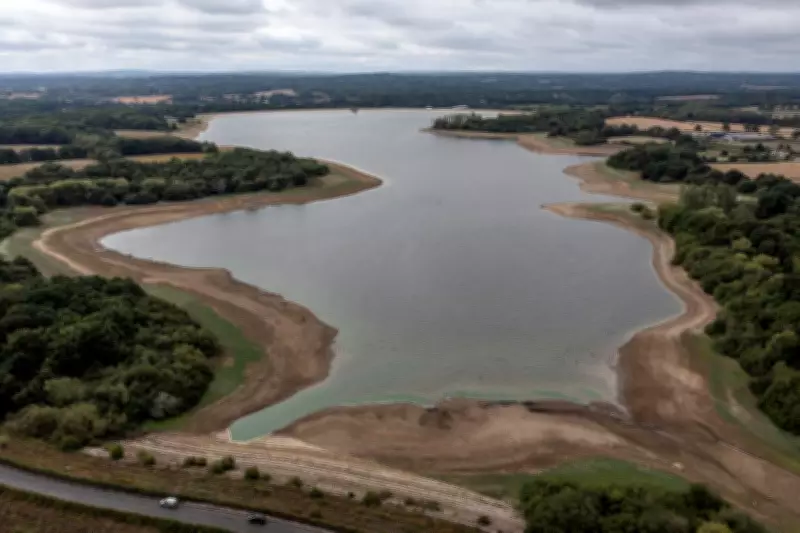
The risk of drought in the United Kingdom is increasing following an unusually dry start to spring, which has pushed river flow, groundwater, and reservoir stores below normal levels across much of the country, especially in central and southern England.
Official Hydrological Outlook
The latest official hydrological outlook, released this week, warns that the rest of May will likely see "below normal to notably low river flows across central southern England," and these conditions could persist into July. In its monthly national report on the water situation across the country, the government acknowledged that "April was the second dry month in a row, with most of the country receiving below average rainfall." East and south-east England recorded their driest April since 2011.
Rainfall and Soil Moisture
Across the country, rainfall over April was 23 percent below average, according to Met Office figures. The lack of rainfall means soil moisture deficits are now being felt across the country, but most acutely in the South and East. "Monthly mean river flow decreased at all indicator sites in April," leaving rivers in these areas below normal levels for the time of year. Groundwater levels have also fallen almost everywhere, the government said, while reservoir storage levels had broadly fallen but nonetheless remained slightly above average for the time of year.

Concerns for Farmers
While drought has not yet struck and more rain is forecast in May, farmers are already concerned about water scarcity in the South and East. In Cambridgeshire, the county council's Environment and Green Investment Committee was informed in April that current water supplies cannot meet future agricultural and domestic demand. A £1.38 million grant scheme has been launched across the county aimed at helping farmers improve water efficiency. Infrastructure projects, including the proposed Fens Reservoir, are planned for the 2030s to secure future supply in the highly water-stressed region.
Southern Water's Position
Southern Water, the supplier for 2.7 million customers across Kent, Sussex, Hampshire, and the Isle of Wight, noted that although April and May have been dry, supplies remain good. The area has had just 20 percent of long-term average rainfall in April and only 15 percent to date in May. The company said reservoir storage was at 92 percent, and most rivers and groundwater stores were stable and in a better position than last year. "We constantly monitor river and reservoir levels so that when we experience drier periods, as seen throughout April, we ensure we use water as efficiently as possible to maximise the efficient use of water resources," a Southern Water spokesperson said. "While we have seen a very dry period since the start of March, our reservoir storage remains strong and the majority of river and groundwater levels across our area are currently stable. We start preparations to respond to the risk of drought early, to help minimise any impact on customers and the environment."






