Complexity Scientist Doyne Farmer's $100m Plan to Revolutionise Economic Forecasting
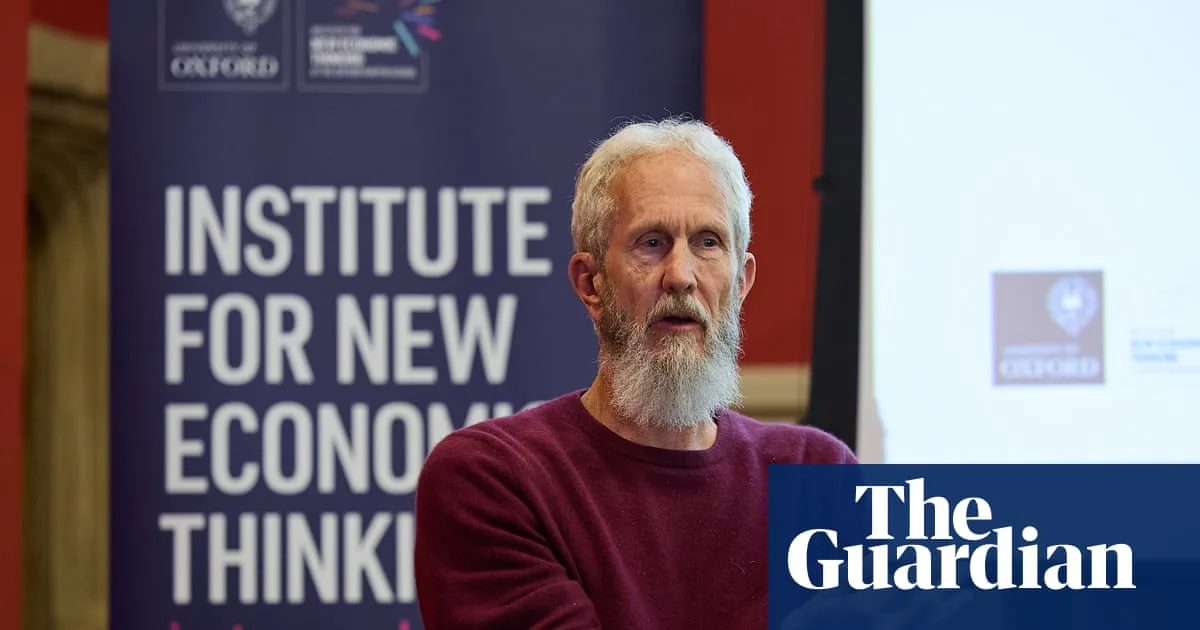
Professor Doyne Farmer, a renowned complexity scientist at Oxford University, has unveiled an ambitious proposal to transform economic planning. He aims to develop a super-simulator of the global economy, costing $100m, which he believes could accelerate the transition to a green, clean world. Farmer compares this initiative to the impact of Google Maps on traffic planning, stating it would provide intelligent and useful answers to economic questions.
A Vision for Unprecedented Clarity
The concept involves creating an economic model where every company is individually represented, making realistic decisions that adapt as the economy evolves. This complexity would yield forecasts of unprecedented clarity, potentially preventing global financial crashes and ineffective climate policies. Farmer argues that traditional economic models are either too simplistic for useful forecasts or too complex for current computers to handle, but complexity economics offers a viable path forward.
He highlights the global financial crash of 2008, which cost the world approximately $10tn, as an example. If a model like his had been available in 2006, central banks could have taken preemptive action to mitigate losses. Farmer estimates that if the $100m model had reduced losses by just 1%, it would have paid back the investment 1,000 times over.
Tackling the Climate Crisis
At 73 years old, Farmer has turned his focus to the climate crisis, describing it as one of the biggest problems facing humanity, exacerbated by political polarisation. He criticises existing economic models for their inadequacy in predicting renewable energy trends, noting they consistently underestimated rollout speed and cost reductions. In reality, costs have plunged and adoption has been rapid.
To address this, Farmer's team is first targeting the energy sector with a complexity model. This model includes all 30,000 energy companies and their 160,000 assets, such as oil rigs and power stations, based on a 25-year dataset. By simulating decision-making for each company as separate digital agents, the model aims to outline the best path to a green energy future. A 2022 study by Farmer and colleagues suggested a rapid transition to clean energy could save trillions of dollars globally.
Overcoming Fundamental Flaws in Economics
Farmer identifies two key issues with mainstream economic models. First, they assume perfect, rational decision-making by economic actors, which becomes computationally impossible with millions of agents. Complexity models simplify this by using rules like imitation or trial and error, reflecting real-world behaviour and reducing computing needs. This allows for modelling millions of agents instead of just a handful.
Second, traditional models assume equilibrium, whereas the real economy experiences booms and busts. Complexity models naturally generate economic cycles without external shocks, as agents learn and adapt in a dynamic environment. Farmer attributes the persistence of ineffective models to academic inertia from the 1960s, limited historical computing power, and a mathematical rather than practical approach in economics.
Urgency and Future Prospects
Farmer expresses urgency in developing the global complexity model, aiming for completion within 5 to 10 years. He believes it would revolutionise decision-making for politicians and business leaders, enabling better forecasts and accelerating climate action. The project is open to funding, with Farmer inviting contributions to advance this groundbreaking work.
His book, Making Sense of Chaos: A Better Economics for a Better World, published in 2024, further explores these ideas. As the world grapples with economic and environmental challenges, Farmer's vision offers a promising tool for navigating complexity and driving positive change.