

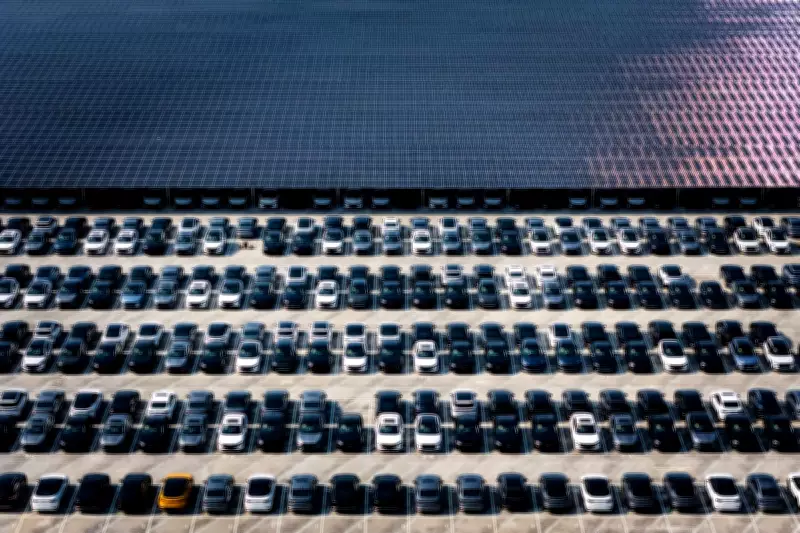
China has taken decisive action to rein in a damaging price war within its automotive sector, introducing stringent new guidelines to curb aggressive discounting that has inflicted heavy losses on manufacturers. This move comes in direct response to official data revealing a dramatic 19.5% year-on-year drop in passenger car sales for January 2026, marking the most severe contraction since February 2024.
New Regulatory Framework Announced
The State Administration for Market Regulation unveiled comprehensive rules on Thursday, targeting automakers, dealerships, and parts suppliers. The core objective is to halt a destructive race-to-the-bottom in pricing that regulators argue harms the entire industry's stability.
The guidelines explicitly prohibit manufacturers from selling vehicles below production cost with the intent to eliminate competitors or establish market dominance. The regulator issued a stark warning, stating that violators would face "significant legal risks." Furthermore, the rules clamp down on deceptive pricing tactics and any form of price-fixing collusion between parts suppliers and car companies.

January Sales Data Reveals Sharp Contraction
According to the China Association of Automobile Manufacturers (CAAM), only 1.4 million passenger cars were sold in January, a stark contrast to the 2.2 million units sold in December. This 19.5% annual decline is attributed to multiple factors squeezing consumer demand.
Analysts point to a cautious, cash-strapped consumer base reluctant to commit to major purchases like automobiles. The sector has also been hit by the reduction of tax exemptions for electric vehicle (EV) purchases and lingering uncertainty over whether trade-in subsidies for EVs will continue, following their phase-out in some regions.
The Cost of the Price War
The aggressive discounting battle has come at a tremendous cost. Li Yanwei, a member of the China Automobile Dealers Association, recently highlighted that the price war has resulted in an estimated loss of 471 billion yuan (approximately $68 billion) in total industry output value over the past three years.
Market forecasts remain cautious for domestic demand in 2026. S&P Global Ratings projects that sales of light vehicles, including passenger cars, in China could fall by up to 3% this year.
Export Markets Offer a Silver Lining
Despite domestic headwinds, Chinese automakers are making significant strides internationally. Passenger car exports surged 49% year-on-year in January, reaching 589,000 units. This export growth is increasingly vital as companies confront intense competition and oversupply in the home market.
"We don't foresee a loss in momentum for the Chinese auto industry this year," stated Claire Yuan, Director of Corporate Ratings for China Autos at S&P Global Ratings, underscoring the offsetting strength of overseas expansion.
Major players like BYD, which surpassed Tesla as the world's leading EV manufacturer, are aggressively targeting markets in Europe and Latin America. Citi analysts project China's total car exports could leap 19% in 2026, driven primarily by electric vehicles and plug-in hybrids.
International Trade Developments
Recent international agreements are paving the way for this export growth. Canada has agreed to reduce its substantial 100% tariff on China-made EV imports, a move welcomed by Chinese manufacturers. Additionally, China has recently concluded a deal with the European Union that could facilitate greater access for its EVs into the European market.
Reflecting this global ambition, BYD has set a target of approximately 1.3 million overseas car sales for 2026, up from 1.05 million the previous year. Other leading Chinese automakers have similarly announced ambitious export-focused sales targets, signaling a strategic pivot towards international markets as domestic conditions tighten.






