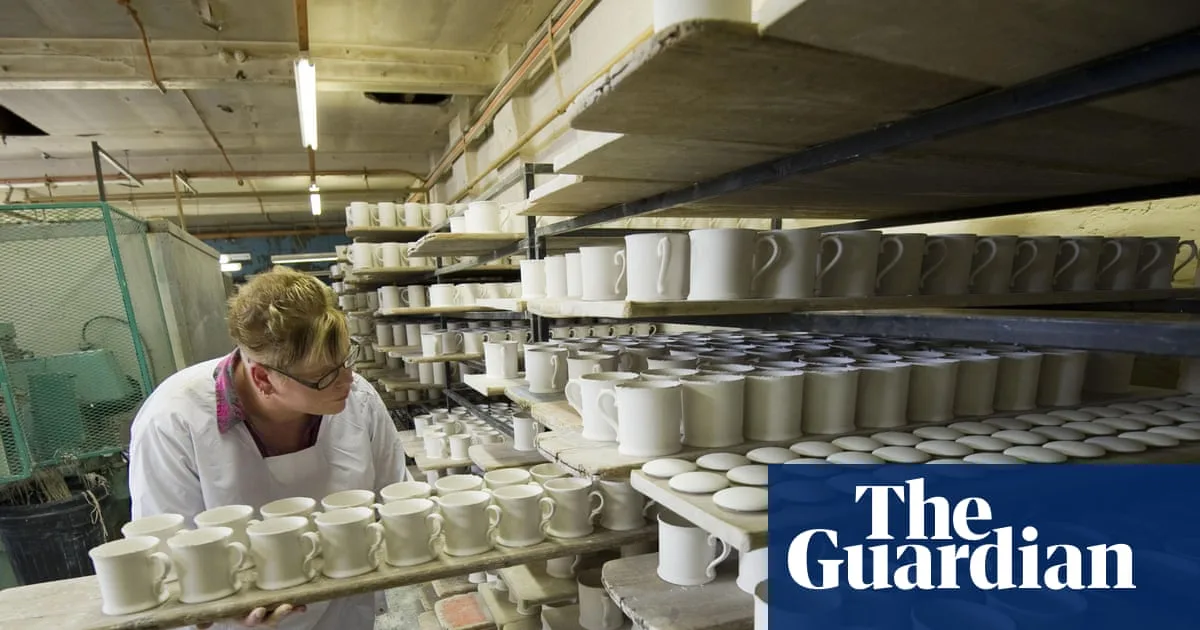
The UK government has been warned that the country risks losing a part of its national identity if the ceramics industry is allowed to decline further without state intervention. Unions and the Green Alliance thinktank have urged action to save the sector, which is struggling with high energy costs, cheap imports, and underinvestment.
Ceramics producers, including the historic potteries of Staffordshire, have faced severe pressure from the UK's high energy prices, leading to job losses. The GMB union's Chris Hoofe said: 'Tens of thousands of working-class jobs rely on the ceramics sector so we cannot afford to leave its future to chance. We need action on gas pricing and an end to unnecessary red tape.'
The Trades Union Congress (TUC) argued that while support has been given to other energy-intensive industries like steel and aluminium, potteries have been overlooked. TUC general secretary Paul Nowak stated: 'Britain's ceramics industry is a fundamental part of our national identity and a vital economic powerhouse. But for too long it has been chronically overlooked and is now on its knees.'
The sector supports 20,000 jobs and is at a 'critical point', according to Cath Smith of Green Alliance. She called for urgent support to reduce industrial energy costs, tackle unfair trading, and provide capital for modernisation. A Department for Business and Trade spokesperson said the government's industrial strategy includes measures such as a supercharger scheme to slash energy prices and a competitiveness scheme to reduce electricity bills for manufacturers by up to 25%.