

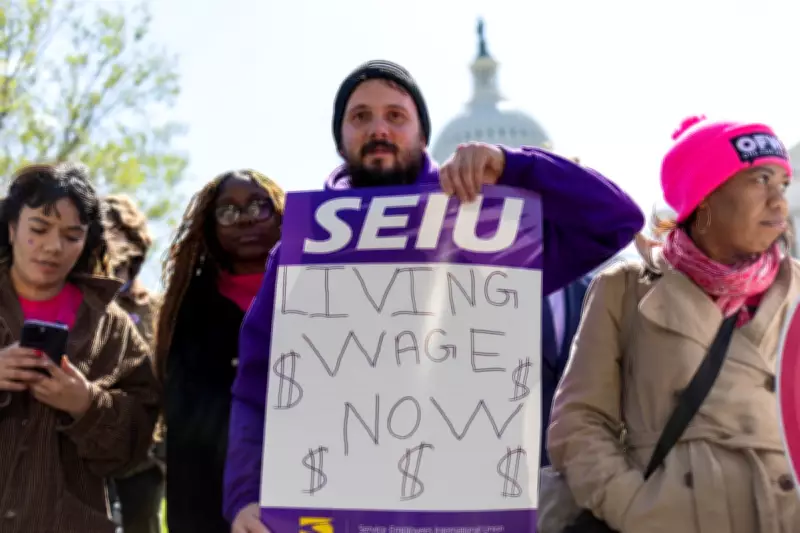
Campaigns for $30 Minimum Wage Gain Momentum in New York and California
Workers across the United States are rallying behind ambitious initiatives to raise the minimum wage to $30 per hour by 2030, with significant pushes underway in Oakland, California, and New York City. These efforts aim to address soaring living costs and economic inequality, but they face staunch opposition from business groups and political hurdles.
Grassroots Movements Drive Wage Increases
In Oakland, Mark Dorsey, a 35-year-old resident, exemplifies the struggle of low-wage workers. He juggles two jobs through temp agencies, often working 10- to 12-hour shifts to make ends meet. Despite Oakland's minimum wage of $17.34 per hour—higher than California's state rate of $16.90—Dorsey finds it insufficient. He is now part of the Oakland and Alameda Living Wage for All campaign, which has filed ballot initiatives for the November 2026 election to raise the minimum wage to $30 per hour by 2030 for large employers.
Dorsey, a member of the Black Organizing Project, emphasized the personal impact, stating, "This $30 an hour minimum wage would take a lot of burden and stress off of people." He highlighted the constant need to seek work wherever available, from Oakland to San Francisco, just to stay afloat financially.

Racial and Economic Justice at Stake
Zach Norris, co-executive director of the Black Organizing Project, framed the wage increase as a racial justice issue. Oakland has seen a 46% decline in Black residents since 2000, driven by the high cost of living. Norris argued, "This is about making sure that people who work here are able to afford to live here." He dismissed business criticisms, noting that small businesses supported the initiatives when announced at a worker-owned restaurant in Oakland.
Norris explained the structured approach: large employers would raise wages first, injecting more money into the local economy and benefiting small businesses through increased consumer spending. Similar efforts are spreading, with community and labor groups urging the Los Angeles county board of supervisors to consider a $30 minimum wage, building on recent increases for hotel and airport service workers ahead of the 2028 Summer Olympics.
New York City Joins the Fight
In New York City, Councilmember Sandy Nurse introduced a bill to raise the city's minimum wage to $30 per hour by 2030 for large employers, with small businesses given until 2032 to comply. Nurse pointed out that the current $17 hourly wage leaves workers with about $500 per week after taxes, making survival in the city nearly impossible. She cited a poll showing one in three New Yorkers plan to leave the state due to high costs.
Nurse compared New York to other cities like Seattle and San Francisco, which have higher minimum wages and lower living expenses, stating, "We feel that New York is behind." She referenced past successes, such as doubling the minimum wage from $7.25 to $15 between 2013 and 2019, and argued that businesses have thrived despite similar opposition.
Business Opposition and Economic Evidence
Business groups in both regions have voiced strong resistance. Jessica Walker, president of the Manhattan Chamber of Commerce, called the proposal a "closing notice for businesses," advocating for a thriving private sector instead. However, economic research supports wage increases. A 2023 study by University of California, Berkeley economist Michael Reich found that minimum wage hikes do not lead to job losses or small business closures; instead, they reduce turnover and job vacancies.
Nurse countered criticisms by emphasizing historical precedent: "New York businesses are still here after previous increases." She stressed that without fair wages, workers cannot sustain the economy as consumers.

Broader Context and Future Prospects
These local initiatives contrast sharply with the federal minimum wage, which remains at $7.25 per hour, unchanged since 2009. The "Fight for $15" movement a decade ago spurred increases in 30 states, but inflation has since eroded gains for low-wage workers. The Economic Policy Institute projects that by 2030, 36.7% of New York City's workforce will earn less than $30 per hour, while MIT's living wage calculator estimates a single adult in the city needs $31.50 per hour to live comfortably.
As campaigns gain steam, they highlight a growing divide between worker demands for economic dignity and business concerns over profitability. With ballot measures and legislative bills in play, the outcomes could set precedents for wage policies nationwide, shaping the future of labor and economic justice in America.





